https://born2invest.com/articles/social-entrepreneurship-solving-problems/
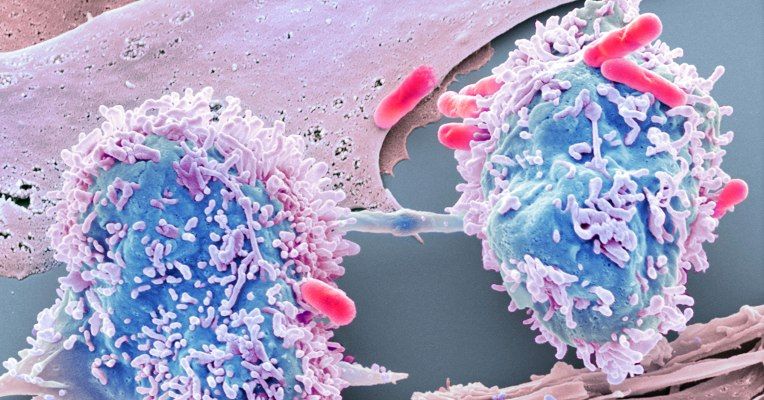
A who’s-who from the world of synthetic biological research have come together to launch Senti Biosciences with $53 million in funding from a slew of venture capital investors.
Led by Tim Lu, a longtime researcher at the Massachusetts Institute of Technology and one of the founding fathers of synthetic biology, Senti’s aim is nothing less than developing therapies that are tailored to an individual’s unique biology — and their first target is cancer.
Here’s how Lu described a potential cancer treatment using Senti’s technology to me. “We take a cell derived from humans that we can insert our genetic circuits into… we insert the DNA and encoding and deliver those cells via an IV infusion. We have engineered the cells to locate where the tumors are… What we’ve been doing is engineering those cells to selectively trigger an immune response against the tumor.”
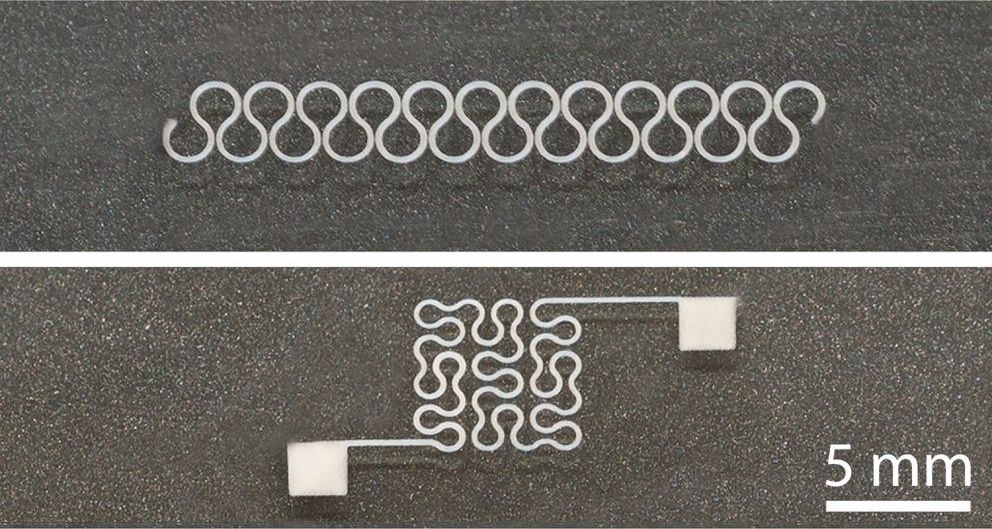
Researchers at North Carolina State University have developed a new technique that allows them to print circuits on flexible, stretchable substrates using silver nanowires. The advance makes it possible to integrate the material into a wide array of electronic devices.
Silver nanowires have drawn significant interest in recent years for use in many applications, ranging from prosthetic devices to wearable health sensors, due to their flexibility, stretchability and conductive properties. While proof-of-concept experiments have been promising, there have been significant challenges to printing highly integrated circuits using silver nanowires.
Silver nanoparticles can be used to print circuits, but the nanoparticles produce circuits that are more brittle and less conductive than silver nanowires. But conventional techniques for printing circuits don’t work well with silver nanowires; the nanowires often clog the printing nozzles.
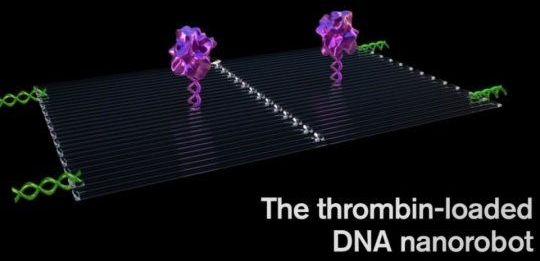
In a major advancement in nanomedicine, Arizona State University (ASU) scientists, in collaboration with researchers from the National Center for Nanoscience and Technology (NCNST), of the Chinese Academy of Sciences, have successfully programmed nanorobots to shrink tumors by cutting off their blood supply.
Quite a number of people develop nearsightedness or farsightedness during their lifetimes. “Nanodrops,” a new eye drop developed by Israeli ophthalmologists, has successfully fixed corneas in pig eyes, and could potentially do the same for people.
New eye drops developed by researchers from the Shaare Zedek Medical Center and Bar-Ilan University in Israel can improve both nearsightedness and farsightedness, the inventors claim. However, so far the “nanodrops” have only been successfully tested on pigs’ corneas.
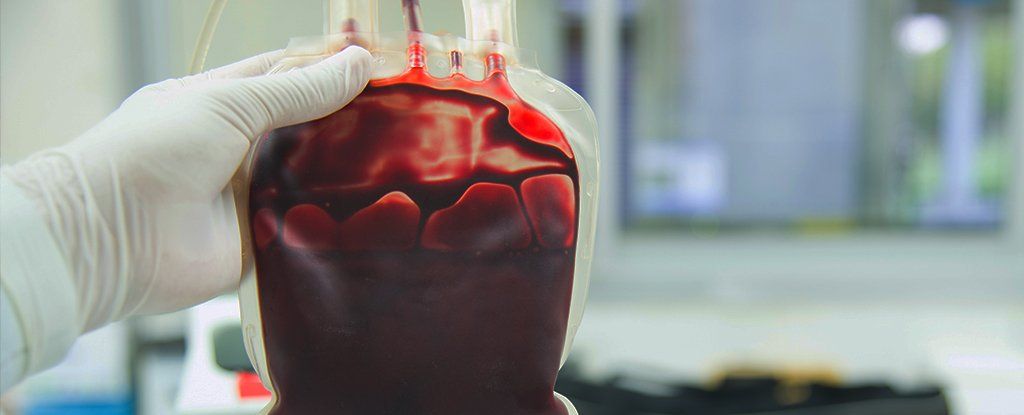
Scientists have been rejuvenating old mice with infusions of not just the blood of younger mice, but even blood from teenage human beings — and we finally have our first clues on why this strange technique works.
Researchers have discovered an enzyme that helps rescue ageing brains from cognitive decline. So far it’s only been shown in mice, but if the same mechanisms are found in humans, it could lead to a new class of anti-ageing therapies.
Four years ago, a team of researchers led by neurobiologist Saul Villeda from the University of California, San Francisco, discovered that giving older mice infusions of blood from younger mice improved their memory and learning by improving connections in the hippocampus.

A startup working to better understand the relationship our gut has with our brain has raised another $66 million.
New York-based Kallyope raised its series B round from new investors Two Sigma Ventures and Euclidean Capital. They were joined by Polaris Partners, Illumina Ventures, Lux Capital and others that had invested in Kallyope’s $44 million series A round in 2015.
Kallyope is trying to figure out how exactly the brain interacts with the gut by mapping it out. By collecting sequencing information about cells in the gut, for example, Kallyope can better figure out how they’re connected to neurons in the brain in a series of circuits. Understanding that relationship could lead to pills that could interact with the gut’s signals and in turn pass that message along to the brain.