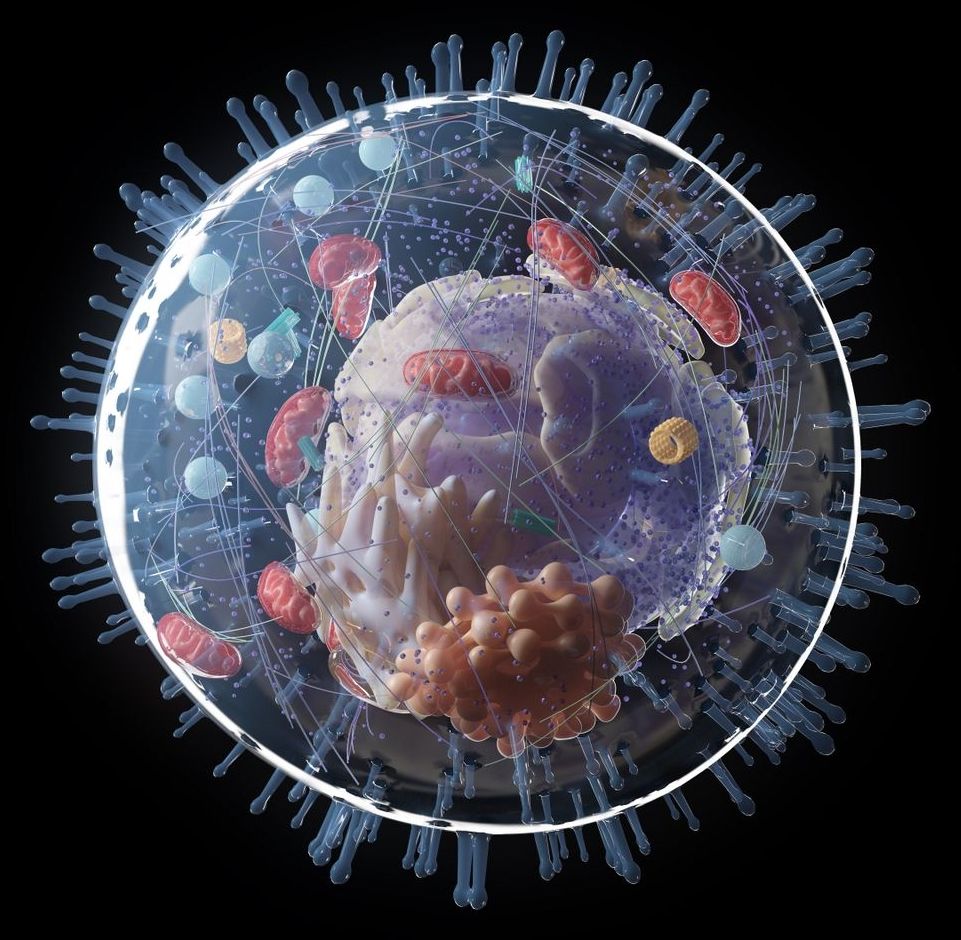
The race is on to develop the first senescent cell clearance therapies (a.k.a., “senolytics”) to reverse the aging process and treat age-related diseases.
An interesting procedure for the treatment of deep vein thrombosis.
Awesome.
Researchers have developed a new gene editing tool that is more efficient and easier to use. CRISPR-EZ addresses the issue of target RNA accuracy and embryo viability in IVF transgenic mice.
( andrew modzelewski/lin he | university of california berkeley )
CRISPR gene editing has been the subject of many researchers around the world because of its great potential in the study human genetic disease. But more than that, scientists have high regard for this tool because it can help cure complex and debilitating diseases like dementia and cancer.
As more fine-tuning is done in the use of CRISPR gene editing, more diseases can be effectively cured. CRISPR-Cas9 has been used to accurately replace or change genes but it is mostly done in early embryos, and there is a need to increase its accuracy and ease of use. With this in mind, researchers from the University of California (UC) Berkeley have developed a new method called CRISPR-EZ (CRISPR ribonucleoprotein electroporation of zygotes) that would make gene editing easier.
When nerve cells have to communicate with each other in our brains, it involves release of neurotransmitters acting as messengers at neural synapses. Here the released neurotransmitter is bound and registered by receptors at the surface of the receiving nerve cell. This will, in turn, trigger a signal which is sent on to other nerve cells. The circuits in the brain using the neurotransmitters noradrenaline, dopamine, GABA and serotonin are known to play an important role in mood, reward and mental well-being, and they also have a key role to in mental disorders such as addiction and depression.
After release of neurotransmitters between nerve cells, they must, however, be removed again to end the signal. This is done by a family of transport proteins which function as molecular vacuum cleaners in the cell membrane of the nerve cell where they pump the neurotransmitter back into the nerve cell for later reuse. This transport is of great importance to the signaling between the nerve cells, but happens relatively slowly. A collaborative project between researchers from Aarhus University has made it possible to explain what happens in the crucial rate-limiting step in the transport process for neurotransmitters such as serotonin, noradrenaline, GABA and dopamine which are all transported by related proteins with the same mechanism.
In a north London hospital, scientists are growing noses, ears and blood vessels in the laboratory in a bold attempt to make body parts using stem cells.
It is among several labs around the world, including in the U.S., that are working on the futuristic idea of growing custom-made organs in the lab.
Let’s formulate the task of life extension slightly differently. Something like this…How can we extend sex appeal?
Gyms and beauty salons are in charge of this question now. There is some success, but it’s mostly superficial. Plastic surgery only masks, but doesn’t delay the processes of aging.
Expanding sex appeal is a complex task. Its aspects include both beauty and the activity of the brain. To be sexually attractive we have to be smart and fun. One cannot solve the problem of dementia with makeup.
We have to be in an excellent physical shape to be sexually attractive, but also things should be running smoothly with our hormonal regulation.
The task of extending the period of sex appeal is extremely science-intensive. It is not only the Viagra, but a complex impact on the whole organism. It is obvious that molecular biology is responsible for sex in the modern world.
By ransdell pierson and bill berkrot.
(Reuters) — U.S. health officials on Thursday reported the first case in the country of a patient with an infection resistant to a last-resort antibiotic, and expressed grave concern that the superbug could pose serious danger for routine infections if it spreads.
“We risk being in a post-antibiotic world,” said Thomas Frieden, director of the U.S. Centers for Disease Control and Prevention, referring to the urinary tract infection of a 49-year-old Pennsylvania woman who had not traveled within the prior five months.
Perhaps it’s serendipitous, then, that the machines have finally arrived. Truly smart, truly impressive robots and machine learning algorithms that may help usher in a new Green Revolution to keep humans fed on an increasingly mercurial planet. Think satellites that automatically detect drought patterns, tractors that eyeball plants and kill the sick ones, and an AI-powered smartphone app that can tell a farmer what disease has crippled their crop.
Forget scarecrows. The future of agriculture is in the hands of the machines.
A Digital Green Thumb
Deep learning is a powerful method of computing in which programmers don’t explicitly tell a computer what to do, but instead train it to recognize certain patterns. You could feed a computer photos of diseased and healthy plant leaves, labeled as such. From these it will learn what diseased and healthy leaves look like, and determine the health of new leaves on its own.