Toggle light / dark theme

Asteroids and comets as space weapons

A dual use research of concern (DURC) refers to research in the life sciences that, while intended for public benefit, could also be repurposed to cause public harm. One prominent example is that of disease and contagion research (can improve disease control, but can also be used to spread disease more effectively, either accidentally or maliciously). I will argue here that DURC can and should be applicable to any technology that has a potential dual use such as this.


Approximately 66 million years ago, a 10 km sized body struck Earth, and was likely one of the main contributors to the extinction of many species at the time. Bodies the size of 5 km or larger impact Earth on average every 20 million years (one might say we are overdue for one, but then one wouldn’t understand statistics). Asteroids 1 km or larger impact Earth every 500,000 years on average. Smaller bodies which can still do considerable local damage occur much more frequently (10 m wide bodies impact Earth on average every 10 years). It seems reasonable to say that only the first category (~5 km) pose an existential threat, however many others pose major catastrophic threats*.

Given the likelihood of an asteroid impact (I use the word asteroid instead of asteroid and/or comet from here for sake of brevity), some argue that further improving detection and deflection technology are critical. Matheny (2007) estimates that, even if asteroid extinction events are improbable, due to the loss of future human generations if one were to occur, asteroid detection/deflection research and development could save a human life-year for $2.50 (US). Asteroid impact mitigation is not thought to be the most pressing existential threat (e.g. artificial intelligence or global pandemics), and yet it already seems to have better return on investment than the best now-centric human charities (though not non-human charities – I am largely ignoring non-humans here for simplicity and sake of argument).

The purpose of this article is to explore a depressing cautionary note in the field of asteroid impact mitigation. As we improve our ability to detect and (especially) deflect asteroids with an Earth-intersecting orbit away from Earth, we also improve our ability to deflect asteroids without an Earth-intersecting orbit in to Earth. This idea was first explored by Steven Ostro and Carl Sagan, and I will summarise their argument below.

Study of one million people leads to world’s biggest advance in blood pressure genetics

Over 500 new gene regions that influence people’s blood pressure have been discovered in the largest global genetic study of blood pressure to date, led by Queen Mary University of London and Imperial College London.

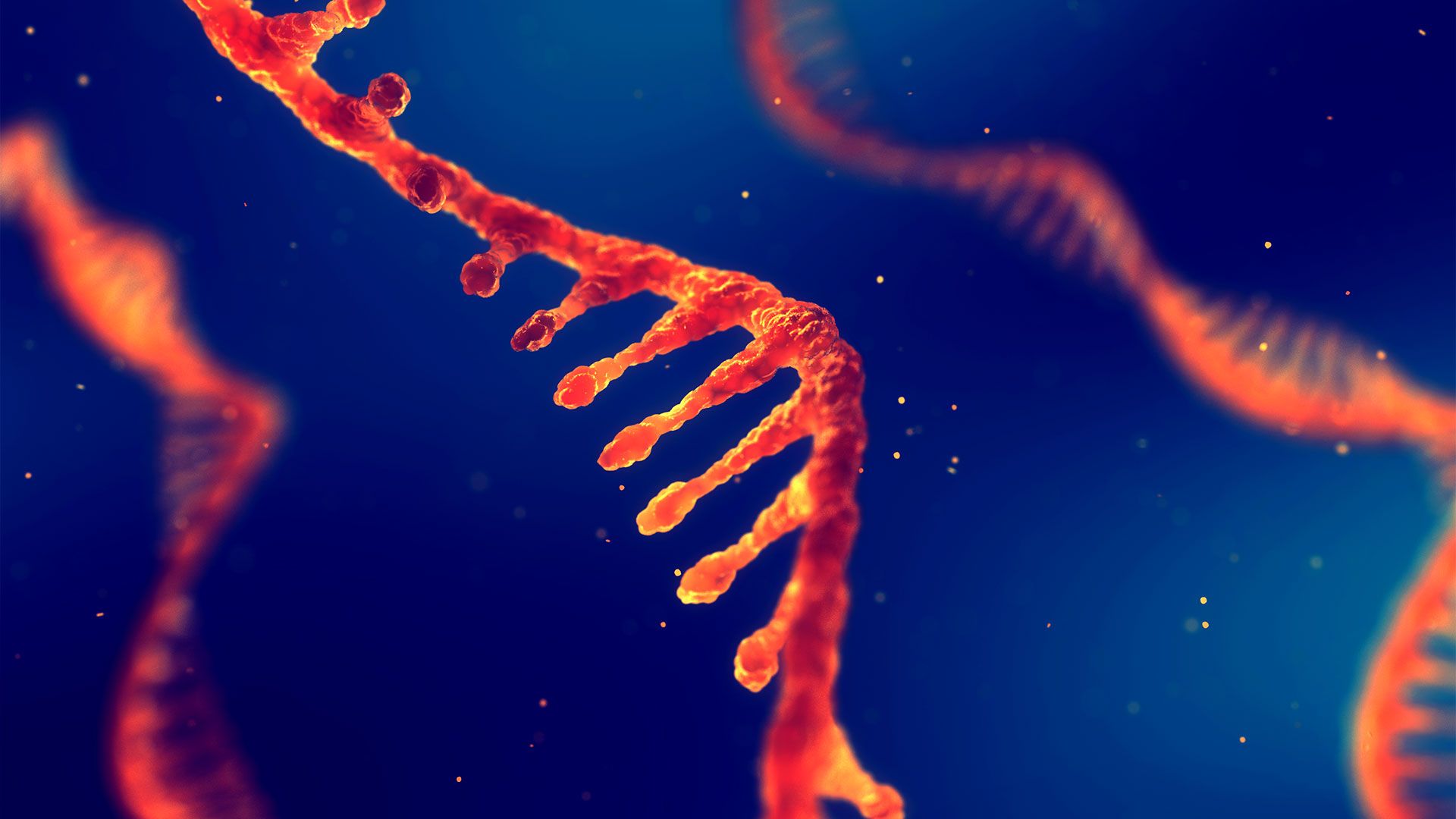
Involving more than one million participants, the results more than triple the number of gene regions to over 1,000 and means that almost a third of the estimated heritability for pressure is now explained.

The study, published in Nature Genetics and supported by the National Institute for Health Research (NIHR), Medical Research Council and British Heart Foundation, also reports a strong role of these genes, not only in blood vessels, but also within the adrenal glands above the kidney, and in body fat.

This Study on Nearly Half a Million People Has Bad News For The Keto Diet

Scientists and dietitians are starting to agree on a recipe for a long, healthy life. It’s not sexy, and it doesn’t involve fancy pills or pricey diet potions.

Fill your plate with plants. Include vegetables, whole grains, healthy fats, and legumes. Don’t include a lot of meat, milk, or highly processed foods that a gardener or farmer wouldn’t recognize.

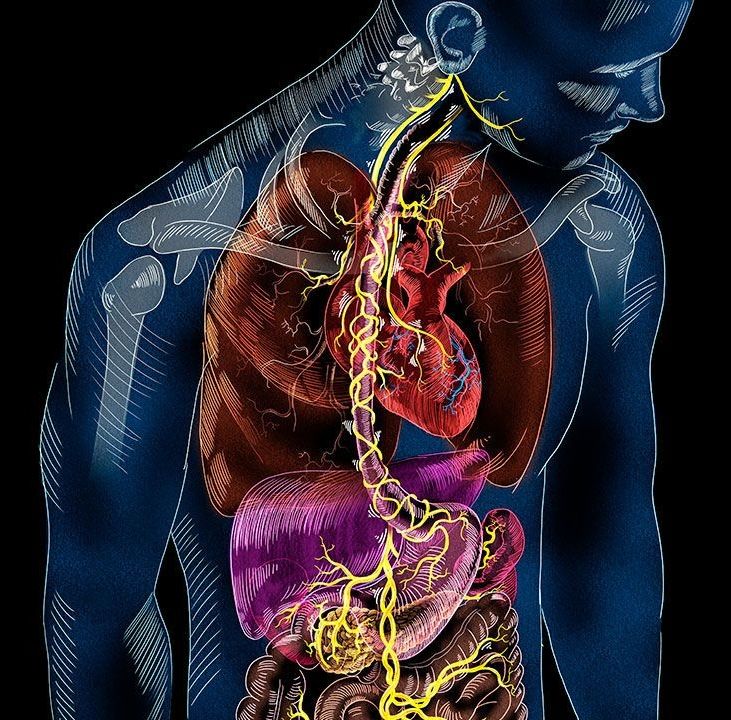
“There’s absolutely nothing more important for our health than what we eat each and every day,” Sara Seidelmann, a cardiologist and nutrition researcher at Brigham and Women’s Hospital in Boston, told Business Insider.

If We Made Life in a Lab, Would We Understand It Differently?

Only time will tell what new forms life will take.


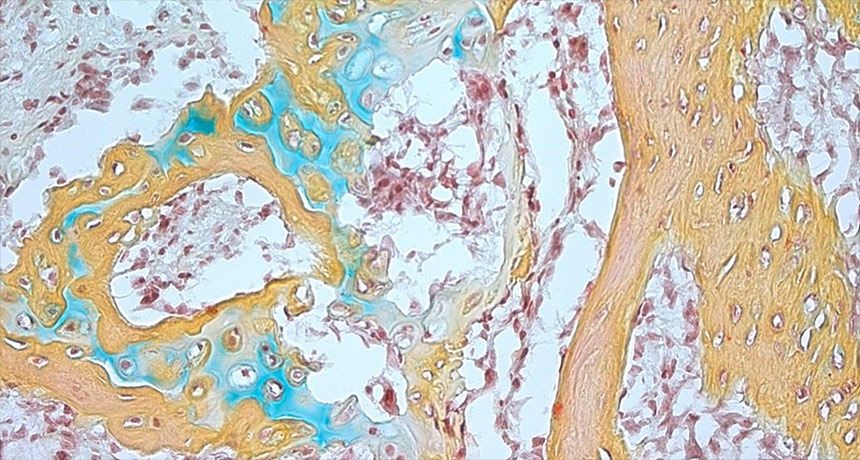
Joyce seeks to understand life by trying to generate simple living systems in the lab. In doing so, he and other synthetic biologists bring new kinds of life into being. Every attempt to synthesize novel life forms points to the fact that there are still more, perhaps infinite, possibilities for how life could be. Synthetic biologists could change the way life evolves, or its capacity to evolve at all. Their work raises new questions about a definition of life based on evolution. How to categorize life that is redesigned, the product of a break in the chain of evolutionary descent?

An origin story for synthetic biology goes like this: in 1997, Drew Endy, one of the founders of synthetic biology and now a professor of bioengineering at Stanford University in California, was trying to create a computational model of the simplest life form he could find: the bacteriophage T7, a virus that infects E coli bacteria. A crystalline head atop spindly legs, it looks like a landing capsule touching down on the Moon as it grabs onto its bacterial host. The bacteriophage is so simple that by some definitions it is not even alive. (Like all viruses, it depends on the molecular machinery of its host cell to replicate.) Bacteriophage T7 has only 56 genes, and Endy thought it might be possible to create a model that accounted for every part of the phage and how those parts worked together: a perfect representation that would predict how the phage would change if any one of its genes were moved or deleted.

Endy built a series of bacteriophage T7 mutants, systematically knocking out genes or scrambling their location in the tiny T7 genome. But the mutant phages conformed to the model only some of the time. A change that should have caused them to weaken would instead have their progeny bursting open E coli cells twice as fast as before. It wasn’t working. Eventually, Endy had a realization: “If we want to model the natural world, we have to rewrite [the natural world] to be modellable.” Instead of trying to make a better map, change the territory. Thus was born the field of synthetic biology. Borrowing techniques from software engineering, Endy began to “refactor” bacteriophage T7’s genome. He made bacteriophage T7.1, a life form designed for ease of interpretation to the human mind.

Glimpse: On the Promise of a Future with Artificial Wombs, and Why It’s Being Stopped by the Present

Given the speed at which reproductive technology has advanced over the past few decades, it doesn’t feel all that far-fetched: A future in which anyone can have a baby, regardless of creed or need, whenever they feel like it. Already, in our present moment, one can buy or sell eggs and sperm; we can give embryos genetic tests to ensure the children they produce don’t have any life-threatening hereditary conditions; and babies can even be born, now, with the genetic information from three parents.

So it follows that we should soon be able to to have pregnancy outside the body — artificial wombs. R ight?

You’d think. Scientists have already figured out how to mimic many of the body’s processes for techniques like in-vitro fertilization and even hormonal birth control. But the ways mothers’ bodies support and signal fetuses is incredibly complicated — and the science isn’t yet at a point where we can simulate these processes. And because scientists are prohibited from studying embryos 14 days past their fertilization, that’s one sci-fi vision that is not likely to come to fruition.

/* */