New research examines cognitive function and brain atrophy in both people with and without type 2 diabetes over the course of approximately 5 years.
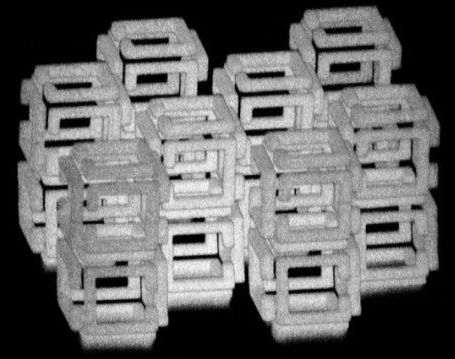

When your computer stores data, it has to pause while the information moves from one piece of hardware to another.
But that may soon stop being the case, as scientists from MIT and the Singapore University of Technology and Design uncovered a new manufacturing trick that should let them build computers that don’t have those annoying delays.
The key is to sit back and let a virus — the biological kind — handle the assembly work.
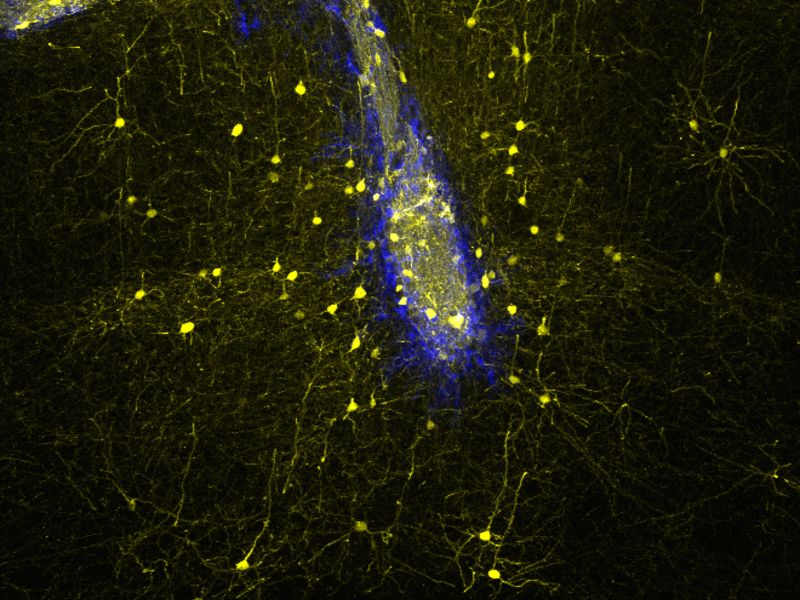
When it comes to recovering from insult, the adult human brain has very little ability to compensate for nerve-cell loss. Biomedical researchers and clinicians are therefore exploring the possibility of using transplanted nerve cells to replace neurons that have been irreparably damaged as a result of trauma or disease. However, it is not clear whether transplanted neurons can be integrated sufficiently, to result in restored function of the lesioned network. Now researchers at the Max Planck Institute of Neurobiology in Martinsried, the Ludwig Maximilians University Munich, and the Helmholtz Zentrum München have demonstrated that, in mice, transplanted embryonic nerve cells can indeed be incorporated into an existing network and correctly carry out the tasks of damaged cells originally found in that region.
Neurodegenerative diseases such as Alzheimer’s or Parkinson’s disease, but also stroke or certain injuries lead to a loss of brain cells. The mammalian brain can replace these cells only in very limited areas, making the loss in most cases a permanent one. The transplantation of young nerve cells into an affected network of patients, for example with Parkinson’s disease, allow for the possibility of a medical improvement of clinical symptoms. However, if the nerve cells transplanted in such studies help to overcome existing network gaps or whether they actually replace the lost cells, remained unknown.
In the joint study, researchers of the Max Planck Institute of Neurobiology, the Ludwig Maximilians University Munich, and the Helmholtz Zentrum München have specifically asked whether transplanted embryonic nerve cells can functionally integrate into the visual cortex of adult mice. The study was supported by the center grant (SFB) 870 of the German Research Foundation (DFG). “This brain region is ideal for such experiments,” says Magdalena Götz, joint leader of the study together with Mark Hübener, who continues to explain: “By now, we know so much about the functions of the nerve cells in the visual cortex and the connections between them that we can readily assess whether the new nerve cells actually perform the tasks normally carried out by the network.”

People with depression also tend to “visit primary care physicians more often than others,” explains Prof. Lorenzo-Luaces. “They have more medical problems, and their depression sometimes gets in the way of their taking their medication for other medical problems.”
So, for the new review, the team examined 21 existing studies using meta-regression analysis. The analysis concluded that CBT apps were effective for treating mild, moderate, and severe depression.
Some of the trials included in the review compared a CBT app with a sham app. In these studies, the real apps were also significantly more effective at treating depression.

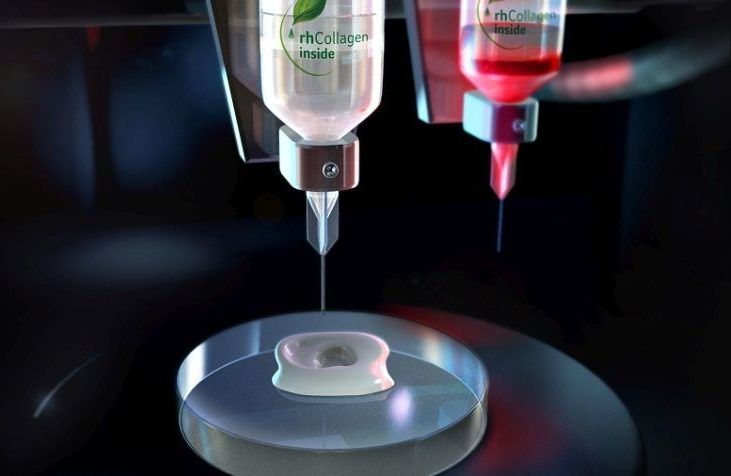
United Therapeutics will license, develop, and commercialize CollPlant Holdings’ recombinant human collagen (rhCollagen) and BioInk technology for 3D bioprinting of solid-organ scaffolds for human transplants, the companies said today, through a collaboration that could generate more than $44 million.
Through its wholly- owned organ manufacturing and transplantation-focused subsidiary Lung Biotechnology PBC, United Therapeutics has been granted what the companies termed an exclusive license “throughout the universe” by CollPlant to its technology for producing and using rhCollagen-based BioInk for 3D bioprinted lung transplants.
Lung Biotechnology PBC is a public benefit corporation formed to address the acute national shortage of transplantable lungs and other organs with a variety of technologies that either delay the need for such organs or expand the supply.
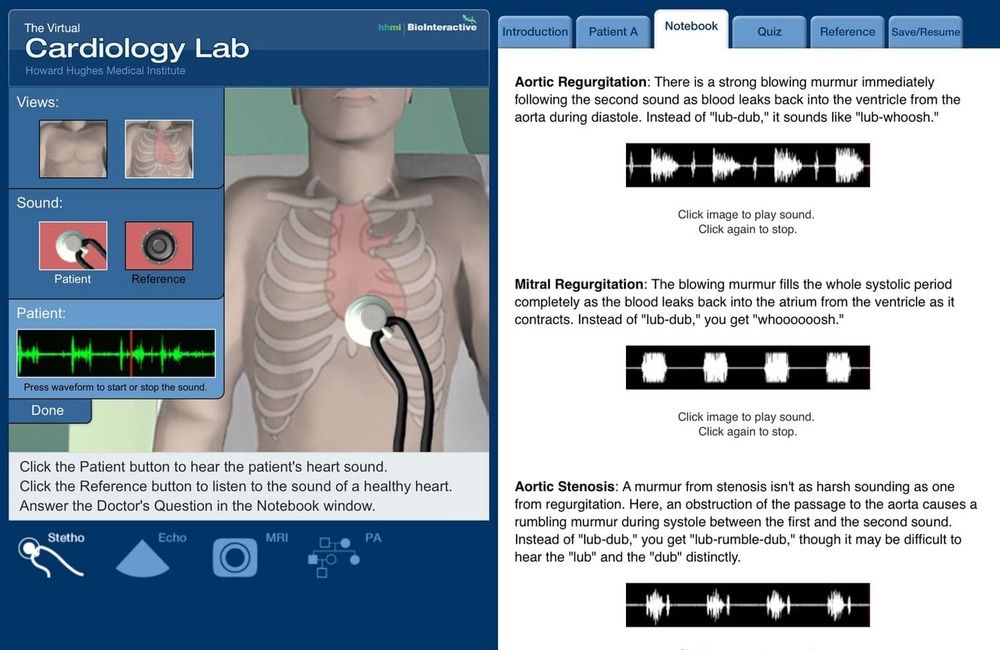
How much do you know about anatomy? Cardiology? Have you ever set foot in a scientific lab? Once you visit BioInteractive’s virtual lab, you’ll feel as if you have.
The website is offered by the Howard Hughes Medical Institute, a nonprofit organization that funds biomedical research. It features free virtual labs for anatomy, bacterial identification, immunology, neurophysiology and cardiology.
The concept is simple: You tool around virtual, web-based spaces as if you were a scientist. And you learn in the process. It’s designed to help users practice the skills and techniques of scientific research.
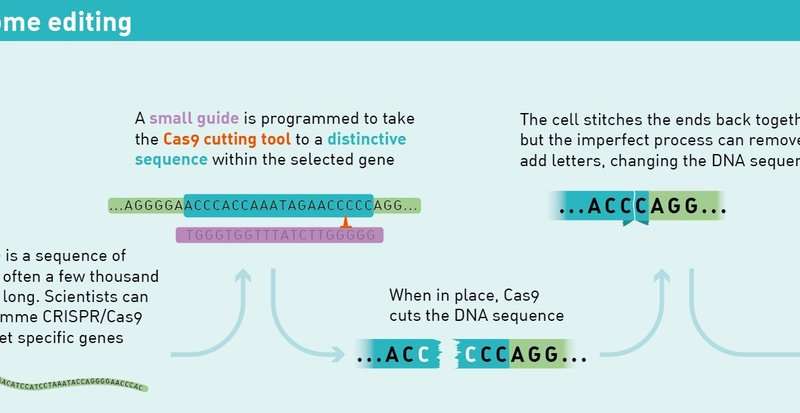
Scientists at the Francis Crick Institute have discovered a set of simple rules that determine the precision of CRISPR/Cas9 genome editing in human cells. These rules, published in Molecular Cell, could help to improve the efficiency and safety of genome editing in both the lab and the clinic.
Despite the wide use of the CRISPR system, rational application of the technology has been hindered by the assumption that the outcome of genome editing is unpredictable, resulting in random deletions or insertions of DNA regions at the target site.
Before CRISPR can be safely applied in the clinic, scientists need to make sure that they can reliably predict precisely how DNA will be modified.