Toggle light / dark theme

IBM predicts five innovations for the next five years

IBM has unveiled its annual “5 in 5” – a list of ground-breaking innovations that will change the way people work, live, and interact during the next five years.

In 1609, Galileo invented the telescope and saw our cosmos in an entirely new way. He proved the theory that the Earth and other planets in our Solar System revolve around the Sun, which until then was impossible to observe. IBM Research continues this work through the pursuit of new scientific instruments – whether physical devices or advanced software tools – designed to make what’s invisible in our world visible, from the macroscopic level down to the nanoscale.

“The scientific community has a wonderful tradition of creating instruments to help us see the world in entirely new ways. For example, the microscope helped us see objects too small for the naked eye, and the thermometer helped us understand the temperature of the Earth and human body,” said Dario Gil, vice president of science & solutions at IBM Research. “With advances in artificial intelligence and nanotechnology, we aim to invent a new generation of scientific instruments that will make the complex invisible systems in our world today visible over the next five years.”

Scar-free wound healing could be on its way

There are a couple of reasons that scar tissue looks different than regular skin – it lacks hair follicles, and it has no fat cells. Recently, though, scientists from the University of Pennsylvania and the University of California, Irvine succeeded in addressing both factors. They’re now able to get wounds to heal with regenerated skin, instead of with scar tissue.

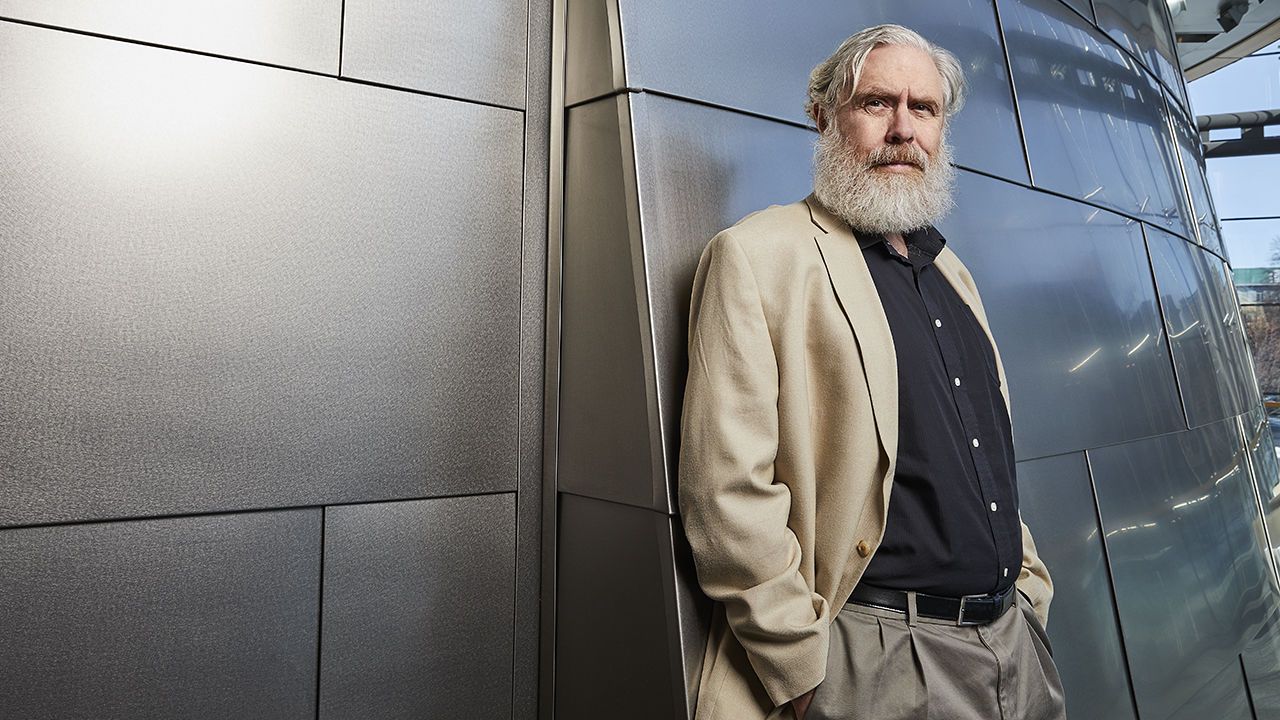
Myofibroblasts are the most common type of cell found in healing wounds, and they’re associated with scar formation. Led by U Penn’s Dr. George Cotsarelis, the research team was able to get those cells to transform into ones known as adipocytes – these are the fat cells that are present in normal skin, but absent in scars.

Scientists in the Cotsarelis Lab already knew which growth factors were necessary for hair follicles to form in the skin. This knowledge previously allowed them to induce follicles to grow at wound sites on mice, although that would supposedly only be solving half of the problem.

Scientists use light to control the logic networks of a cell (w/video)

Luv this.


Proteins are the workhorse molecules of life. Among their many jobs, they carry oxygen, build tissue, copy DNA for the next generation, and coordinate events within and between cells. Now scientists at the University of North Carolina at Chapel Hill have developed a method to control proteins inside live cells with the flick of a switch, giving researchers an unprecedented tool for pinpointing the causes of disease using the simplest of tools: light.

The work, led by Klaus Hahn and Nikolay Dokholyan and spearheaded by Onur Dagliyan, a graduate student in their labs, builds on the breakthrough technology known as optogenetics. The technique, developed in the early 2000s, allowed scientists, for the first time, to use light to activate and deactivate proteins that could turn brain cells on and off, refining ideas of what individual brain circuits do and how they relate to different aspects of behavior and personality.

Multiplexed optogenetic control, using Photo-inhibitable Vav2 (PA-Vav2) and Photo-inhibitable Rac1 (PI-Rac1) in the same cell.

Tiny 3D printed biobots could dispense drug doses from inside your body

Samuel Sia, a professor of biomedical engineering at New York City’s Columbia University, has developed a 3D printed biobot that can be implanted in the body to release controlled doses of drugs. The amazing device can be controlled from outside the body using only magnets.

For patients who have been diagnosed with cancer, treatment options are often few and far between, and in many serious cases, starting an intense course of chemotherapy becomes a necessity rather than a choice. But despite being a powerful weapon against cancer, chemotherapy takes its toll on the body in a number of ways: chronic pain, nausea, fatigue, hair loss, and the chance of infertility are just some of the adverse effects that chemotherapy can present. Fortunately, scientists are working hard to develop more effective ways of delivering chemotherapy drugs, including a new 3D printing method that involves fabricating squishy, “clockwork” micromachines that deliver precise drug doses from within the body.

‘Out-of-the-Box’ Approaches Can Help Combat Antibiotic Resistance

Is it possible to kill bacteria with bacteria?

This is the unorthodox question posed by a team of researchers funded by the Defense Advanced Research Projects Agency (DARPA)—a research and development organization within the U.S. Department of Defense—that is exploring whether an unusual type of bacteria that eats other bacteria could be a new weapon in the fight against drug-resistant infections.

Known as the Pathogen Predator program, the DARPA initiative (led by Dr. Barry Pallotta) is part of a growing effort to seek new and innovative ways to defeat drug-resistant superbugs, which are rapidly evolving to beat even our most powerful antibiotics.

Synthego bags $41M to grow CRISPR synthetic RNA kit biz

Nice.


Synthetic RNA kit business Synthego has raised $41 million to step up its efforts to make CRISPR gene editing easier and more accurate. The West Coast startup relied heavily on tech VCs for the cash, but also gained validation from having CRISPR pioneer Jennifer Doudna invest in its business.

Redwood City, CA-based Synthego exited stealth in August, four years after it was set up by two former SpaceX computer engineers. In those early years, which were bankrolled by an $8.3 million investment in 2013, Synthego established an automated manufacturing process for guide RNA products that it thinks sets it apart from larger competitors in terms of cost, turnaround time and editing efficiency.

Sythengo has persuaded some big names it is on to something. 8VC, an infrastructure-focused VC that also invested in uBiome, led the round with support from fellow new backers AME Cloud Ventures, Elements Capital, OS Fund, Alexandria Equities and ZhenFund. Existing investors including Peter Thiel’s Founders Fund and Menlo Ventures also contributed to the Series B round.

/* */