Toggle light / dark theme

How Fungus And Synthetic Biology Could Save Astronauts On Mars

Clay Wang brought his kids to the California Space Center a few years ago to show them the Space Shuttle. But as he looked up at Endeavour and pondered human space exploration, the pharmacologist wondered, “What if a crew runs out of medicine halfway to Mars?”

A lot of things can go wrong during a three-year mission to Mars, and there’s only so much medicine you can pack. “For food you can predict exactly how much the astronauts will need to eat,” says Wang. “Medicine you can’t predict.”

What if they develop a sudden need for a drug that wasn’t packed? Compounding the problem is the fact that the space environment seems to make many drugs lose potency and degrade more quickly compared to drugs on Earth.

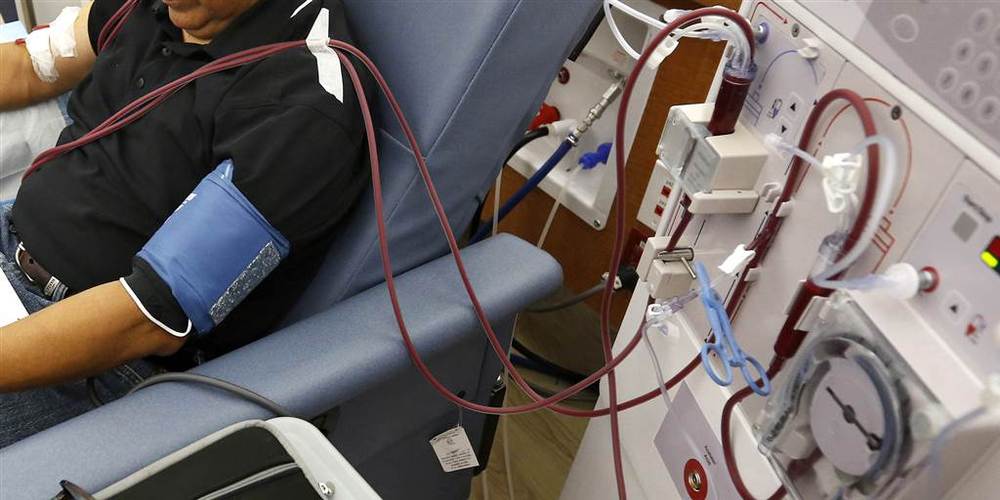
Part Nano-Tech, Part Living Cells: Scientists Build A First-Ever Artificial Kidney

Scientists at Vanderbilt University have developed a first-ever implantable artificial kidney. The artificial kidney contains a microchip filter and living kidney cells that can function using the patient’s heart, and this bio-synthetic kidney acts like the real organ, removing salt, water and waste products to keep patients with kidney failure from relying on dialysis.

The key to this new development is a breakthrough in the microchip itself, which uses silicon nanotechnology. “[Silicon nanotechnology] uses the same processes that were developed by the microelectronics industry for computers,” said Dr. William H. Fissell IV, who led the team that developed the device.

The microchips are affordable, precise, and function as an ideal filter.

AI can analyse mammogram results 30 times faster than doctors, and with 99% accuracy

Researchers have developed machine learning software that can accurately diagnose a patient’s breast cancer risk 30 times faster than doctors, based on mammogram results and personal medical history.

The system could help doctors give better diagnoses the first time around — which means fewer mammogram callbacks and false positives.

“This software intelligently reviews millions of records in a short amount of time, enabling us to determine breast cancer risk more efficiently using a patient’s mammogram,” said one of the researchers, Stephen Wong, from Houston Methodist Research Institute. “This has the potential to decrease unnecessary biopsies.”

CRISPR Could Usher in a New Era of Delicious GMO Foods

That brought a lot of media attention, and Giorgio got skittish. “They didn’t want to have the perception from customers that their company was developing genetically modified organisms,” says Yang. Yang is still working to perfect the anti-browning in his academic lab, but he has no immediate plans to commercialize it.

The anti-browning trait might also just be a tough sell to customers: When a Canadian apple wanted to sell a GM apple that doesn’t brown—genetically altered through conventional means—it had to battle assumptions that growers just wanted to hide bruised produce. Which is, well, true. Produce that doesn’t brown when handled does also mean less waste for stores and growers.

In Sweden, Jansson is no stranger to unease over genetic engineering. His colleagues recently returned from a conference where activists flung cow dung and eggs at scientists. The CRISPR-edited cabbage he grew he actually got from researchers outside Sweden, who did not want their names or even their country revealed, fearing backlash from environmental activists. Jansson did his cabbage stunt because he wanted people to start thinking about what CRISPR could mean for food.

Mind-Controlled Nanobots Used to Release Chemicals in Living Cockroaches

This is wild: a team of Israeli scientists developed a contraption that uses a person’s brain waves to remotely control DNA-based nanorobots — while the nanobots were inside a living cockroach. When prompted by a human thought, the clam shell-like robots opened up, revealing a drug-like molecule that tweaked the physiology of the cockroach’s cells.

Though “merely a demonstration and proof of concept,” the technology represents a new era of brain-nanomachine interfaces that links a person’s mental state to bioactive payloads such as drugs. Future techniques that build upon this prototype could be helpful for schizophrenia, depression or other mental disorders, in that the drugs only activate when a patient’s brain waves show signs of abnormality.

Talk about the power of positive thinking!

Scientists Find a Way to Destroy Blood Clots With Laser Beam

A team of physicists from the US, Germany and Russia have devised a method of detecting blood clotting with the help of a laser beam, RIA Novosti reported, citing an article carried by the latest issue of PLOS ONE scientific journal.

“We have demonstrated how you can detect blood clots using photoacoustic flow-cytometry. We will potentially be able to destroy them right away, but this requires additional research,” Alexander Melerzanov, a senior fellow at Moscow’s Institute of Physics and Technology, told RIA.

Formation of clots in the blood stream is the main cause of strokes and heart attacks. Breaking loose in the bloodstream they can clog arteries often resulting in a patient’s death.

One Year Anniversary of BioViva’s Gene Therapy Against Human Aging

It has officially been one year since I volunteered to take the first gene therapy to treat biological aging. It has been an amazing year! It began with a great deal of excitement in the weeks leading up to taking the treatment. The excitement of treatment day was followed by months of anticipation before the letdown of not magically reversing visual aging and becoming a 20-year-old biologically again. Even so, the year has been filled with energizing information gleaned from every additional molecular biomarker test that we have done. In this post, I will try to summarize my feelings on several topics as they have evolved throughout the year.

First in Human Use

Being the first person to use any new medical treatment is a complicated endeavor. It is infinitely more complicated when we don’t know the possible outcomes, the perfect dosage, the regimen, or the optimal delivery method. With all of these uncertainties, one is constantly aware that all the excitement and hopes could be squelched in moments. For the same reasons, every small success seems unbelievable, even though they are the results we wanted.

/* */