https://player.fm/series/caring-for-aging-parents/reversing-…ira-pastor
In 1996, Dolly the sheep became the first mammal to be cloned from a somatic cell. Twenty years later, scientists have succeeded in using the same technique on primates—as detailed in a study published today in the journal Cell, two long-tailed macaque monkeys were born at the Chinese Academy of Sciences Institute of Neuroscience in Shanghai.
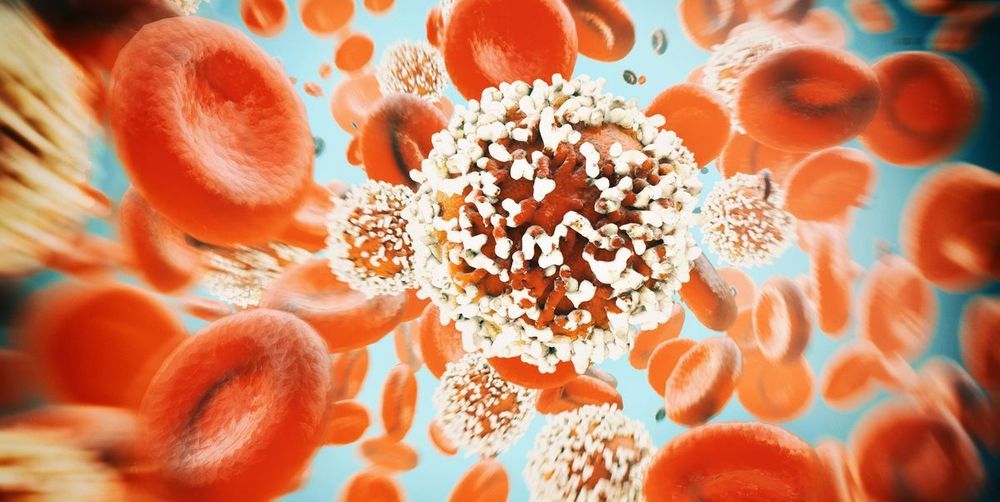
In a new study, researchers propose that TIGIT is a marker of T cell senescence and exhaustion in the immune system. However, not only is TIGIT just a biomarker, it is also a potential therapeutic target; as the researcher team discovered, lowering levels of TIGIT resulted in the restoration of some lost function in T cell populations that were experiencing high levels of senescence and exhaustion.
In a new study, researchers propose that TIGIT is a marker of T cell senescence and exhaustion in the immune system[1]. However, not only is TIGIT just a biomarker, it is also a potential therapeutic target; as the researcher team discovered, lowering levels of TIGIT resulted in the restoration of some lost function in T cell populations that were experiencing high levels of senescence and exhaustion.
Aging is associated with immune dysfunction, especially T-cell defects, which result in increased susceptibility to various diseases. Previous studies showed that T cells from aged mice express multiple inhibitory receptors, providing evidence of the relationship between T-cell exhaustion and T-cell senescence. In this study, we showed that T-cell immunoglobulin and immunoreceptor tyrosine-based inhibitory motif (ITIM) domain (TIGIT), a novel co-inhibitory receptor, was upregulated in CD8 + T cells of elderly adults. Aged TIGIT + CD8 + T cells expressed high levels of other inhibitory receptors including PD-1 and exhibited features of exhaustion such as downregulation of the key costimulatory receptor CD28, representative intrinsic transcriptional regulation, low production of cytokines, and high susceptibility to apoptosis. Importantly, their functional defects associated with aging were reversed by TIGIT knockdown.
Since the birth of Dolly the sheep in 1996, scientists across the globe have used the same technique to clone nearly two dozen other animal species, including cats, dogs, rats, and cattle. Primates, however, had proven resistant to the process — until now.
In a new study published in Cell, a team of Chinese researchers led by Qiang Sun at the Chinese Academy of Sciences Institute of Neuroscience in Shanghai reveal that they’ve found a way to tweak the Dolly cloning technique to make it work in primates. Their efforts have resulted in the birth of two cloned female macaques: Zhong Zhong and Hua Hua.
The first monkeys have been cloned in a historic breakthrough — could humans be next?
WASHINGTON — Scientists have created a hair-thin implant that can drip medications deep into the brain by remote control and with pinpoint precision.
Tested only in animals so far, if the device pans out it could mark a new approach to treating brain diseases — potentially reducing side effects by targeting only the hard-to-reach circuits that need care.
“You could deliver things right to where you want, no matter the disease,” said Robert Langer, a professor at the Massachusetts Institute of Technology whose biomedical engineering team reported the research Wednesday.
The end of men? Experts reveal how the male sex chromosome could one day disappear completely.
Since the dawn of humanity, men have played a vital role in determining the sex of their offspring.
The Y chromosome, carried by roughly half of a man’s sperm, dictates whether a child will be male or female.
If the Y chromosome is present, a child will develop into a boy, whereas a lack of this strand of DNA will result in a girl.
As we hear more and more about the upcoming Winter #Olympics in a few weeks, let’s remember the idea for a future Transhumanist Olympics: http://www.sfchronicle.com/opinion/openforum/article/Embrace…211040.php #transhumanism
The 2016 Paralympics, which began this week in Rio de Janeiro, is bringing together 4,500 athletes to compete in 23 sports from wheelchair fencing to swimming to hand biking.