Chronic inflammation is linked to a host of medical issues and life-threatening diseases, but researchers may have just discovered a new way to prevent it.

While these “moonshots” are still some years away, there are viable applications of 5G in the near term. South Korea launched the world’s first commercial 5G network in April and has seen data transfer rates rise from 50 megabits per second to over 700 Mbps. This enables the delivery of augmented reality, virtual reality and AI-enhanced real-time sports content.
With the arrival of next-generation mobile networks, new services like remote surgery will be suddenly feasible. More immediately, expect a boom in video traffic and augmented reality content.
It has transformed the country since the introduction of a universal healthcare system in 2001.
🔎 Learn more about infectious diseases: https://wef.ch/2Io98fA
Wow, the shit flies are flying out of the trash cans of Earth… I myself do not desire the thought of man and machine becoming one literally bolted together. But only as Singularity has been now for centuries.
For centuries every technological marvel of the era man became the brain of the covered wagon the bicycle the car the train the Plane now Rocket ships.
Each machine man had to become one with it for it to work. Mans brain became machine like-calculating to operate these miracles of each generation.
NOW Suddenly on Google of all places these nay sayers with totally bogus reasoning are loudly speaking against Transhumanism and even loudly against Immortality, of which the likes of Nikola Tesla literally forcast-Prophesy…
So what say Ye about these new Johnny get your Gun and jump on what I now say is our collective vehicle and let us call our vehicle the Band Wagon.
They, so many now are joining the wave started by Who??? Many, such as the De Grey, Gennady Stolyarov, Ray Kurzweil, Jim Strole and Bernadeane and Ilia Stambler and the list could go on.
Now many garner attention by saying the same forecast the same words of Ray or De Grey then they go on tour.


Is a film based on a video game with fleeting mentions of a biotech buzzword compelling sci-fi? No. But I liked Rampage anyway.
The use of CRISPR to edit genes is perhaps the only novel plot point in this latest monster movie. An evil head of a biotech company subverts a scientist’s work to fashion a bioweapon that revs up the growth hormone gene, and more, in three unfortunate animals. Cue Godzilla, King Kong, and the beast in Lake Placid.
But the screenwriters seem to confuse gene editing with an infectious bioweapon, like anthrax. The tagline at IMDb reveals the befuddlement: “When three different animals become infected with a dangerous pathogen, a primatologist and a geneticist team up to stop them from destroying Chicago.” Infectious disease, genetic modification, or both?

Plant regeneration at the cellular and tissue level is a unique process. Similar to animals, the stem cells in plants have properties that help stimulate and regenerate plants after injury. The unique properties of plant stem cells have been a recent area of interest and focus both in developing new cosmetics and studying how these extracts/phytohormones will influence animal skin. This special report focuses on the current evidence-based trends in plant stem cell-based cosmetics and sheds light on the challenges that we need to overcome in order to see meaningful changes in human skin using topical cosmetics derived from plant stem cells.
Keywords: : aging skin, antiaging, Ayurveda, cosmetics, epidermal stem cells, herbs, plant stem cells, regeneration.
Plants are equipped with a robust mechanism for regeneration of their tissues under stress. Significant efforts have been put into understanding this mechanism in the expanding field of plant biotechnology [1]. In animals, tissue regeneration occurs following a wound stimulus, resulting in the initiation of organ repair. By contrast, the regenerative efforts made by the plants are not only for tissue repair from damage, but also for the development of a new plant [2]. In other words, cutting the branch of a tree also results in a new bud/branch growth. Can we use this unique property in plants for improving tissue regeneration in animals? “Eat an apple a day…But can it keep aging away?” is thus the question. This report focuses on current applications of plant stem cell-based cosmetics and current research into effects of plant stem cells in human skin.
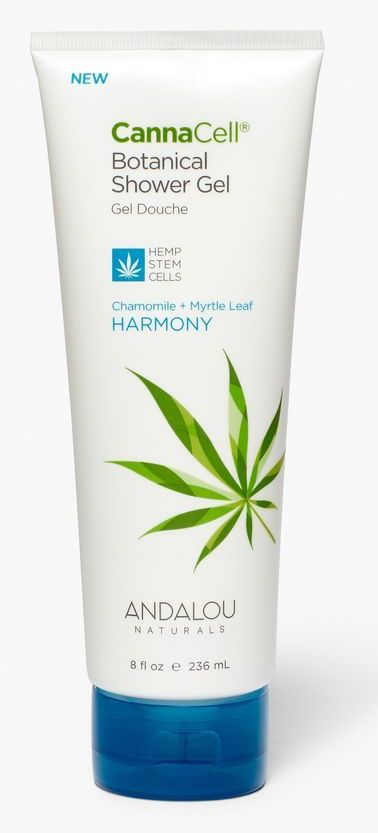
Discover your pure, natural beauty with this nourishing botanical shower gel with CannaCell® hemp stem cells, organic hemp seed oil, pure plant essential oils, chamomile, and myrtle leaf to soothe, balance, and uplift your body, mind, and spirit.
Made with bioavailable vegan ingredients to be gentle and effective for all skin types.
Size: 8.0 fl oz.

A new publication by an international team of scientists has proposed a new healthcare framework to help older people stay healthier for longer by improving the development of therapies that target age-related diseases.
Society is aging, and we need to change healthcare for the better
This new publication urges World Health Organization (WHO), governments, and the medical science community to work together and develop classifications and staging systems using a new framework as a basis for diagnosing and treating age-related diseases.

The idea of a cell therapy for Parkinson’s disease starts out simple: Symptoms of the progressive disease are largely driven by the deaths of dopamine-producing neurons found deep within the brain. With lower levels of the neurotransmitter come the characteristic tremors, rigidity and slow movements.
By replacing those lost nerve cells with new dopamine producers, researchers hope to renew the brain’s connection to the body’s muscles and improve a person’s overall motor function.
But in the brain, everything becomes more complicated. On top of the risk of immune system rejection that comes with any kind of living tissue transplant, it’s important to make sure the implanted cells function correctly and do not pick up any dangerous genetic mutations as they grow.