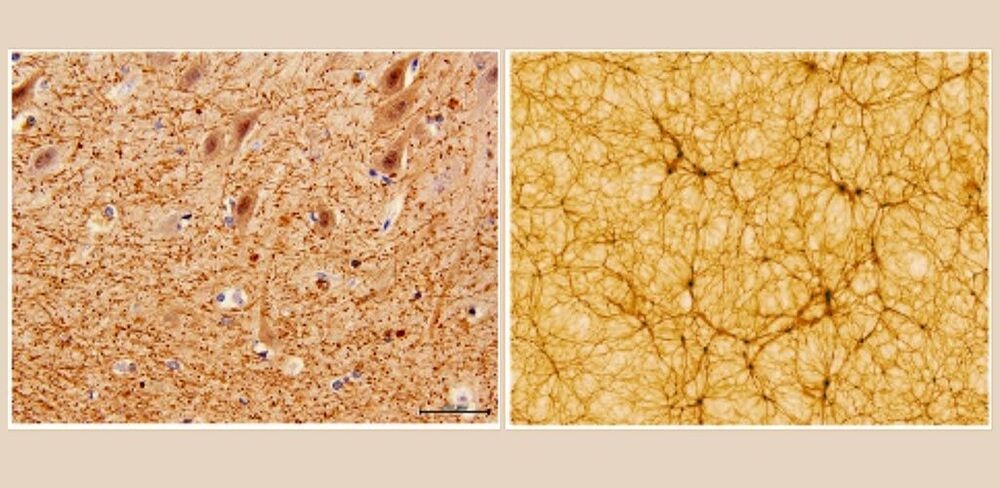
Researchers have identified a link between traumatic brain injury and intestinal changes. A new study reports the intestinal changes may contribute to increased risk of developing infections and could worsen brain damage in TBI patients.
Dr. Stanislaw Burzynski’s radical, alternative cancer treatment was suppressed by the FDA and Texas Medical Board, until his patients fought back. Watch more: https://bit.ly/2kRwW2e
MaraGen Aims to Detoxify the Body from Pathogens & Harmful Substances. It Is an Alternative Medicine for Incurable Diseases.
Cellular senescence, discovered in 1961 by Leonard Hayflick and Paul Moorhead, is a state in which cells no longer perform their functions, instead emitting harmful chemicals that turn other cells senescent. Senescence is primarily caused by telomere shortening and DNA damage, and senescent cells are known to contribute to multiple diseases, such as Alzheimer’s, Parkinson’s, and dementia.
One method of removing senescent cells is caloric restriction, which is a temporary reduction of food calories. This has been shown to be one of the most effective methods to decrease and slow the onset of aging phenotypes [1].
This is related to autophagy, which is the cell’s natural method of breaking down parts of itself when it doesn’t have immediate access to food [2]. Autophagy has been shown to both promote and prevent senescence. It removes damaged macromolecules or organelles, such as mitochondria, which would otherwise cause cellular senescence. However, some of the processes that cause autophagy cause cellular senescence as well [3].
If used to make non-heritable genetic changes, CRISPR gene-editing technology holds tremendous promise for treating or curing a wide range of devastating disorders, including sickle cell disease, vision loss, and muscular dystrophy. Early efforts to deliver CRISPR-based therapies to affected tissues in a patient’s body typically have involved packing the gene-editing tools into viral vectors, which may cause unwanted immune reactions and other adverse effects.
Now, NIH-supported researchers have developed an alternative CRISPR delivery system: nanocapsules. Not only do these tiny, synthetic capsules appear to pose a lower risk of side effects, they can be precisely customized to deliver their gene-editing payloads to many different types of cells or tissues in the body, which can be extremely tough to do with a virus. Another advantage of these gene-editing nanocapsules is that they can be freeze-dried into a powder that’s easier than viral systems to transport, store, and administer at different doses.
In findings published in Nature Nanotechnology [1], researchers, led by Shaoqin Gong and Krishanu Saha, University of Wisconsin-Madison, developed the nanocapsules with specific design criteria in mind. They would need to be extremely small, about the size of a small virus, for easy entry into cells. Their surface would need to be adaptable for targeting different cell types. They also had to be highly stable in the bloodstream and yet easily degraded to release their contents once inside a cell.
блядь! An explosion at Russia’s State Research Centre of Virology and Biotechnology (Vector) resulted in a fire, glass blown out throughout the building, and one worker suffering third degree burns on Monday, according to the Bulletin of Atomic Scientists. Vector is one of the only two places in the world where live smallpox virus samples are officially stored, as well as retains stocks of other deadly pathogens including the Ebola virus and anthrax spores.
According to the state-run TASS news agency, Koltsovo city head administrator Nikolai Krasnikov said that the blast occurred during scheduled repair work, blowing out glass in the building and starting a 30 square meter fire. Various reports have indicated the incident started with a gas explosion. However, Krasnikov emphasized that no biohazardous materials were stored where the explosion and blaze occurred, and that there is no threat to the general population. The Vector building in question did not suffer structural damage, Krasnikov added, while the worker is in “intensive” condition.