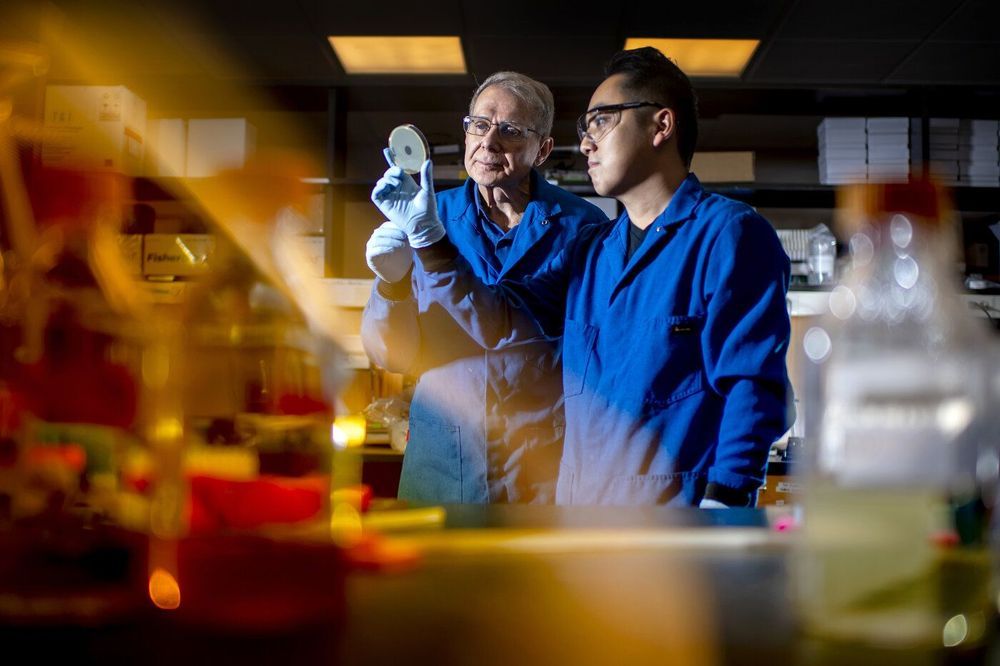
Researchers at Northeastern have discovered a new antibiotic that could treat infections caused by some of the nastiest superbugs humanity is facing in the antibiotic resistance crisis.

But in the last few years, AI has changed the game. Deep-learning algorithms excel at quickly finding patterns in reams of data, which has sped up key processes in scientific discovery. Now, along with these software improvements, a hardware revolution is also on the horizon.
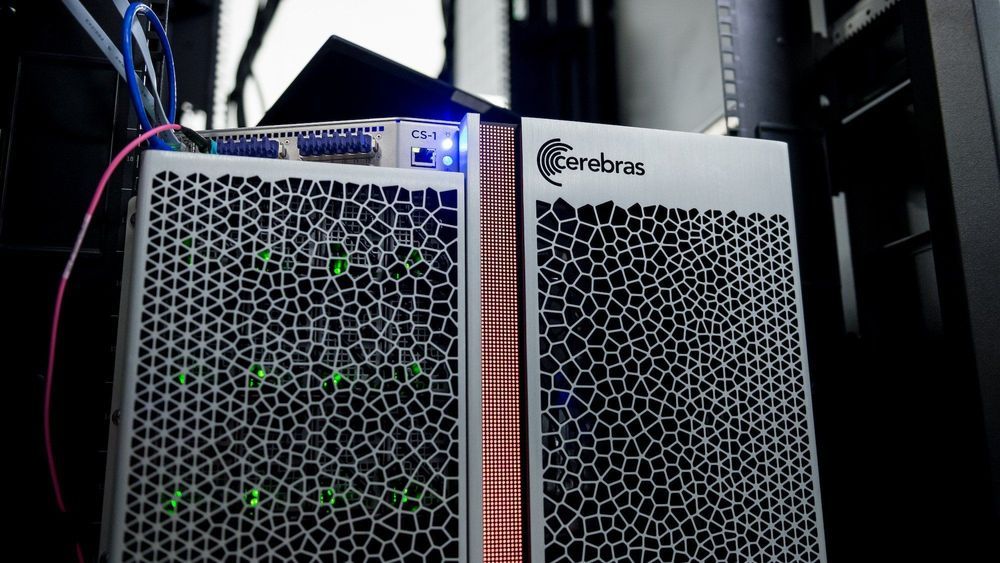
Yesterday Argonne announced that it has begun to test a new computer from the startup Cerebras that promises to accelerate the training of deep-learning algorithms by orders of magnitude. The computer, which houses the world’s largest chip, is part of a new generation of specialized AI hardware that is only now being put to use.
“We’re interested in accelerating the AI applications that we have for scientific problems,” says Rick Stevens, Argonne’s associate lab director for computing, environment, and life sciences. “We have huge amounts of data and big models, and we’re interested in pushing their performance.”

The brain cortex, the outside layer of our brain often referred to as grey matter, is one of the most complex structures found in living organisms. It gives us the advanced cognitive abilities that distinguish us from other animals.
Neuroscientist Professor Pierre Vanderhaeghen (VIB-KU Leuven, Université libre de Bruxelles) explains what makes the human brain so unique: “One remarkable feature of human neurons is their unusually long development. Neural circuits take years to reach full maturity in humans, but only a few weeks in mice or some months in monkeys.”
“This long period of maturation allows much more time for the modulation of brain cells and circuits, which allows us to learn efficiently for an extended period up until late adolescence. It’s a very important and unique feature for our species, but what lies at its origin remains a mystery.”


A particularly harmful byproduct of oxidized cholesterol appears to be a primary cause of atherosclerosis and a therapeutic target ripe for the taking. A new review takes a look at 7-ketocholesterol and its role in aging and disease.
A new review exploring 7-ketocholesterol
We recently reported on the launch of Underdog Pharma, a new startup biotech company that was spun off from many years of research at SENS Research Foundation and is focused on the problem of 7-ketocholesterol.
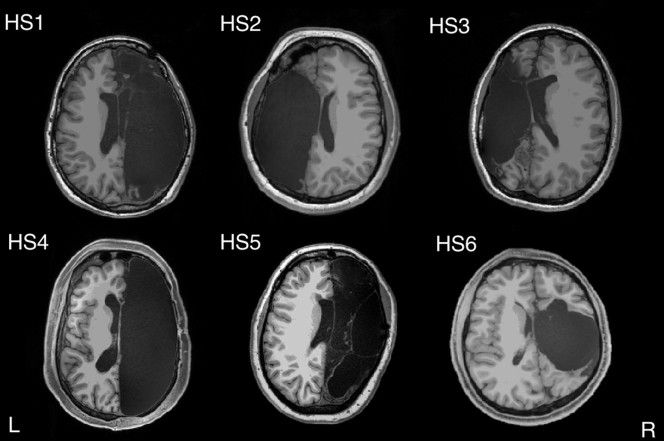


They found 68,809 cases of anal cancer and 12,111 deaths from the disease.
The vast majority of these cases are associated with the human papillomavirus, but about three-quarters of American adults don’t know HPV causes the disease, a recent study, also led by Deshmukh, found.
He called the findings “shocking.”

Several newly published studies are reporting evidence affirming a growing hypothesis that links inflammation with cognitive deficits. As well as associating inflammation with the cognitive deficits seen in conditions such as bipolar disorder and Alzheimer’s, some research is even suggesting low-grade systemic inflammation in healthy subjects can result in mental sluggishness.
For some time patients suffering from chronic inflammatory conditions such as rheumatoid arthritis or inflammatory bowel disease have reported mild cognitive deficits in association with their disease. Despite a number of correlational studies finding connections between inflammation and cognitive performance, homing in on any clear causal links has been a little tricky for scientists.
“Scientists have long suspected a link between inflammation and cognition, but it is very difficult to be clear about the cause and effect,” explains Ali Mazaheri, from the University of Birmingham. “For example, people living with a medical condition or being very overweight might complain of cognitive impairment, but it’s hard to tell if that’s due to the inflammation associated with these conditions or if there are other reasons.”