Residents in Wuhan, China are shouting encouragement and singing songs from their apartment windows to boost morale amidst the coronavirus quarantine.
Category: biotech/medical – Page 2,426
The genetic secret of night vision
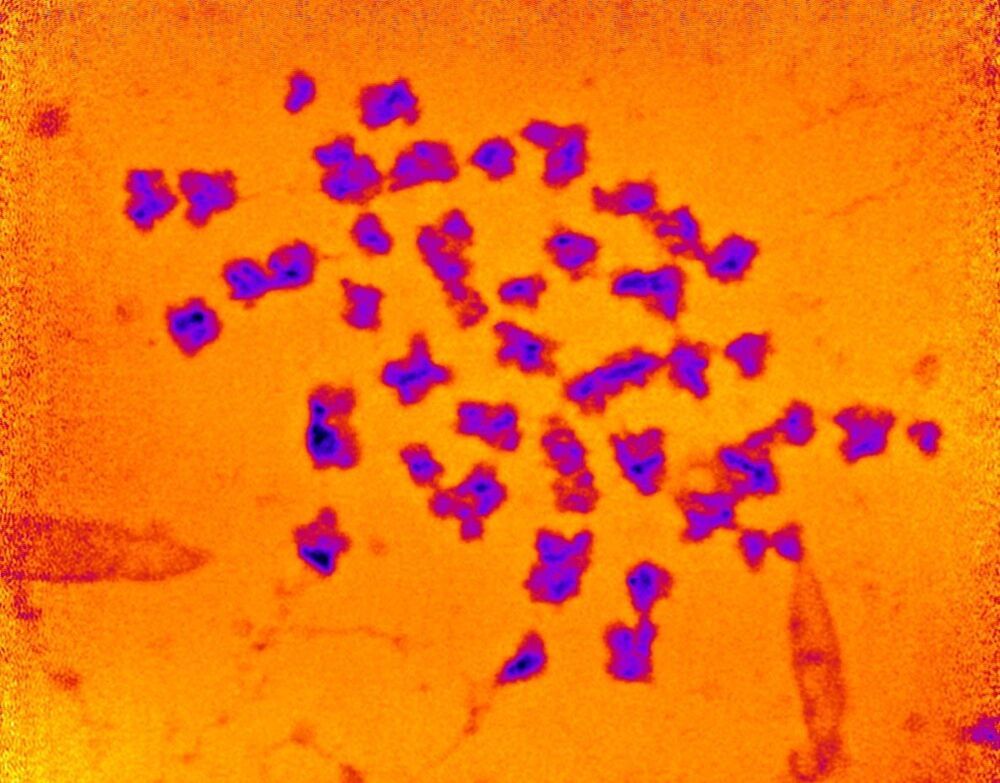
One of the most remarkable characteristics of the vertebrate eye is its retina. Surprisingly, the sensitive portions of the photoreceptor cells are found on the hind side of the retina, meaning that light needs to travel through living neural tissue before it can be detected. While the origin of the high optical quality of the retina remain largely uninvestigated, it has long been proposed that a peculiar DNA organization would serve to improve vision in nocturnal mammals. Researchers at the Max Planck Institute of Molecular Cell Biology and Genetics in Dresden now showed that the optical quality of the mouse retina increases in the first month after birth that imparts improved visual sensitivity under low light conditions. This improvement is caused by a compact organization of the genetic material in the cell nucleus of rod photoreceptor cells that responsible for dim light vision.
Our retina is an amazing feature of the eye of vertebrates. This light-sensitive layer of tissue is lining the back of the eye-ball and acts as a screen for images projected by the lens. The retina has a thickness of 130 to 500 micrometer and is composed of five layers of dense neural tissue. Since the sensitive portions of the photoreceptor cells are found on the hind side of the retina, light needs to travel through this dense neural tissue to reach the photoreceptors. Researchers suggested that a certain compact arrangement of DNA in the cell nucleus of the rod photoreceptors could improve night vision in nocturnal animals but it remained unclear if and how night vision would benefit from this organization of genetic material.
Scientists around the research group leader Moritz Kreysing at the Max Planck Institute of Molecular Cell Biology and Genetics together with colleagues from the TU Dresden and the Biozentrum at the Ludwig Maximilians Universität in Munich wanted to find out, if and why cells of retinal neural cells are optically special and what the implications for the transparency of the retina are. Transparency in this context means that each rod cell scatters less light, which causes it to be more transparent.
Americans should prepare for coronavirus spread in U.S., CDC says
Top U.S. public health officials said Tuesday that Americans should prepare for the spread of the coronavirus in communities across the country.
“It’s not so much a question of if this will happen any more, but rather more a question of exactly when this will happen and how many people in this country will have severe illness,” Dr. Nancy Messonnier, the head of Centers for Disease Control and Prevention’s National Center for Immunization and Respiratory Diseases, said during a media briefing Tuesday.
Download the NBC News app for breaking news.
CRISPR handbook – Free PDF download
The CRISPR Handbook – Enabling Genome Editing and Transforming Life Science Research is GenScript’s comprehensive guide to the CRISPR/Cas9 genome editing revolution. This new resource includes:
An introductory history of genome editing. The current applications for CRISPR/Cas9 in genome editing. An updated overview of expanded CRISPR research applications, including immunoprecipitation, epigenetic modification, live imaging, and therapeutics. New CRISPR/Cas9 workflows and case studies to help you start using this technology in your research.
CRISPR Handbook – Enabling Genome Editing and Transforming Life Science Research. Free PDF download on the CRISPR/Cas9 genome editing revolution, including CRISPR KO & KI workflows, case studies, and references.
Diabetes in mice cured rapidly using human stem cell strategy
Researchers have converted human stem cells into insulin-producing cells and demonstrated in mice infused with such cells that blood sugar levels can be controlled and diabetes functionally cured for nine months.
The findings, from researchers at Washington University School of Medicine in St. Louis, are published online Feb. 24 in the journal Nature Biotechnology.
“These mice had very severe diabetes with blood sugar readings of more than 500 milligrams per deciliter of blood — levels that could be fatal for a person — and when we gave the mice the insulin-secreting cells, within two weeks their blood glucose levels had returned to normal and stayed that way for many months,” said principal investigator Jeffrey R. Millman, PhD, an assistant professor of medicine and of biomedical engineering at Washington University.
Oldest reconstructed bacterial genomes link farming, herding with emergence of new disease
The Neolithic revolution, and the corresponding transition to agricultural and pastoralist lifestyles, represents one of the greatest cultural shifts in human history, and it has long been hypothesized that this might have also provided the opportunity for the emergence of human-adapted diseases. A new study published in Nature Ecology & Evolution led by Felix M. Key, Alexander Herbig, and Johannes Krause of the Max Planck Institute for the Science of Human History studied human remains excavated across Western Eurasia and reconstructed eight ancient Salmonella enterica genomes—all part of a related group within the much larger diversity of modern S. enterica. These results illuminate what was likely a serious health concern in the past and reveal how this bacterial pathogen evolved over a period of 6,500 years.
Searching for ancient pathogens
Most pathogens do not cause any lasting impact on the skeleton, which can make identifying affected archaeological remains difficult for scientists. In order to identify past diseases and reconstruct their histories, researchers have turned to genetic techniques. Using a newly developed bacterial screening pipeline called HOPS, Key and colleagues were able to overcome many of the challenges of finding ancient pathogens in metagenomics data.