High blood concentrations of omega-3 fatty acids, which oily fish such as salmon are known to be rich in, can increase your life expectancy by nearly five years.

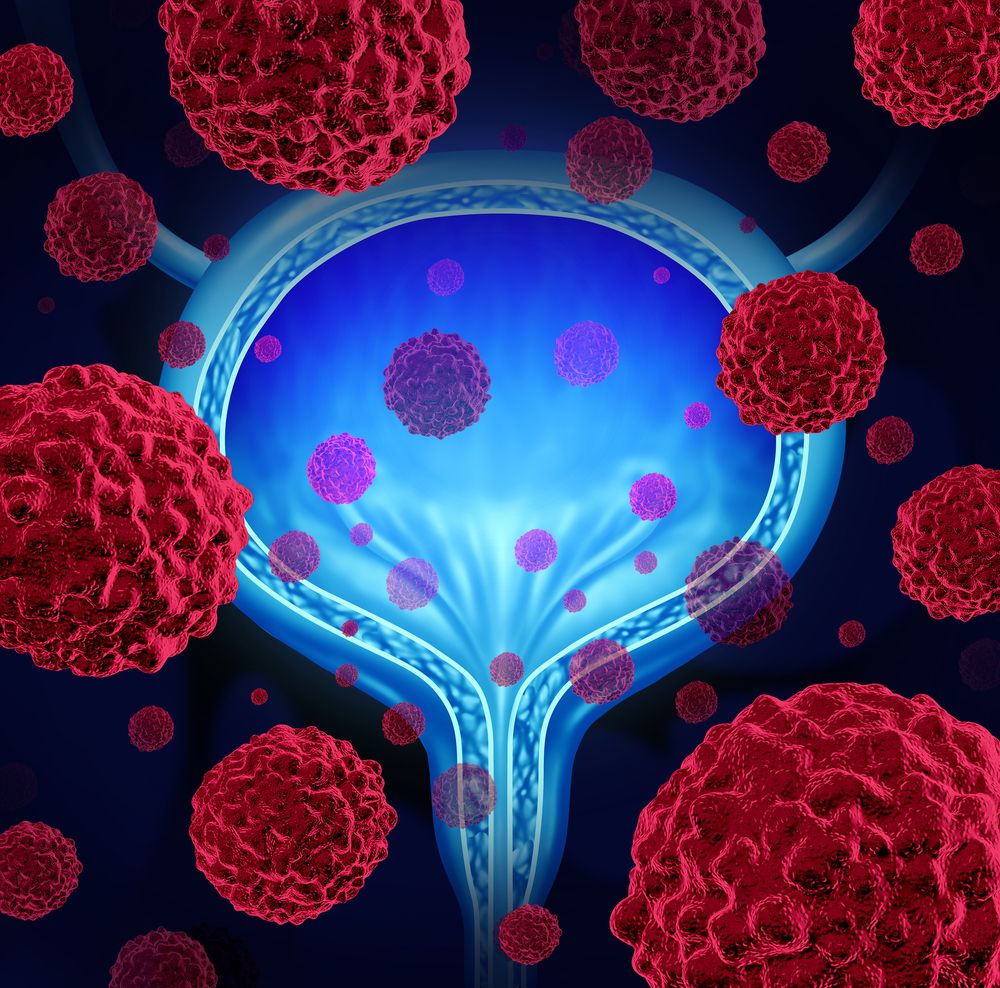
The company that makes SG was testing it mainly against other cancers, but Dr. Tagawa, who is also a professor of urology and a member of the Sandra and Edward Meyer Cancer Center at Weill Cornell Medicine, and his colleagues showed in a 2015 pilot trial that it shrank tumors in three of six patients with advanced urothelial carcinoma that had not responded to platinum-based chemotherapy. That trial led to the enrollment of a group of 45 patients with treatment-refractory urothelial carcinoma (amongst many others with various advanced cancers) with encouraging results.
A new treatment for advanced urothelial cancer was effective with tolerable side effects in an international, multi-center phase 2 clinical trial led by investigators at Weill Cornell Medicine and NewYork-Presbyterian.
The trial results prompted a U.S. Food and Drug Administration (FDA) accelerated approval of the treatment on April 13, giving patients with this very aggressive type of cancer a new therapeutic option.
In the study, published online April 30 in the Journal of Clinical Oncology, the researchers gave the treatment, sacituzumab govitecan (SG), previously known as IMMU-132 and now by the trade name Trodelvy, to 113 patients with advanced urothelial carcinoma, the most common type of bladder cancer. The trial population had progressed despite treatment with platinum-based chemotherapy and immune-boosting checkpoint inhibitors, and overall had a median of 3 prior lines of therapy. Treatment with SG was followed by sustained reductions in tumor size for 31 patients (27 percent), including complete tumor disappearance in six patients. The most common severe side effects included very low white blood cell count in 34 percent (with fever in 10 percent) and severe diarrhea in 9 percent, which were managed with dose adjustment and best supportive care.


Right now, protection against Covid-19 comes via an injection. But in future, those vaccines could come from inhalers or even pills.
In a white, airy laboratory in Medicon Village, one of southern Sweden’s largest science parks, chemist Ingemo Andersson holds up a thin, plastic inhaler, half the size of a matchbox.
Her team is hoping this tiny product could play a big role in the global fight against coronavirus allowing people to take powdered versions of future vaccines at home.
Researchers are looking at easier ways for people to get the vaccine, including via inhalers and tablets.

The news we like: “In five to 10 years time from now, we’ll have a new, special kind of drugs: longevity drugs. And unlike today’s medication, which always focused on one disease, this kind of drug will will give us an opportunity to influence aging as a whole and a very fatalistic way, working on healthspan, not only on lifespan… it’s very likely that this new drug will be developed with the help of artificial intelligence, which will compress drug development cycle by two or three times from what they are today.”
Ahead of the launch of his new book Growing Young, Sergey Young joins us for a video interview to discuss longevity horizons, personal health strategies and disruptive tech – and how we are moving towards radically extending our lifespan and healthspan.
Sergey Young, the longevity investor and founder of the Longevity Vision Fund is on a mission to extend healthy lifespans of at least one billion people. His new book, Growing Young, is released on 24th August and is already rising up the Amazon charts.
“It’s been amazing three years journey,” Young told Longevity. Technology. “I spent hours and days in different labs in the best clinics in the world and best academic institutions. I even talked to Peter Jackson! I’m very excited to share with everyone, so every reader can start their longevity journey today.”

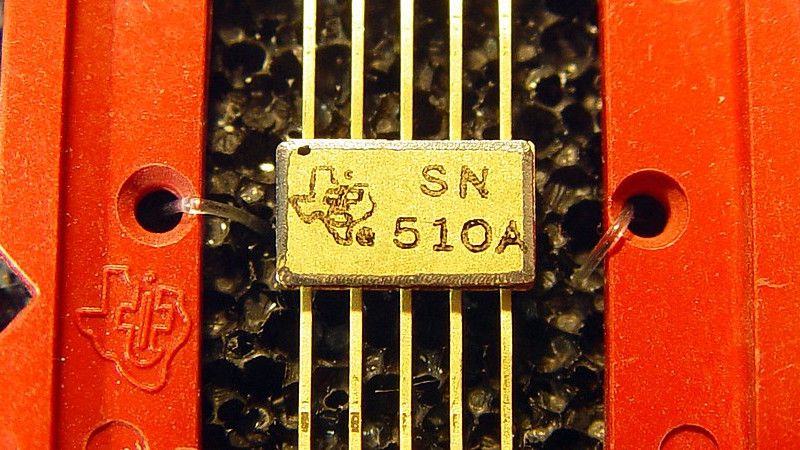
Over six decades of integrated circuit production we’ve become used to their extreme reliability and performance for a very reasonable price. But what about those first integrated circuits from the early 1960s? Commercial integrated circuits appeared in 1961, and recently Texas Instruments published a fascinating retrospective on the development of their first few digital ICs.
TI’s original IC product on the market was the SN502, a transistor flip-flop that debuted at $450 (about $4100 today), which caught the interest of NASA engineers who asked for logic functions with a higher performance level. The response was the development of the 51 series of logic chips, whose innovation included on-chip interconnects replacing the hand interconnects of the SN502. Their RCTL logic gave enough performance and reliability for NASA to use, and in late 1963 the Explorer 18 craft carried a telemetry system using the SN510 and SN514 chips into orbit. 52 and 53 series chips quickly followed, then in 1964 the 54 series TTL chips which along with their plastic-encapsulated 74 series equivalents are still available today.
Considering that in 1961 the bleeding edge of integrated circuit logic technology was a two-transistor chip with hand interconnects, it seems scarcely conceivable that by ten years later in 1971 the art had advanced to the point at which the first commercially available microprocessors would be produced. It’s unlikely that many of us will stumble upon any of the three-figure SN1-series logic chips, but to read about them is a fascinating reminder of this pivotal moment in the history of electronics.
DeepMind CEO and co-founder. “We believe this work represents the most significant contribution AI has made to advancing the state of scientific knowledge to date. And I think it’s a great illustration and example of the kind of benefits AI can bring to society. We’re just so excited to see what the community is going to do with this.” https://www.futuretimeline.net/images/socialmedia/
AlphaFold is an artificial intelligence (AI) program that uses deep learning to predict the 3D structure of proteins. Developed by DeepMind, a London-based subsidiary of Google, it made headlines in November 2020 when competing in the Critical Assessment of Structure Prediction (CASP). This worldwide challenge is held every two years by the scientific community and is the most well-known protein modelling benchmark. Participants must “blindly” predict the 3D structures of different proteins, and their computational methods are subsequently compared with real-world laboratory results.
The CASP challenge has been held since 1994 and uses a metric known as the Global Distance Test (GDT), ranging from 0 to 100. Winners in previous years had tended to hover around the 30 to 40 mark, with a score of 90 considered to be equivalent to an experimentally determined result. In 2018, however, the team at DeepMind achieved a median of 58.9 for the GDT and an overall score of 68.5 across all targets, by far the highest of any algorithm.
Then in 2020, version 2.0 of their AlphaFold program competed in the CASP, winning once again – this time with even greater accuracy. The AlphaFold 2.0 achieved a median of 92.4 across all targets, with its average margin of error comparable to the width of an atom (0.16 nanometres). Andrei Lupas, biologist at the Max Planck Institute in Germany who assessed the performances of each team in CASP, said of AlphaFold: “This will change medicine. It will change research. It will change bioengineering. It will change everything.”
“Balancing that, I clearly state that my goal is not longevity, not even modest longevity. It’s just reversal of diseases of aging, which really is classic medicine. Q: Which takes me to the next question: do we even know how to aim at life extension? I don’t think we do. I think if we get serious aging reversal, it’s something that we can continue to improve on, just like we improved on transportation from the first wheel to rocket ships,” I’ll be honest, I disagree as we have some improvement in humans indicated from TRIM and TAME and plasma filtering. Church’s work is very important though.
Professor of Genetics at Harvard Medical School and one of the most prominent geroscientists, George Church works on gene therapies that can potentially reverse age-related diseases. We had the opportunity to interview this prolific researcher and entrepreneur, who is involved in dozens of startups on topics ranging from the current state of gene therapy to his recent attempt to auction off his genome, one of the first sequenced human genomes in the world, as an NFT.
What have been the successes and the failures of gene therapy in recent years? What do you expect to happen in the next few years?
So, most of the big failures of gene therapy happened at the very beginning, around the year 2000, almost two decades ago, when a couple of people died from an LMO2 oncogene, and one person died from an immune reaction to an adenovirus vector. So, that was 20 years ago. Fast forward to now, and gene therapies are mostly succeeding, hundreds of them are in clinical trials, you have dozens that have been approved by the FDA.
“Our study raises the possibility of using therapeutic drugs, gene editing, or other strategies to make epigenetic modifications that tap into the latent regenerative capacity of inner ear cells as a way to restore hearing,” said Segil. “Similar epigenetic modifications may also prove useful in other non-regenerating tissues, such as the retina, kidney, lung, and heart.”
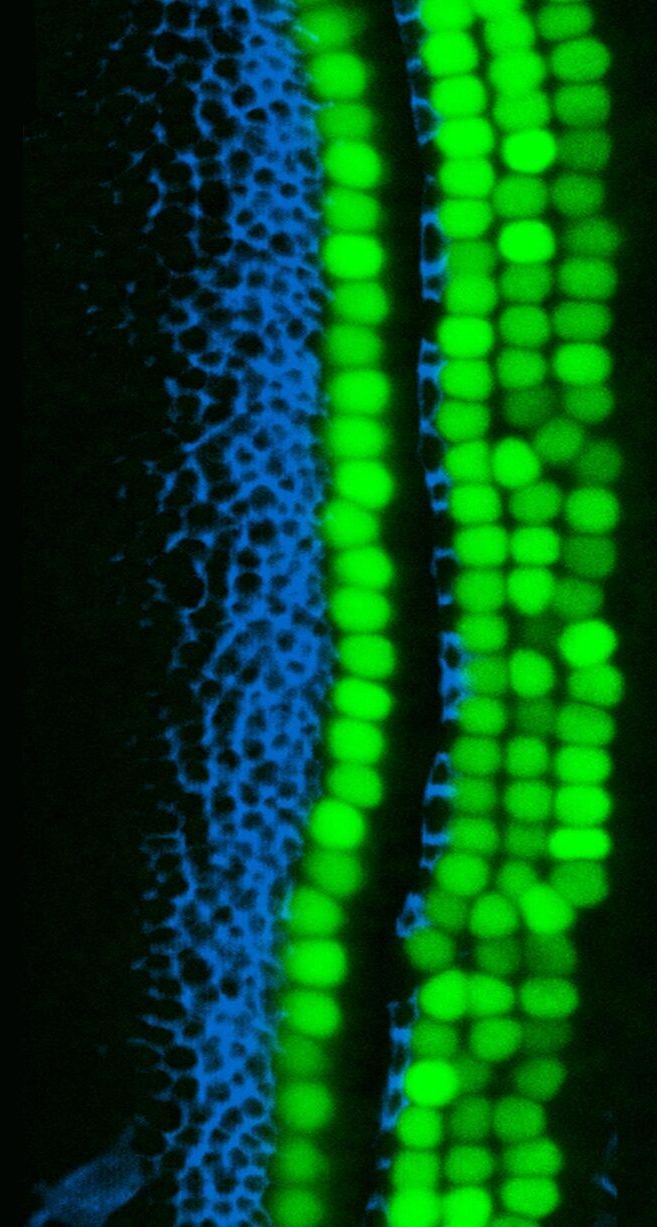
Scientists from the USC Stem Cell laboratory of Neil Segil have identified a natural barrier to the regeneration of the inner ear’s sensory cells, which are lost in hearing and balance disorders. Overcoming this barrier may be a first step in returning inner ear cells to a newborn-like state that’s primed for regeneration, as described in a new study published in Developmental Cell.
“Permanent hearing loss affects more than 60 percent of the population that reaches retirement age,” said Segil, who is a Professor in the Department of Stem Cell Biology and Regenerative Medicine, and the USC Tina and Rick Caruso Department of Otolaryngology – Head and Neck Surgery. “Our study suggests new gene engineering approaches that could be used to channel some of the same regenerative capability present in embryonic inner ear cells.”
In the inner ear, the hearing organ, which is the cochlea, contains two major types of sensory cells: “hair cells” that have hair-like cellular projections that receive sound vibrations; and so-called “supporting cells” that play important structural and functional roles.