A new generation of scientists is growing up with CRISPR technology. Here’s how some high school students learn to edit genes.
Our bodies can’t plug-and-play organs like replacement computer parts. The first rule of organ transplant is that the donor organs need to “match” with the host to avoid rejection. That is, the protein molecules that help the body discriminate between self and other need to be similar—a trait common (but not guaranteed) among members of the same family.
The key for getting an organ to “take” is reducing destructive immune attacks—the holy grail in transplantation. One idea is to genetically engineer the transplanted organ so that it immunologically “fits” better with the recipient. Another idea is to look beyond the organ itself to the source of rejection: haemopoietic stem cells, nestled inside the bone marrow, that produce blood and immune cells.
DISOT’s theory is simple but clever: swap out the recipient’s immune system with the donor’s, then transplant the organ. The recipient’s bone marrow is destroyed, but quickly repopulates with the donor’s stem cells. Once the new immune system takes over, the organ goes in.
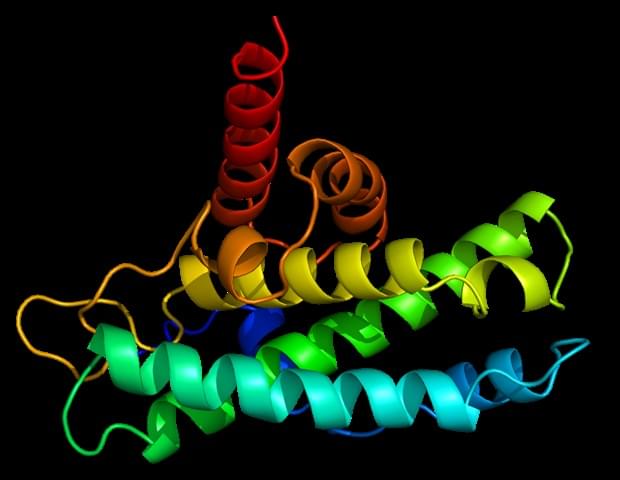
Yet when faced with enormous protein complexes, AI faltered. Until now. In a mind-bending feat, a new algorithm deciphered the structure at the heart of inheritance—a massive complex of roughly 1,000 proteins that helps channel DNA instructions to the rest of the cell. The AI model is built on AlphaFold by DeepMind and RoseTTAfold from Dr. David Baker’s lab at the University of Washington, which were both released to the public to further experiment on.
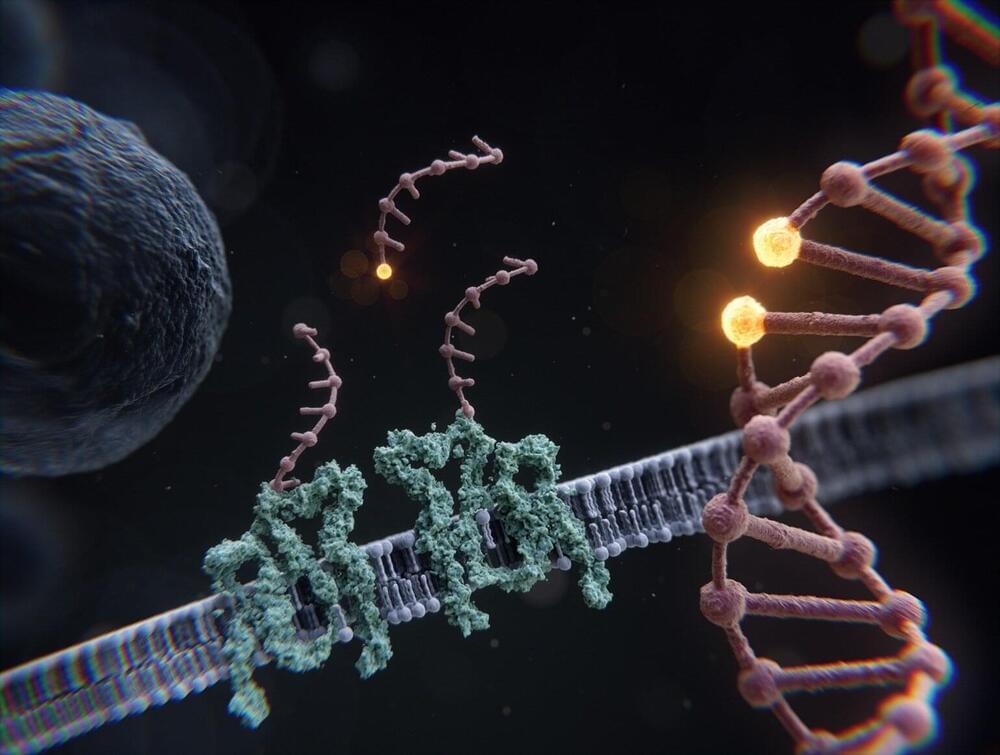
Our genes are housed in a planet-like structure, dubbed the nucleus, for protection. The nucleus is a high-security castle: only specific molecules are allowed in and out to deliver DNA instructions to the outside world—for example, to protein-making factories in the cell that translate genetic instructions into proteins.
At the heart of regulating this traffic are nuclear pore complexes, or NPCs (wink to gamers). They’re like extremely intricate drawbridges that strictly monitor the ins and outs of molecular messengers. In biology textbooks, NPCs often look like thousands of cartoonish potholes dotted on a globe. In reality, each NPC is a massively complex, donut-shaped architectural wonder, and one of the largest protein complexes in our bodies.
Omuterema AkhahendaAdmin.
I remember when my friends worked at a Motorola Chip fabrication plant in San Antonio. They had the facilities, as well as skilled labor. However, cheaper labor led many to invest abroad. I even changed my major from computer science, as I heard of thi… See more.
Anne KristoffersenWell — Orbital semiconductor fabrication should be pursued, there are so many benefits to making chips in a naturally micro-gravity, hard-vacuum environment.
Notably, you aren’t using any water, and your silicon wafers can be arbitrarily large.… See more.
1 Reply.
View 6 more comments.
Parents of the future rejoice! Scientists in China have developed an AI nanny that they say could one day take care of human fetuses in a lab.
Researchers in Suzhou, China, claim to have created a system that can monitor and care for embryos as they grow into fetuses while growing inside an artificial womb, The South China Morning Post reports.
Nanotechnologist and co-founder of the Black in Nanotech initiative, Olivia Geneus. (Courtesy: Alexander Harold) Welcome to this Physics World Nanotechnology Briefing, which showcases the breadth of applications of modern nanotechnology.
Olivia Geneus is one of the growing number of scientists who are developing nanotechnologies for medicine. In an interview, the PhD student at the State University of New York at Buffalo explains how she is developing nanoparticles designed to cross the blood–brain barrier in order to image and destroy brain cancer cells. Geneus also talks about Black in Nanotech Week, which she co-founded, and the need to encourage Black children to consider careers in science.
Ed Lester of the UK’s University of Nottingham knows that there are myriad uses for nanoparticles. In 2007 he founded the company Promethean Particles when he realized industrial users were not able to source nanoparticles in the quantities and quality that they required. In an interview, Lester talks about some of the company’s development projects including nanoparticles for aviation, healthcare and energy.
Takao Someya and colleagues at the University of Tokyo have developed the first artificial-skin patch that does not affect the touch sensitivity of the real skin beneath it. The new ultrathin sensor could be used in applications as diverse as prosthetics and human-machine interfaces.
“A wearable sensor for your fingers has to be extremely thin,” explains Tokyo’s Sunghoon Lee. “But this obviously makes it very fragile and susceptible to damage from rubbing or repeated physical actions.” For this reason most e-skins developed to date been relatively thick and bulky.
In contrast, the sensor developed by the Tokyo team is thin and porous and consists of two layers (Science 370 966). The first layer is an insulating mesh-like network comprising polyurethane fibres around 200–400 nm thick. The second layer is a network of lines that makes up the functional electronic part of the device – a parallel-plate capacitor. This is made of gold on a supporting scaffold of polyvinyl alcohol (PVA), a water-soluble polymer often found in contact lenses. Once this layer has been fabricated, the PVA is washed away to leave only the gold support. The finished pressure sensor is around 13 μ m thick.