Discover how THALES collaborates with the CNRS to identify new genetic markers leading to the development of pediatric cancers, thereby contributing to the improvement of patient care.


Lung cancer screening is crucial for decreasing the death count from the disease but the government can’t scan everyone’s lungs. Here is an AI that identifies people who actually need screening.
Lung cancer is the deadliest cancer type, killing over a million people annually across the globe. The disease is responsible for the highest number of cancer deaths in both men and women in the US.
In fact, the death toll from lung cancer among women and men is nearly triple that of breast cancer and prostate cancer, respectively.
Venture Investing To Catalyze The Next Generation Of Founder-Led, Longevity Biotech Companies — Dr. Alex Colville, Ph.D., Co-Founder and General Partner — age1.
Dr. Alex Colville, Ph.D. is Co-Founder and General Partner of age1 (https://age1.com/), a venture capital firm focused on catalyzing the next generation of founder-led, longevity biotech companies, with a strategy of building a community of visionaries advancing new therapeutics, tools, and technologies targeting aging and age-related diseases.
With a recent initial closing of US$35 million, age1 will be focusing on founders and companies at the earliest stages of first-money in, pre-seed and seed funding, and is resourced to continue to support companies through later rounds.
Dr. Colville previously established the biotech arm of Starbloom Capital and served as founding Chief of Staff of Amaranth Foundation, where he led: the foundation’s support of skilled researchers and ambitious moonshot projects in the longevity field, and helped to advance their lobbying efforts; the TIME Initiative (a group with mission to activate undergraduate students’ interest in aging biology); the Marine Biology Laboratory Biology of Aging Summer Course, among other programs.
Dr. Colville completed his Ph.D. in Genetics at Stanford University studying the biology of aging in Dr. Thomas Rando’s lab while consulting for several family offices, the R&D team of Rubedo Life Sciences, and the business development team of Maze Therapeutics. Prior to his Ph.D., while at Northeastern University completing his Bachelor of Science (B.S.) in Chemical Engineering with a Minor in Biochemical Engineering, he advised pharma companies as a management consultant at Putnam Associates, a boutique life sciences consulting firm.

Professor René Ketting’s team at the Institute of Molecular Biology (IMB) in Mainz, Germany, along with Dr. Sebastian Falk’s group at the Max Perutz Labs in Vienna, Austria, have discovered a new enzyme, PUCH, which plays a key role in preventing the spread of parasitic DNA
DNA, or deoxyribonucleic acid, is a molecule composed of two long strands of nucleotides that coil around each other to form a double helix. It is the hereditary material in humans and almost all other organisms that carries genetic instructions for development, functioning, growth, and reproduction. Nearly every cell in a person’s body has the same DNA. Most DNA is located in the cell nucleus (where it is called nuclear DNA), but a small amount of DNA can also be found in the mitochondria (where it is called mitochondrial DNA or mtDNA).
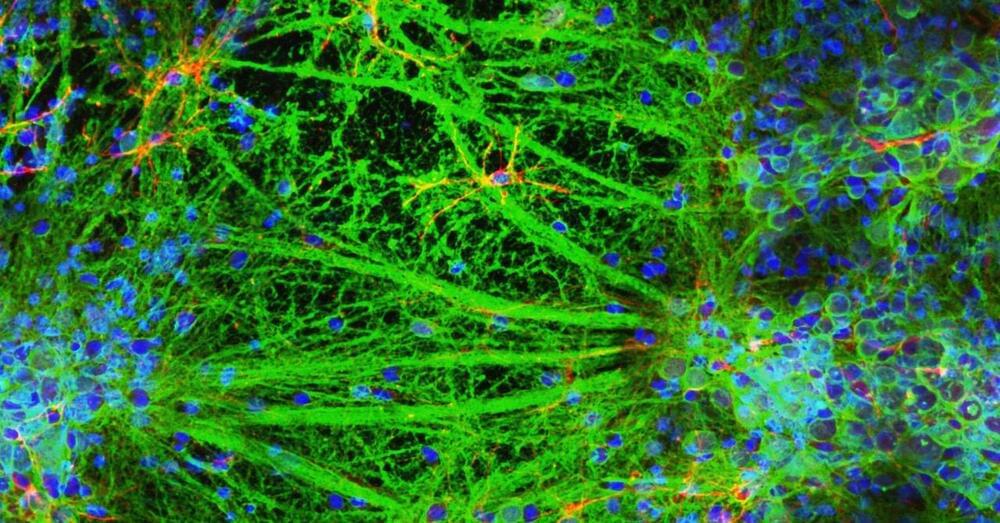

Summary: Neuroscientists delved into the mechanisms behind true and false memories. Their study reveals that electrical signals in the hippocampus can differentiate between the imminent recall of authentic versus fabricated memories.
By monitoring neural activity in epilepsy patients, the team identified distinct patterns ahead of a correct or false recall. These findings not only offer insights into memory retrieval but may also pave the way for novel therapeutic interventions for disorders like PTSD.

But are you ready to explain this complex disease in terms that your child can understand?
Keep It Simple for Young Children Use language that is appropriate for your child’s age to describe what happens when asthma flares-up. Try to avoid medical terminology and details that will confuse a young child. Stick to the basic information at first. This includes making your child aware of what triggers symptoms and giving very basic understanding of what happens to cause the symptoms. Visit Just for Kids for story books, games and puzzles that explain asthma in terms your child can understand.
Medication management is not necessarily an issue with young children, as it is your responsibility as a caregiver to make certain you give your child medication as prescribed. Set a routine so it’s easy to remember when these medications should be taken. Practice with a nebulizer, peak flow meter and spacer so that your child understands how each device helps manage asthma.
150 YEARS MAXIMUM BIOLOGICAL AGE — “We observed, that the age-dependent population DOSI distribution broadening could be explained by a progressive loss of physiological resilience measured by the DOSI auto-correlation time. Extrapolation of this trend suggested that DOSI recovery time and variance would simultaneously diverge at a critical point of 120 − 150 years of age corresponding to a complete loss of resilience. The observation was immediately confirmed by the independent analysis of correlation properties of intraday physical activity levels fluctuations collected by wearable devices. We conclude that the criticality resulting in the end of life is an intrinsic biological property of an organism that is independent of stress factors and signifies a fundamental or absolute limit of human lifespan.”
We investigated the dynamic properties of the organism state fluctuations along individual aging trajectories in a large longitudinal database of CBC measurements from a consumer diagnostics laboratory. To simplify the analysis, we used a log-linear mortality estimate from the CBC variables as a single quantitative measure of aging process, henceforth referred to as dynamic organism state index (DOSI). We observed, that the age-dependent population DOSI distribution broadening could be explained by a progressive loss of physiological resilience measured by the DOSI auto-correlation time. Extrapolation of this trend suggested that DOSI recovery time and variance would simultaneously diverge at a critical point of 120 − 150 years of age corresponding to a complete loss of resilience. The observation was immediately confirmed by the independent analysis of correlation properties of intraday physical activity levels fluctuations collected by wearable devices. We conclude that the criticality resulting in the end of life is an intrinsic biological property of an organism that is independent of stress factors and signifies a fundamental or absolute limit of human lifespan.
P.O. Fedichev is a shareholder of Gero LLC. A.Gudkov is a member of Gero LLC Advisory Board. T.V. Pyrkov, K. Avchaciov, A.E. Tarkhov, L. Menshikov, and P.O. Fedichev are employees of Gero LLC.