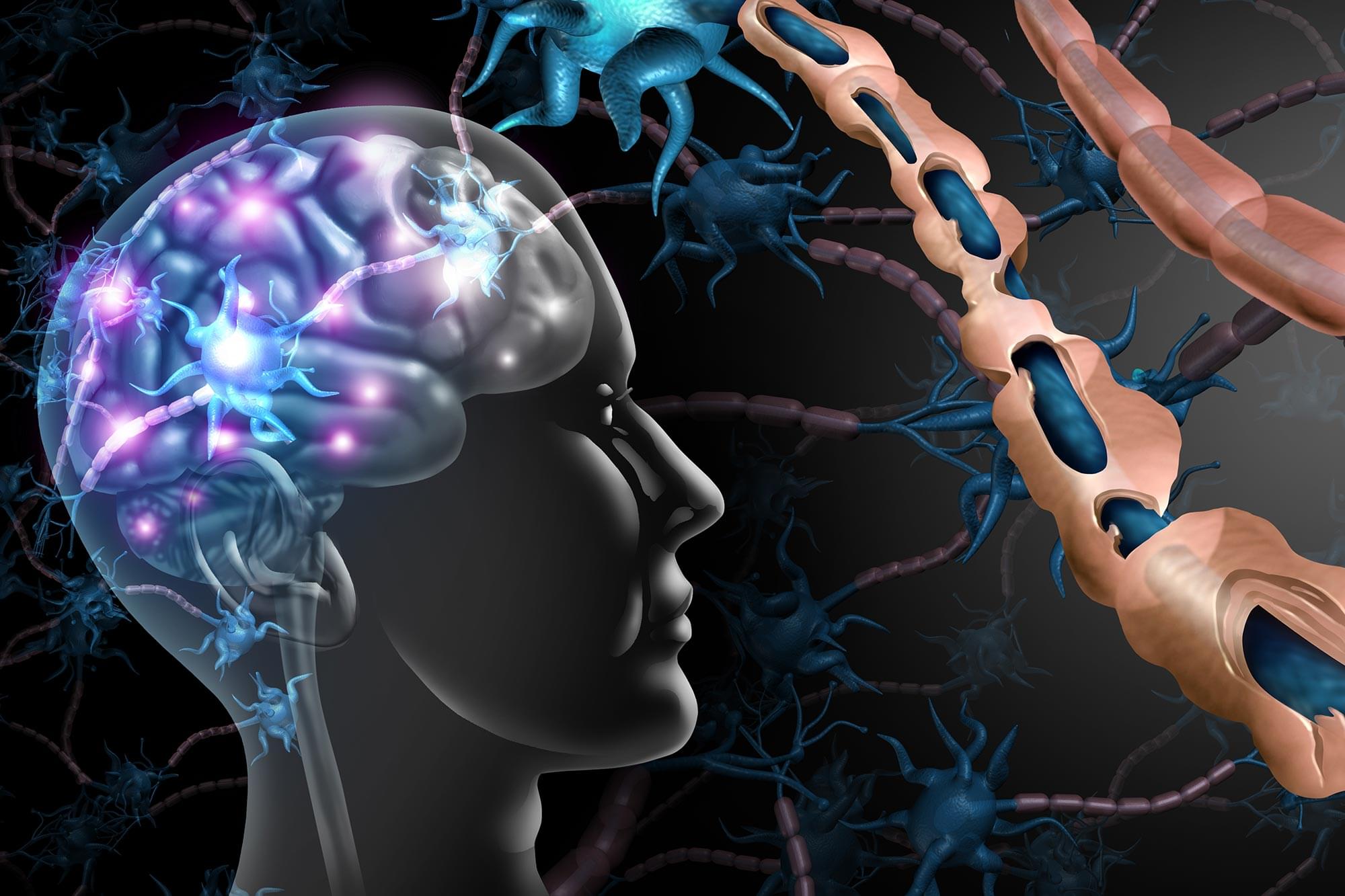
Does mono cause MS? A new study shows that people with a history of infectious mononucleosis are three times more likely to develop Multiple Sclerosis.
Online now: Body-wide multi-omic counteraction of aging with GLP-1R agonism: (Cell Metabolism 37, 2362–2380.e1–e8; December 2, 2025)
Online now: (Cell Metabolism 37, 2362–2380.e1–e8; December 2, 2025)
Following publication, Steve Horvath and colleagues at the Clock Foundation alerted us to a platemap error in the DNA methylation (DNAm) data. Our investigation pinpointed the potential source of this error. We provided samples on 96-well plates in a row-wise orientation instead of the column-wise orientation specified in the Clock Foundation’s protocol. Subsequently, incorrect assignment of metadata for 36 samples (out of 459) that contributed data to the paper likely occurred during the transposition and rearrangement of a subset of samples on two incompletely filled plates prior to the assay. Working with Clock Foundation colleagues, we have corrected the metadata for 33 samples and discarded 3 samples for which we could not retrieve the metadata with total certainty.
This error impacted DNAm data for the following tissues:
A team led by principal investigators Bobo Dang and Ting Zhou at Westlake University/Westlake Laboratory have developed a high-throughput platform for engineering fast-acting covalent protein therapeutics. Their study, titled “A high-throughput selection system for fast-acting covalent protein drugs” published in Science, opens new avenues for next-generation biologics.
Covalent small-molecule drugs have shown great success in cancer therapy by forming irreversible bonds with their targets. This has inspired efforts to extend covalent strategies to protein therapeutics, especially engineered miniproteins. However, their development is limited by a kinetic mismatch: Miniproteins are rapidly cleared in vivo, whereas covalent bond formation is typically slow. In addition, high-throughput platforms for systematically optimizing covalent protein reactivity have been lacking.
To address this challenge, the researchers proposed that precise spatial positioning of chemical warheads within protein scaffolds could enable molecular preorganization, thereby accelerating covalent bond formation without increasing intrinsic reactivity.
As part of the JCI’s Review Series on Neurodegeneration, Sonja W. Scholz and colleagues highlight key genomic technologies advancing diagnosis and research in neurodegeneration.
1Neurodegenerative Diseases Research Section, National Institute of Neurological Disorders and Stroke;
2Neurogenetics Branch, National Institute of Neurological Disorders and Stroke; and.
3Neuromuscular Diseases Research Section, National Institute on Aging, National Institutes of Health (NIH), Bethesda, Maryland, USA.
Imagine treating back pain not with surgery, not with opioids—but by using your own stem cells to repair the damage at its source.
Lance Alstodt is President, CEO, and Chairman of BioRestorative Therapies, Inc. (https://biorestorative.com/), a publicly traded regenerative medicine company focused on developing stem cell-based therapies to treat highly prevalent conditions, including chronic lower back pain and metabolic disorders.
With more than 25 years of experience across healthcare investment banking, medical technology, and company building, Lance brings a unique perspective at the intersection of science and capital markets. Prior to joining BioRestorative, he was the founder and CEO of MedVest Consulting, advising healthcare companies on growth strategy, M&A, and capital formation.
Earlier in his career, Lance held senior leadership roles at firms including Leerink Partners, Oppenheimer & Co., Bank of America Merrill Lynch, and JPMorgan Chase & Co., where he specialized in healthcare and medical technology transactions.
At BioRestorative, Lance is leading the development of innovative cell therapies such as BRTX-100, an autologous mesenchymal stem cell therapy currently in Phase 2 trials for chronic lumbar disc disease, aiming to offer a non-opioid, non-surgical solution to one of the most widespread causes of disability worldwide.
#StemCells #RegenerativeMedicine #BackPainRelief #Biotech #HealthcareInnovation #MedicalBreakthrough #ChronicPain #BioTech #FutureOfMedicine #StemCellTherapy #DegenerativeDiscDisease #PainManagement #HealthTech #BiotechStocks #Longevity #MedicalInnovation #CellTherapy #NonSurgicalTreatment #OpioidCrisis #SciencePodcast #HealthcareRevolution
Glucagon-like peptide-1 (GLP-1) receptor agonists are incretin analogues that promote glucose-mediated insulin release and are used to treat type 2 diabetes mellitus and obesity. GLP-1 receptor agonists and GLP-1 and glucose-dependent insulinotropic peptide agonists have several mechanisms of action, including reduction of gastric emptying, inhibition of glucagon secretion, beneficial changes in the intestinal microbiome, and direct effects on hypothalamic nuclei to enhance satiety (which promotes weight loss). Beyond the impressive effects of GLP-1 receptor agonists on blood glucose levels and body weight, large-scale randomized, controlled trials have shown that GLP-1 receptor agonists reduce cardiovascular risk and slow progression to renal failure in persons at high risk and those with type 2 diabetes.
For some evangelical Christians, attributing mental illness to demonic forces can offer a sense of meaning, while for others, it creates harmful barriers to medical care. A recent qualitative study published in Spirituality in Clinical Practice outlines how these widespread spiritual explanations act as a double-edged sword for individuals experiencing psychological distress. The research indicates that integrating religious beliefs with standard psychiatric care may be a safer path forward for many faith communities.
Religion frequently shapes how people interpret their physical and mental health. Psychologists recognize that religious frameworks offer a primary system for individuals to make sense of the world around them. By relying on theological teachings, people construct meaning around their personal suffering. This process of religious meaning construction can influence health outcomes in both positive and negative directions.
Within evangelical Christianity, foundational teachings often emphasize the active existence of spiritual forces. This includes the belief that angels, demons, and other supernatural entities directly influence the physical world. This worldview can lead to the belief that spiritual forces cause human ailments, including severe psychological distress.
Imagine looking at a loved one and seeing their face twist into a demonic, unnatural shape. Their eyes might stretch to the sides of their head, their nose might swell, and deep, unnatural grooves might appear across their cheeks and forehead. This terrifying visual experience belongs to a rare neurological condition known medically as
In popular media and online discussions, it is sometimes referred to as “demon face syndrome.” People with this condition see human faces as severely distorted, even though their vision for everyday objects remains completely normal.
Prosopometamorphopsia is fundamentally different from a hallucination. A hallucination involves seeing something that is not actually present in the physical world. People experiencing these facial distortions are looking at a real person standing in front of them. Their brain simply alters the shape, size, color, or position of the facial features before the image reaches their conscious awareness.
After decades of intense research, surprises in the realm of semiconductors—materials used in microchips to control electrical currents—are few and far between. But with a pair of published papers, materials engineers at Stanford University debut a promising approach to using a well-studied semiconductor to improve infrared light-emitting diodes and sensors. They say the approach could lead to smaller, sleeker, and less expensive infrared technologies for environmental, medical, and industrial uses.
“We taught an old dog new tricks,” said senior author Kunal Mukherjee, an assistant professor of materials science and engineering at the Stanford School of Engineering, putting the work’s importance in perspective. “The so-called IV–VI materials we’re working with—lead selenide and lead tin selenide—are more than a hundred years old. They are among the oldest semiconductors historically recorded. We found a way to integrate them with modern technology to produce a new type of infrared diode and to control the infrared light in important ways.”
The new diode emits infrared light in a desirable range of longer wavelengths (4,000–5,000 nanometers) good for sensing gas in the air (think greenhouse gases in the sky) or in medical settings (think carbon dioxide meters).
In recent decades, the zebrafish has become one of the most valuable model organisms in scientific research. For a variety of reasons, including their genetic similarities to humans, these tiny tropical fish have helped researchers unlock secrets to diseases ranging from muscular dystrophy to melanoma. Now, Yale researchers are hoping the zebrafish will do the same for autism spectrum disorder.
In a new study, a research team generated a database of 520 U.S. Food and Drug Administration (FDA)-approved drugs and their effects on basic larval zebrafish behaviors and then used the database to identify drug candidates that reverse disrupted behaviors in zebrafish carrying mutations in autism risk genes.
These drug candidates, the researchers say, might represent targets for people carrying mutations in specific autism risk genes.