Toggle light / dark theme

COVID-19 Research: Study reveals New Details about Potentially Deadly Inflammation

A recent USC study provides new information about why SARS-CoV-2, the virus behind the COVID-19 pandemic, may elicit mild symptoms at first but then, for a subset of patients, turn potentially fatal a week or so after infection. The researchers showed that distinct stages of illness correspond with the coronavirus acting differently in two different populations of cells.

The study, published in Nature Cell Biology, may provide a roadmap for addressing cytokine storms and other excessive immune reactions that drive serious COVID-19.

The team found that when SARS-CoV-2 infects its first-phase targets, cells in the lining of the lung, two viral proteins circulate within those cells—one that works to activate the immune system and a second that, paradoxically, blocks that signal, resulting in little or no inflammation.

Advanced Microscopy Technique Offers a New Look Inside Cells

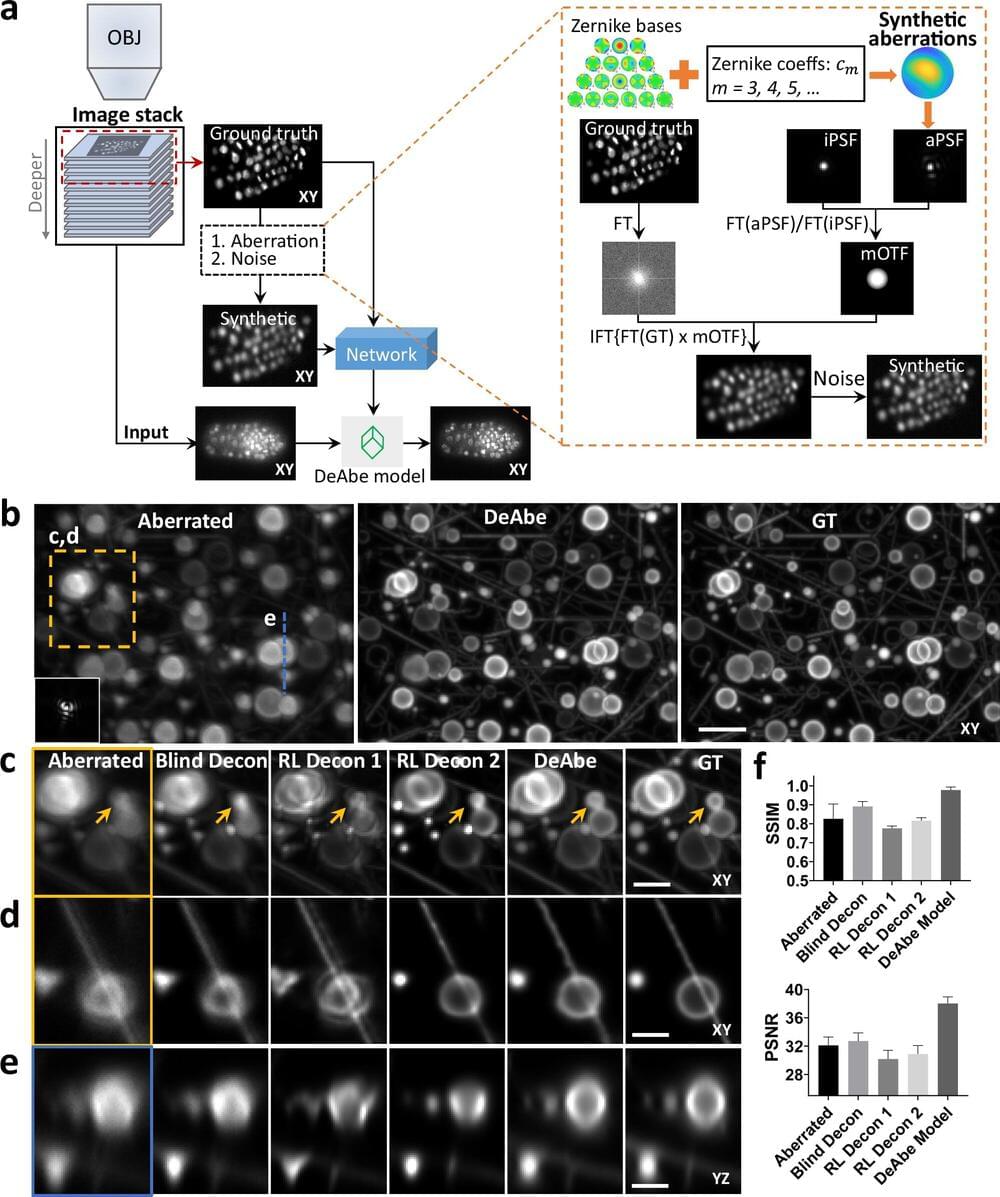
Researchers in the Yale Department of Cell Biology have created a new microscopy technique that will help unlock the inner workings of cells 100 times faster than current technology allows – and at a fraction of the cost.

Writing in the journal Cell, the Yale team says their FLASH-PAINT technique…


While current microscopy techniques image only a few intracellular molecules at a time, a new technique developed by Yale scientists can help researchers.

Scientists Discover ‘Unusual’ Third Path to Multicellular Lifeforms

Just when scientists thought they had almost figured out the origins of multicellular life, evolution throws another curveball.

In a serendipitous discovery, a team of researchers has just chanced upon a third type of ‘unconventional’ multicellularity that blends the two kinds we already knew about.

Multicellularity has evolved a staggering 45 times or more across the tree of life. Yet fundamentally, the ancestor of each multicellular lineage relied on just one of two methods — individual cells sticking together as they split, or individual cells that have previously split coming back together.

Shape Matters in Self-Assembly

Many biological structures form through the self-assembly of molecular building blocks. A new theoretical study explores how the shape of these building blocks can affect the formation rate [1]. The simplified model shows that hexagonal blocks can form large structures much faster than triangular or square blocks. The results could help biologists explain cellular behavior, while also giving engineers inspiration for more efficient self-assembly designs.

Certain viruses and cellular structures are made from self-assembling pieces that can be characterized by geometrical shapes. For example, some types of bacteria host carboxysomes, which are icosahedral (20-face) compartments built up from self-assembling hexagonal and pentagonal subunits.

To investigate the role of shape, Florian Gartner and Erwin Frey from Ludwig Maximilian University of Munich simulated self-assembly of two-dimensional structures with three types of building blocks: triangles, squares, and hexagons. The model assumed that the blocks bind along their edges, but these interactions are reversible, meaning that the resulting structures can fall apart before growing very large. Gartner and Frey found that certain shapes were better than others at assembling into larger structures, as they tended to form intermediate structures with more bonds around each block. In particular, hexagonal blocks were the most efficient building material, forming 1000-piece structures at a rate that was 10,000 times faster than triangular blocks.

Joscha Bach — Consciousness as a coherence-inducing operator

A theory of consciousness should capture its phenomenology, characterize its ontological status and extent, explain its causal structure and genesis, and describe its function. Here, I advance the notion that consciousness is best understood as an operator, in the sense of a physically implemented transition function that is acting on a representational substrate and controls its temporal evolution, and as such has no identity as an object or thing, but (like software running on a digital computer) it can be characterized as a law. Starting from the observation that biological information processing in multicellular substrates is based on self organization, I explore the conjecture that the functionality of consciousness represents the simplest algorithm that is discoverable by such substrates, and can impose function approximation via increasing representational coherence. I describe some properties of this operator, both with the goal of recovering the phenomenology of consciousness, and to get closer to a specification that would allow recreating it in computational simulations.

/* */