Toggle light / dark theme

PLOS Synthetic Biology Community

The field, or at least the widely used term, of synthetic biology (synbio) started nearly two decades ago. As the field has matured, two PLoS ONE papers have analyzed the publishing data to look at trends, language, and connections among synbio researchers. This data provides snapshots of who’s publishing, what kind of research is being published, when it’s being published, and where it’s being published. The question of why is certainly open for interpretation but the growth dynamics of synthetic biology publishing can give some sense of why a the term has stuck as a useful unifying term.

In 2012, researchers used Thomson Reuters Web of Science publishing data to map where people are publishing synbio research, how those people are connected, and who’s funding it. More recently, three French researchers also used data from the Thomson Reuters Web of Science to assess how synthetic biology the different areas of synthetic biology have grown and interacted.

Both of these papers draw interesting pictures of how new terms and ideas spread within an new umbrella term for a kind of research. Together these two papers paint give us some answers to the ‘Who, What, When, Where, & Why’ of synthetic biology.
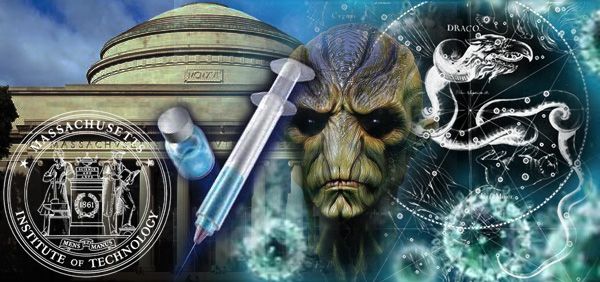
As In The Days Of Noah—New Synthetic Biology Factory Will Design, Build, And Test Exotic New Lifeforms

Why compliance exist.


Gingko Bioworks launched their new laboratory last month—an automated “factory” that mass-produces genetically modified organisms. The organism company’s tagline is “Biology By Design,” and it aims to deliver just that in their second foundry, which is equipped with numerous robots that mash together huge batches of genes to churn out new and exotic lifeforms […] Gingko is ambitiously working through the complexities of biology and genetics to create these experimental organisms. The company boasts of a design-build-test cycle: gene-enzyme mixes designed from the company’s scientific database is put together in a hundred different ways, and the “mashup” that services a client’s needs best is accepted as the new organism’s genetic profile. Their new liquid-handling robots like the Echo 525 make large-scale experimentation possible. (READ MORE)

FREE GIANT 5-VOL RESEARCHERS LIBRARY WITH THE 2016 PROPHECY DVDS COLLECTION!

DVD Rocky Mountain Pre-Sale Final Version

10 companies that want to make chemotherapy easier for patients — Bioquark Inc.

Bioquark Inc. (www.bioquark.com) mention on CNBC — the best way to make chemo easier is to eliminate the need for it forever!

Affordable EEG biosensors to control physical things

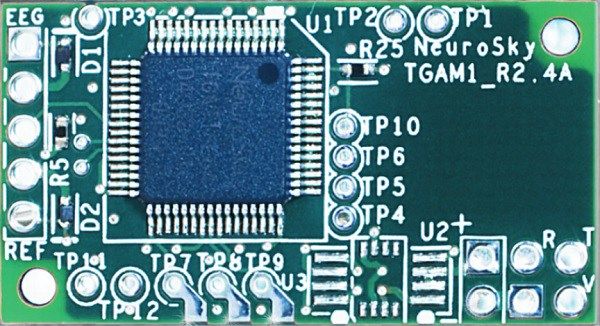
It seems that biofeedback is a thing of future. By having brain activity feedback, you can train meditation, attention, improve sleep, control gadgets, artificial limbs, carts for impaired, and even computer I/O. Everything starts with proper biosensor and controller. Biological signals are very low voltage – microvolts. In order to distinguish them from noisy environment, a precision electronics is required. Brain activity signals are somewhat different from myograms or ECG, they can be analyzed as power spectrum that represent brain activity phases like Alpha, Beta, Theta. There has be a numerous modules developed to acquire brain signals. If you want low to develop sensors by yourself, you could grab a Neurosky platform which is a small size PCB with sensor and microcontroller interfaces.

neurosky

With it you can read raw EEG signals with sampling 512Hz and do with them what you want. USART interface enables you to connect it yo Arduino or Raspberry Pi where you can calculate all sort of things and extract control signals. Of course you can read processed power spectrum as well to detect activities like attention, meditation and other activities. Eye blink detection is also an option. Great thing is that you can use this module to read ECG activity as well. Module incorporates AC noise filter which can be configured for 50HZ or 60Hz.

The 4 big ethical questions of the Fourth Industrial Revolution

We live in an age of transformative scientific powers, capable of changing the very nature of the human species and radically remaking the planet itself.

Advances in information technologies and artificial intelligence are combining with advances in the biological sciences; including genetics, reproductive technologies, neuroscience, synthetic biology; as well as advances in the physical sciences to create breathtaking synergies — now recognized as the Fourth Industrial Revolution.

New imaging method helps observe activation of neural circuits in the brain

Watching millions of neurons in the brain interacting with each other is the ultimate dream of neuroscientists! A new imaging method now makes it possible to observe the activation of large neural circuits, currently up to the size of a small-animal brain, in real time and three dimensions. Researchers at the Helmholtz Zentrum München and the Technical University of Munich have recently reported on their new findings in Nature’s journal ‘Light: Science & Applications’.

Nowadays it is well recognized that most brain functions may not be comprehended through inspection of single neurons. To advance meaningfully, neuroscientists need the ability to monitor the activity of millions of neurons, both individually and collectively. However, such observations were so far not possible due to the limited penetration depth of optical microscopy techniques into a living brain.

A team headed by Prof. Dr. Daniel Razansky, a group leader at the Institute of Biological and Molecular Imaging (IBMI), Helmholtz Zentrum München, and Professor of Molecular Imaging Engineering at the Technical University of Munich, has now found a way to address this challenge. The new method is based on the so-called optoacoustics*, which allows non-invasive interrogation of living tissues at centimeter scale depths.