Toggle light / dark theme

Biological networks can boost artificial intelligence

For robots; the bigger question where is the bigger ROI? Robots trying to be built to out do people; or is it better to enhance people? DARPA is more focused on enhancing people such as soldiers; and I agree with DARPA.


Understanding the hierarchical structure of biological networks like human brain — a network of neurons — could be useful in creating more complex, intelligent computational brains in the fields of artificial intelligence and robotics, says a study.

Like large businesses, many biological networks are hierarchically organised, such as gene, protein, neural, a…

Autonomous synthetic nanomotors powered by proteins and chemicals

Researchers at the University of Manchester, UK have made the first autonomous chemically powered synthetic small-molecule motor. The new device, which is very much like the protein motors found in biological cells, might be used to design artificial molecular machines similar to those found in nature. Such machines could be important for applications such as synthetic muscles, nano- and micro-robots and advanced mechanical motors.

READ MORE ON IOP | NANOTECHWEB

Chemical reaction lights the way for tracking microRNA in living organisms

The ability to track molecular events inside the cells of living organisms offers a powerful window into fundamental biological processes, but methods for visualizing RNA in vivo without interfering with cell processes have been elusive. Now, researchers have developed a light-induced chemical reaction that accomplishes this feat in live zebrafish embryos (ACS Cent. Sci. 2016, DOI: 10.1021/acscentsci.6b00054). It is the first technique for detecting specific strings of nucleic acids in live vertebrates that doesn’t require genetically modifying the organism. What’s more, it’s sensitive enough to visualize the expression of microRNAs, small noncoding RNAs that act as puppetmasters of gene expression.

To do the reaction, chemical biologist Nicolas Winssinger, biochemist Marcos Gonzalez-Gaitan, and their colleagues at the University of Geneva designed two nucleic acid probes that each complement and bind to adjacent halves of a target microRNA sequence. The researchers conjugated one probe to a ruthenium complex that absorbs visible light and the other to a fluorogenic rhodamine that lights up when its azide bonds are cleaved. When the probes attach to the target sequence, the two reagents come close enough to react. Shining a light on the sample activates the ruthenium which then reduces the azide in the rhodamine conjugate, releasing its fluorescence. The dependence on external light allows researchers to control when the reporting reaction happens, Winssinger explains.

The team first developed the system three years ago (Chem. 2013, DOI: 10.1002/chem.201300060) for use in cultured cells; here, they adapted it for use in just-fertilized zebrafish embryos. “That’s really not trivial,” says Winssinger. The probes had to be nontoxic, stable for a day or more, and powerful enough to work even after being diluted through cell division.

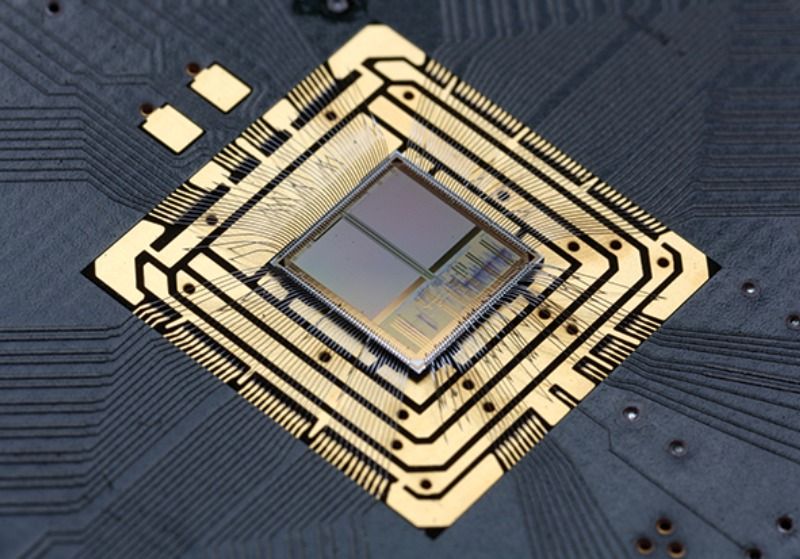
A former NASA chief just launched this AI startup to turbocharge neural computing

Good for him.


A new company launched Monday by former NASA chief Dan Goldin aims to deliver a major boost to the field of neural computing.

KnuEdge’s debut comes after 10 years in stealth; formerly it was called Intellisis. Now, along with its launch, it’s introducing two products focused on neural computing: KnuVerse, software that focuses on military-grade voice recognition and authentication, and KnuPath, a processor designed to offer a new architecture for neural computing.

“While at NASA I became fascinated with biology,” said Goldin in an interview last week. “When the time came to leave NASA, I decided the future of technology would be in machine intelligence, and I felt a major thrust had to come from inspiration from the mammalian brain.”

Scientists build gene circuits capable of complex computation

BOSTON, June 3 (UPI) — Until now, synthetic biological systems have focused exclusively on either analog or digital computation. Researchers at MIT have devised a technique for creating cellular gene circuits capable of complex computation.

Analog computation, also called continuous computation, is the type of processing happening as the human eye adjusts to changing light conditions. Digital computation involves binary decision making, on or off processes.

The new synthetic cellular circuitry designed by MIT scientists performs like a comparator, receiving analog input signals and converting them into digital output signals.

Animal-plant integration

[Image: An animal that looks like a plant. From simple.wikipedia.org/wiki/Stick_insect#/media/File:LeafInsect.jpg.]

Future genetic engineering may create animals that can photosynthesize like plants. These animals would require less food because they will make some of it from sunlight. In principle, even humans could be modified this way!

There are already some natural cases of animal-plant integration. Some marine flatworms have algae living in their translucent bodies,between their cells. Increasing the degree of plant-animal integration further, the method used by coral and various other marine animals is to have symbiotic algae living, not between their cells (like the flatworms), but actually inside some of their cells. The algae are typically of the genus Symbiodinium, and live in “symbiosomes,” blobs inside the animal cells that hold the algae separate from the rest of the cell. Each symbiosome is a kind of really, really tiny terrarium (a “nanoterrarium”) maintained by the finely engineered nanotechnology device of nature we call the cell. The cells supply the algae, in its symbiosome home, with basic chemicals and exposure to light. In return the algae produce nutrients that the animals extract from the symbiosome and use. In coral, when these algae die the coral loses color and, if not reversed, itself dies in the phenomenon called “coral bleaching.”

Taking the algae-animal combination another step, there are species of sea sponges, a primitive type of animal, that host algae in leaf-like structures that they grow to better capture underwater sunlight. That’s right: animals with leaves.

The degree of integration can be tighter still. Observe that algae (like their descendants, the plants) do photosynthesis using chloroplasts. These are small green organelles, organelles being the tiny nanomachines that serve as “organs” of cells. Chloroplasts thus give plants their green color. The chloroplasts are thought to have once been independent organisms that, eons ago, took up residence inside cells of other organisms, where they have lived ever since. What about animals whose cells can contain chloroplasts directly, eliminating the inefficiency of using algae as the middleman? There is no reason why this could be created by genetic engineering. Nor is there any reason why something like this could not exist on some other planet already.

[This passage is slightly modified from my book The Human Race to the Future, published by the Lifeboat Foundation.]

Poverty marks a gene, predicting depression

Not surprised;


A long line of research links poverty and depression. Now, a study by Duke University scientists shows how biology might underlie the depression experienced by high-risk adolescents whose families are socio-economically disadvantaged.

The study, published May 24, 2016 in the journal Molecular Psychiatry, combined genetics, brain imaging and behavioral data gathered as adolescents were followed for more than three years as part of a larger study.

The results are part of a growing body of work that may lead to biological predictors that could guide individualized depression-prevention strategies.

Is aging inevitable? Not necessarily for sea urchins

Sea urchins are remarkable organisms. They can quickly regrow damaged spines and feet. Some species also live to extraordinary old ages and—even more remarkably—do so with no signs of poor health, such as a decline in regenerative capacity or an increase in age-related mortality. These ocean Methuselahs even reproduce as if they were still youngsters.

MDI Biological Laboratory Associate Professor James A. Coffman, Ph.D., is studying the of sea urchins in hopes that a deeper understanding of the process of regeneration, which governs the regeneration of aging tissues as well as lost or damaged body parts, will lead to a deeper understanding of the aging process in humans, with whom sea urchins share a close genetic relationship.

In a paper recently published in Aging Cell, a leading journal in the field of aging biology, with Andrea G. Bodnar, Ph.D., of the Bermuda Institute of Ocean Studies, the scientists shed new light on the aging process in sea urchins, raising the prospect that the physical decline that typically accompanies aging is not inevitable.

/* */