Toggle light / dark theme

The End of the Dinosaurs | SpaceTime S24E91 | Astronomy & Space Science News Podcast

The Astronomy, Technology, and Space Science News Podcast.
SpaceTime Series 24 Episode 91
*Astronomers zero in on source of the impactor that wiped out the dinosaurs.
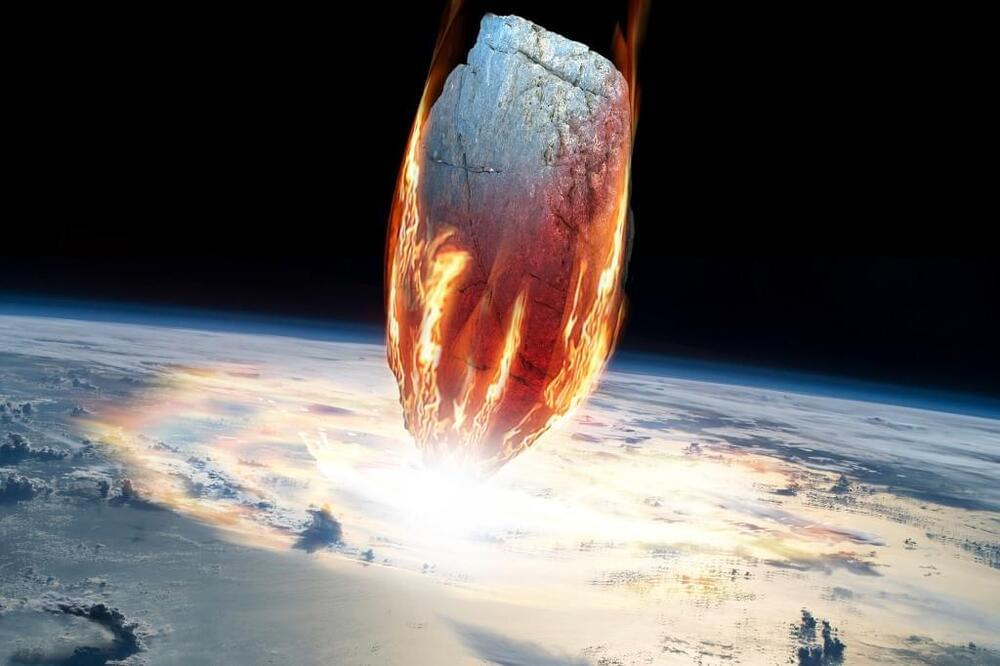
A new study claims the impactor believed to have wiped out and 75 percent of all life on Earth 66 million years ago including all the non-avian dinosaurs — likely came from the outer half of the main asteroid belt between Mars and Jupiter.
*Producing matter out of pure energy.
Scientists have directly converted pure light energy into matter in a single process for the first time.
The findings reported in the journal Physical Review Letters involved the creation of Electrons and their antimatter counter parts positrons — by colliding quantum packets of photons – light particles.
*Discovery of a galactic stream of galaxy clusters.
Astronomers have discovered a never-before-seen galaxy cluster with a black hole at its centre, travelling at high speed along an intergalactic road of matter.
*Solar Orbiter and BepiColombo making space history with double flyby of Venus.
As we go to air tonight the European Space Agency is making space history with two of its space craft6 undertaking almost simultaneous flybys of the planet Venus.
*The Science Report.
New US congressional report says COVID-19 leaked out of Chinese Government Wuhan Lab.
Wearing masks and social distancing even when vaccinated key to combat new COVID strains.
Rising sea levels may mean fewer eruptions from volcanic islands.
How slowing of the planet’s rotation could have paved the way for life on Earth.
Skeptic’s guide to low vaccination and low IQ.
For more SpaceTime and show links: https://linktr.ee/biteszHQ

Your support is needed…
SpaceTime is an independently produced podcast (we are not funded by any government grants, big organisations or companies), and we’re working towards becoming a completely listener supported show…meaning we can do away with the commercials and sponsors. We figure the time can be much better spent on researching and producing stories for you, rather than having to chase sponsors to help us pay the bills.
That’s where you come in…help us reach our first 1,000 subscribers…at that level the show becomes financially viable and bills can be paid without us breaking into a sweat every month. Every little bit helps…even if you could contribute just $1 per month. It all adds up.
By signing up and becoming a supporter at the $5 or more level, you get immediate access to over 230 commercial-free, double, and triple episode editions of SpaceTime plus extended interview bonus content. You also receive all new episodes on a Monday rather than having to wait the week out. Subscribe via Patreon or Supercast…and share in the rewards. Details at Patreon www.patreon.com/spacetimewithstuartgary or Supercast — https://bitesznetwork.supercast.tech/
Details at https://spacetimewithstuartgary.com or www.bitesz.com

NBD, There’s Just a Massive Asteroid Hurtling Past Earth This Month

Should you be worried about the massive space rock that could, theoretically, spell disaster if it were to make landfall on terra firma? No, you shouldn’t. But that doesn’t mean you should ignore it either.

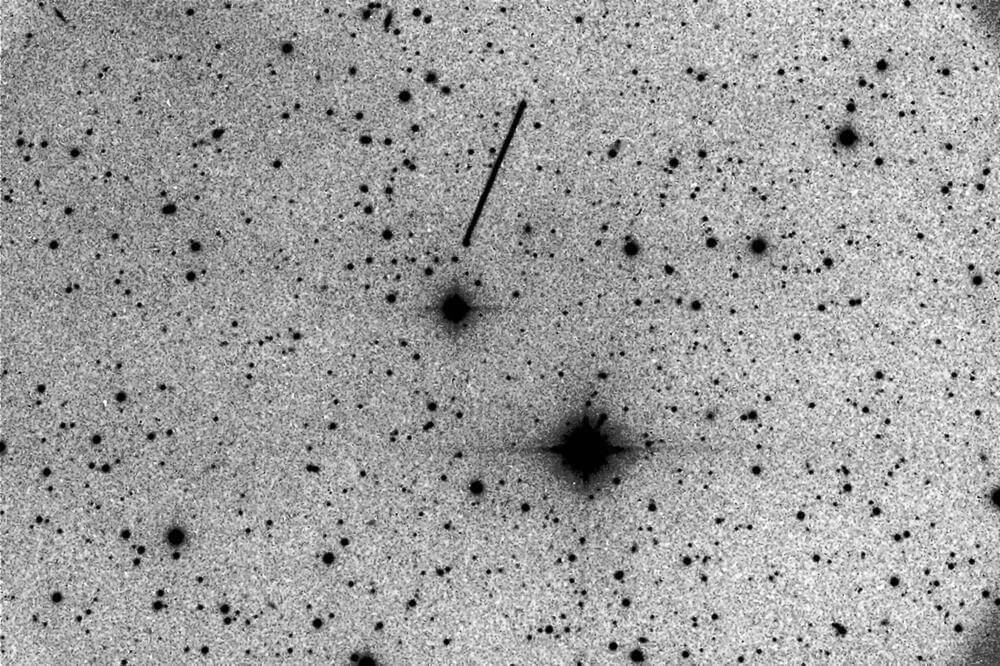
The asteroid, called 2016 AJ193, is just under a mile wide and moving at a speed of 58538 miles per hour, according to EarthSky. Its closest encounter with Earth will occur on August 23 at 11:10 a.m. ET, and experts note that anyone trying to spot the asteroid in the wild will have the best chance of doing so before sunrise. If you’re trying to catch a glimpse of it, you’ll have to use a telescope.

Despite the “potentially hazardous” label designated by NASA, EarthSky is quick to allay any fears of impending apocalypse (at least from this particular asteroid) because it won’t hit Earth.

Asteroid the size of the Great Pyramid of Giza just flew (safely)

😀


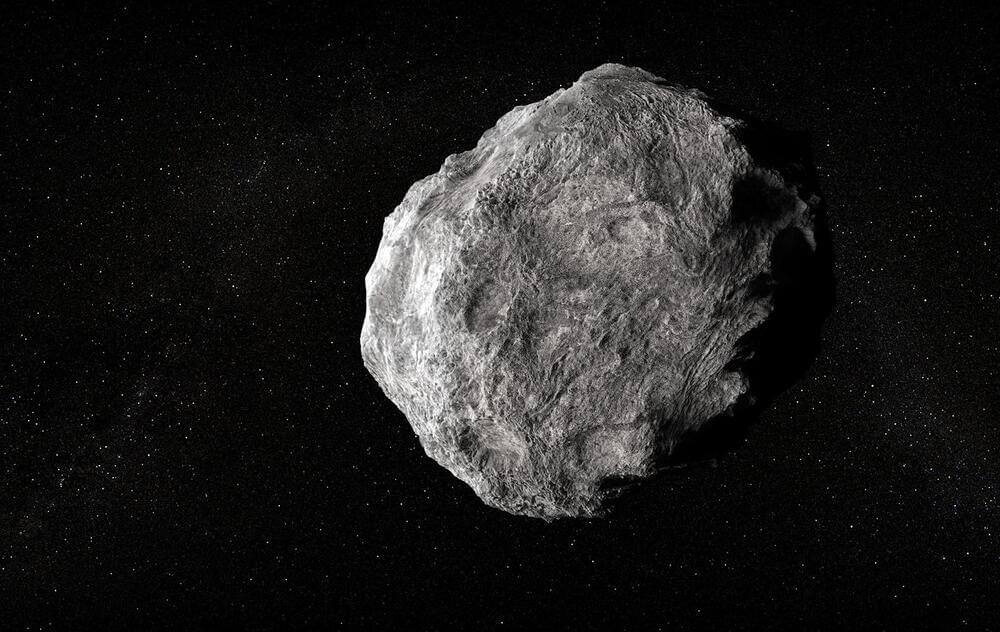
An asteroid about as long as the Great Pyramid of Giza is tall made a “close” approach with Earth on Sunday (July 25), according to NASA calculations.

There is no worry that the space rock poses any threat to Earth, but NASA monitors such rocks to both learn more about the early solar system — asteroids are rocky fragments from that time — and because if their orbits were to change, the asteroid could pose a future risk to Earth.

Asteroid the size of the Great Pyramid of Giza to fly (safely)

An asteroid about as long as the Great Pyramid of Giza is tall will make a “close” approach with Earth on Sunday (July 25), according to NASA calculations.

There is no worry that the space rock poses any threat to Earth, but NASA monitors such rocks to both learn more about the early solar system — asteroids are rocky fragments from that time — and because if their orbits were to change, the asteroid could pose a future risk to Earth.

NASA approved a space telescope that could save Earth from an asteroid

NASA finally approves the launch of an infrared asteroid hunting space telescope able to locate threats 30M miles away…


NASA has approved the Near-Earth Object Surveyor space telescope to help the space agency be better prepared for future asteroids that could pose a threat to Earth.

The 20-foot-long infrared telescope would help astronomers and planetary scientists find ‘most’ of the potentially hazardous asteroids and comets that come within 30 million miles of Earth’s orbit, also known as near-Earth objects (NEOs).

According to NASA, there are just over 25000 NEOs, but many more are waiting to be discovered.

In a NASA simulation of an asteroid impact, scientists concluded they couldn’t stop a space rock from decimating Europe

Scientists around the world have been bamboozled this week by a fictitious asteroid heading toward Earth.

A group of experts from US and European space agencies attended a week-long exercise led by NASA in which they faced a hypothetical scenario: An asteroid 35 million miles away was approaching the planet and could hit within six months.

These are the asteroids to worry about

Stephen Hawking thought an asteroid impact posed the greatest threat to life on Earth. Thanks to Kiwico for sponsoring this video. For 50% off your first month of any crate, go to https://kiwico.com/veritasium50
For other potential world ending catastrophes, check out Domain of Science: https://ve42.co/DoS

Special thanks to:
Prof. Dave Jewitt from UCLA Earth, Planetary, and Space Sciences.
Prof. Mark Boslough from Sandia National Labs.
Scott Manley: https://www.youtube.com/user/szyzyg.
Ryan Wyatt at Morrison Planetarium.
Prof. Amy Mainzer.
Alexandr Ivanov for the opening shot of Chelyabinsk Meteor.

Maps of Asteroid Impacts —https://ve42.co/Map.

Time passing animation from Universe Sandbox — http://universesandbox.com/

Opposition Effect — https://ve42.co/Belskaya2000
Belskaya, I. N., & Shevchenko, V. G. (2000). Opposition effect of asteroids. Icarus, 147, 94–105.

Potentially Hazardous Asteroids — https://ve42.co/Perna2013

OSIRIS-REx to make final close approach to asteroid before heading back to Earth

WASHINGTON — NASA’s OSIRIS-REx spacecraft will make one final close approach to the asteroid it collected samples from next week before heading back to Earth.

On April 7, the spacecraft will pass 3.7 kilometers above the location on the asteroid Bennu called Nightingale where, in October, the spacecraft briefly touched down and collected as much as several hundred grams of material, now stored in the spacecraft.

Immediately after that sample collection maneuver, the mission had no plans to return to the vicinity of Bennu. However, NASA decided to make a final pass over the touchdown site to see what changes the sampling made to the Nightingale region, like the creation of a crater.

/* */