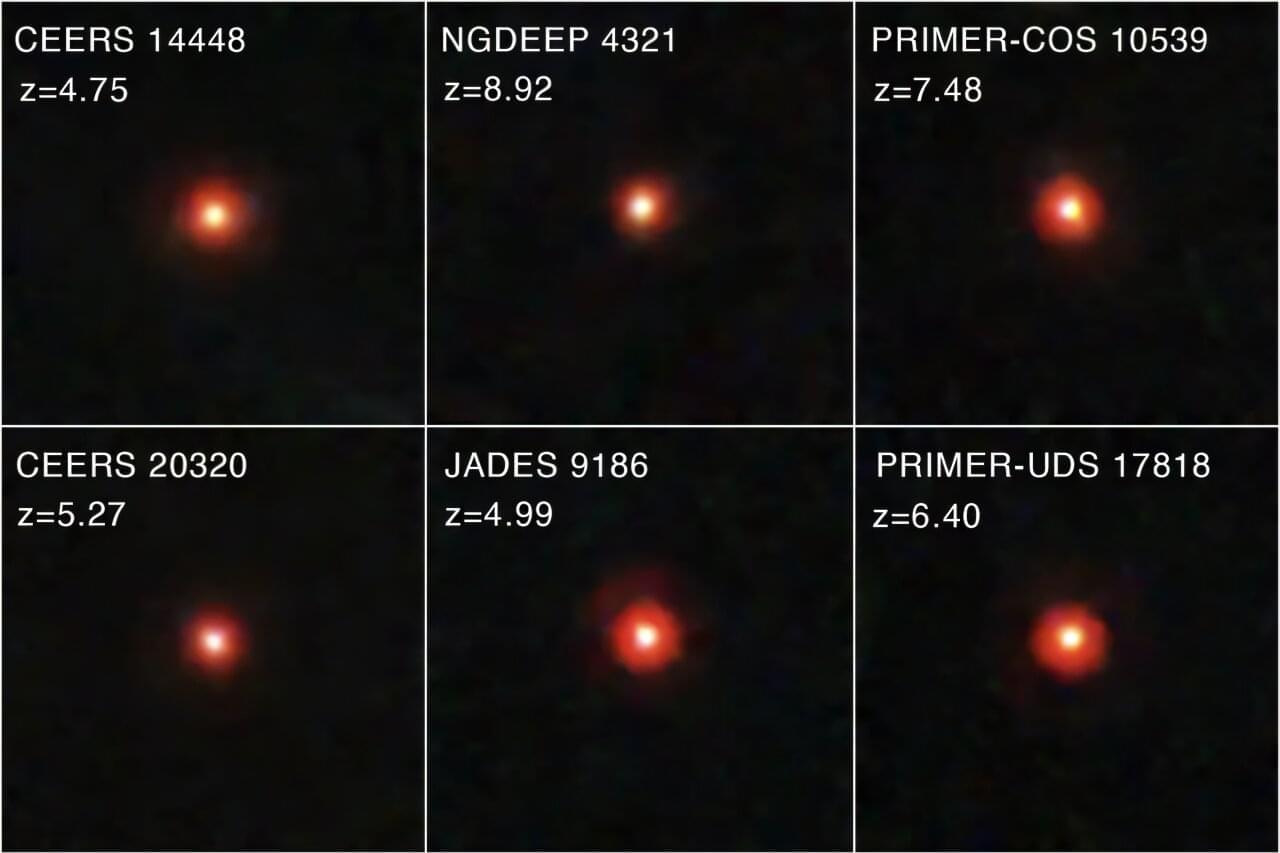
Astronomers may have solved one of the biggest mysteries uncovered by NASA’s James Webb Space Telescope (JWST), using sophisticated simulations to show that enigmatic objects known as “little red dots” (LRDs) are likely the birthplaces of the first supermassive black holes.
The discovery sheds new light on how some of the universe’s largest black holes formed less than a billion years after the Big Bang. The paper is published in The Astrophysical Journal Letters.
Since JWST began peering deeper into the cosmos than ever before, astronomers have been puzzled by hundreds of compact, bright objects known as little red dots. These mysterious sources appear as tiny red specks in the early universe and are unlike anything predicted by existing theories.