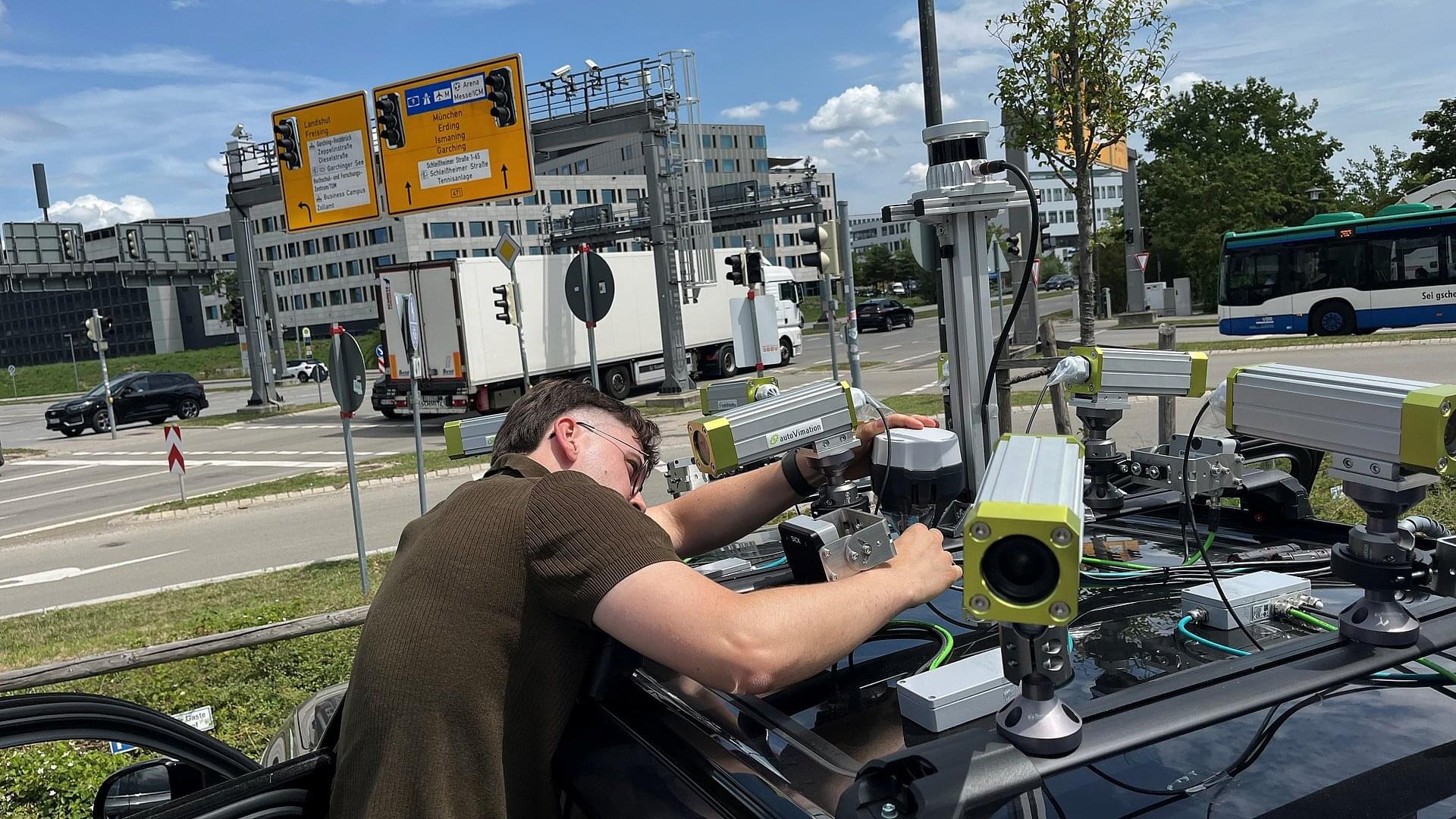
As the BMW test vehicle approaches the intersection, the artificial intelligence system has already gathered information from all relevant sensors in the vicinity. These include infrastructure sensors mounted on the sign gantries at the intersection, as well as cameras, radar and a lidar unit on the roof of the test vehicle.
The in-car display shows all road users approaching the intersection from the right, left, front and rear, with a positional accuracy of up to 10 centimeters (4 inches). The AI continuously predicts where the cars, bicycles and pedestrians are likely to move next.
The advantage of a digital, real-time representation of traffic is clear: “Drivers can now see into areas that would otherwise be obscured, allowing them to react more quickly to potential hazards or be warned of them,” explains professor Alois Knoll, head of the Chair of Robotics, Artificial Intelligence and Real-Time Systems at TUM.