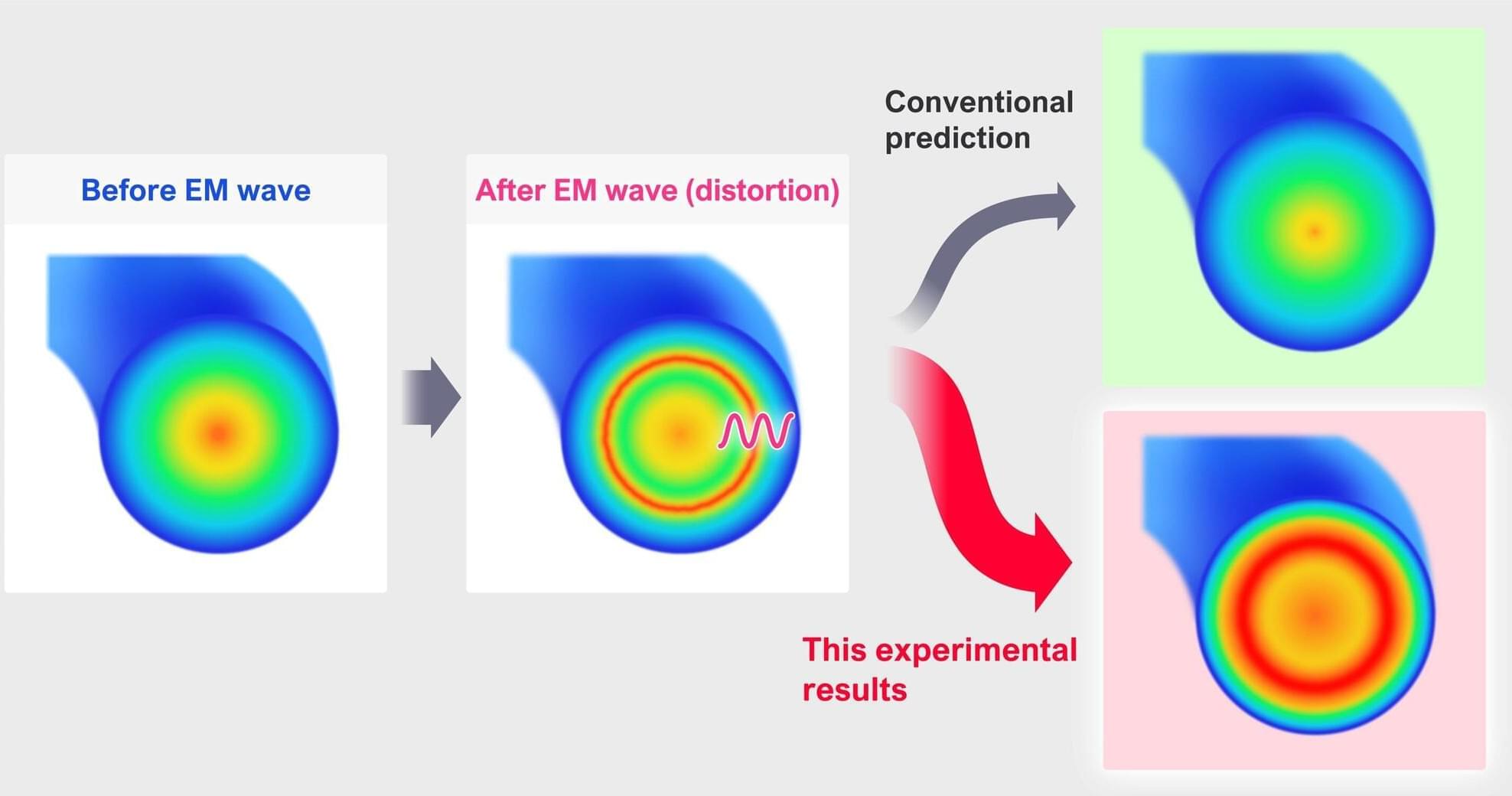
Fusion power is expected to be a sustainable energy source that emits no carbon dioxide during electricity generation. To achieve this, research is underway worldwide to confine high-temperature plasma using magnetic fields. To initiate a fusion reaction, high-energy particles or waves must be injected from outside to heat the plasma to extremely high temperatures.
Once the fusion reaction begins, “self-heating” occurs, in which high-energy particles generated by the reaction further heat the plasma, allowing the high-temperature state to be maintained even if external heating is reduced.
This self-heating process is complex, and large-scale experimental facilities such as ITER are necessary to demonstrate it in its entirety. Demonstration of self-heating is expected around 2040. However, one of the key processes underpinning self-heating—the phenomenon in which “waves generated by plasma instabilities heat the plasma itself”—can be verified even with current experimental facilities.