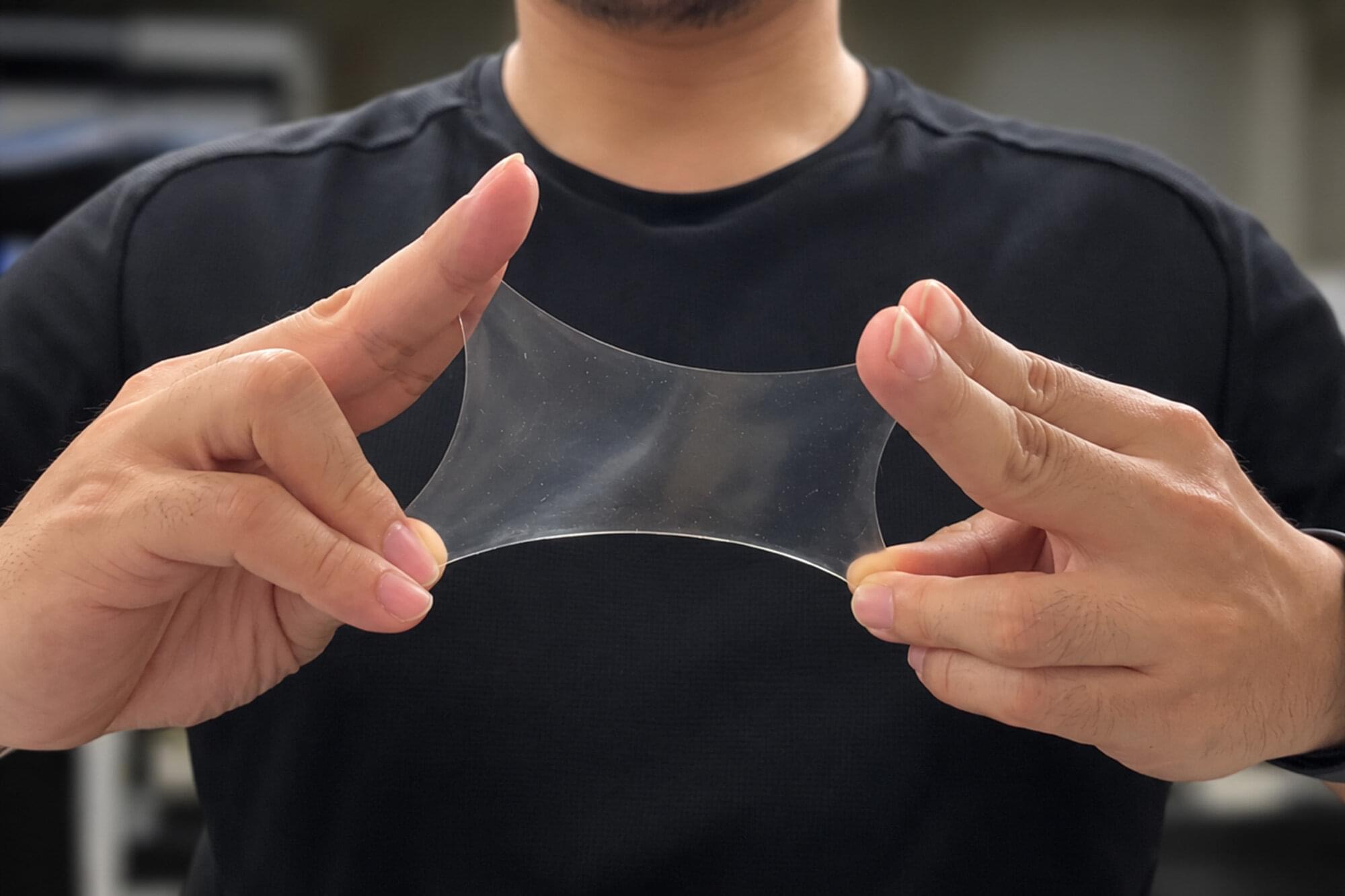
Engineers at MIT and the Singapore-MIT Alliance for Research and Technology’s Wearable Imaging for Transforming Elderly Care project (SMART WITEC) have developed a dry and stretchy material that could eliminate the need for a wet and sticky gel in ultrasound imaging.
Ultrasound technicians typically spread a cold gel onto a patient’s skin before imaging the area with an ultrasound probe. The gel fills in tiny gaps between the probe and the skin so ultrasound waves can travel efficiently through the skin to generate clear images of a patient’s underlying structures.
Members of MIT’s Zhao Lab are designing wearable ultrasound patches that could provide continuous imaging, at home or on the go. But one sticking point has been the gel. Their previous designs have included a layer of hydrogel—a mostly water-based material that seals up the space between the skin and a small ultrasound probe. But within a day or two, the gel can dry out and lose its ability to transmit sound waves.