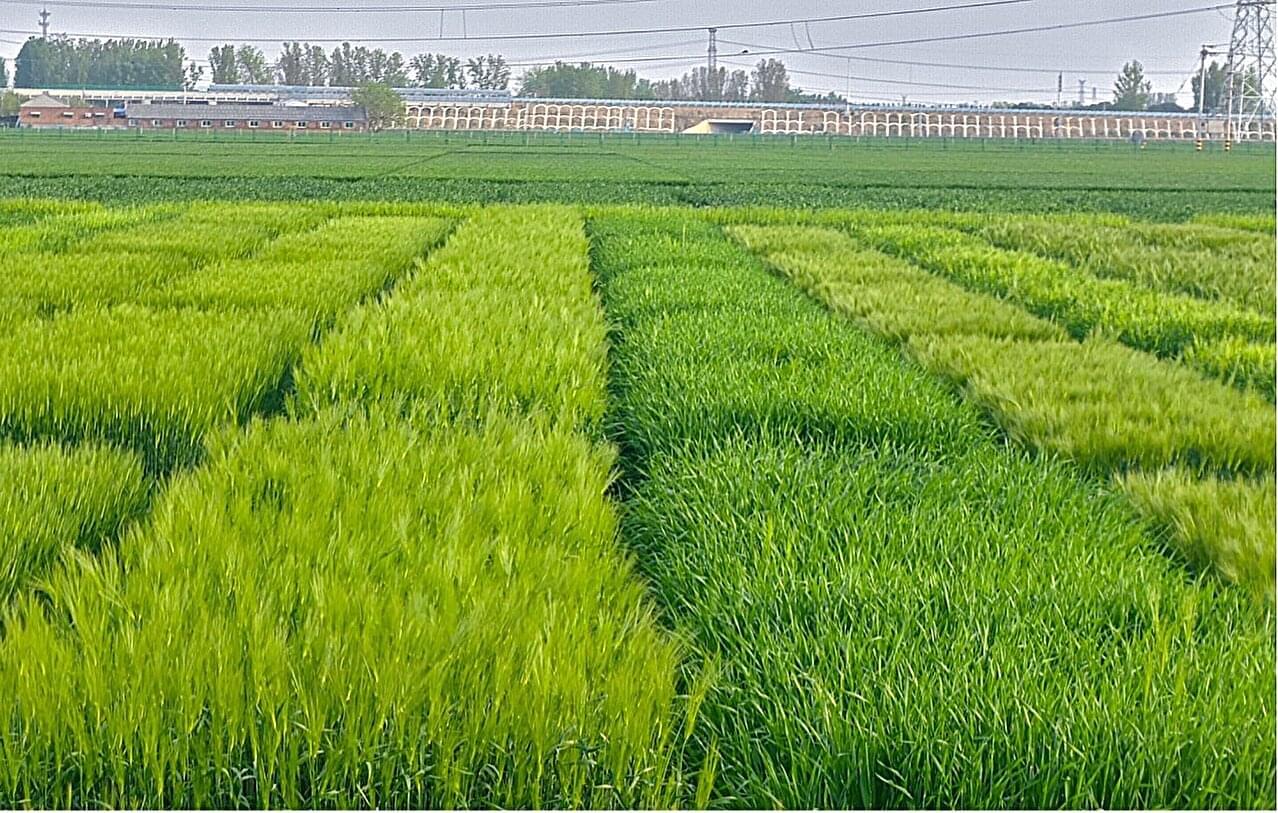
Growing two crops in succession on the same land requires a tight schedule. In parts of central and eastern China, farmers sow barley in autumn and harvest it in late spring. It is then followed by a summer crop, such as rice. For this cropping sequence to succeed, the barley must mature in time. An early harvest also helps the crop avoid heat and rain toward the end of the growing season.
A research team led by Ping Yang at the Chinese Academy of Agricultural Sciences, working with researchers at the IPK Leibniz Institute, investigated the genetic changes that enable this adaptation. The team combined historical data spanning eight decades with field trials and molecular genetic studies. IPK researchers contributed genomic analyses and expertise in barley’s genetic diversity and evolutionary history to the international collaboration.
The study examined 505 representative Chinese barley varieties and 27 introduced reference lines. Their genetic data reveal how the genetic makeup of Chinese barley varieties has changed since the 1940s. Introduced varieties, particularly those from Europe, brought valuable yield and quality traits. However, their longer development period poses a challenge for established cropping systems in which barley is followed by another crop.