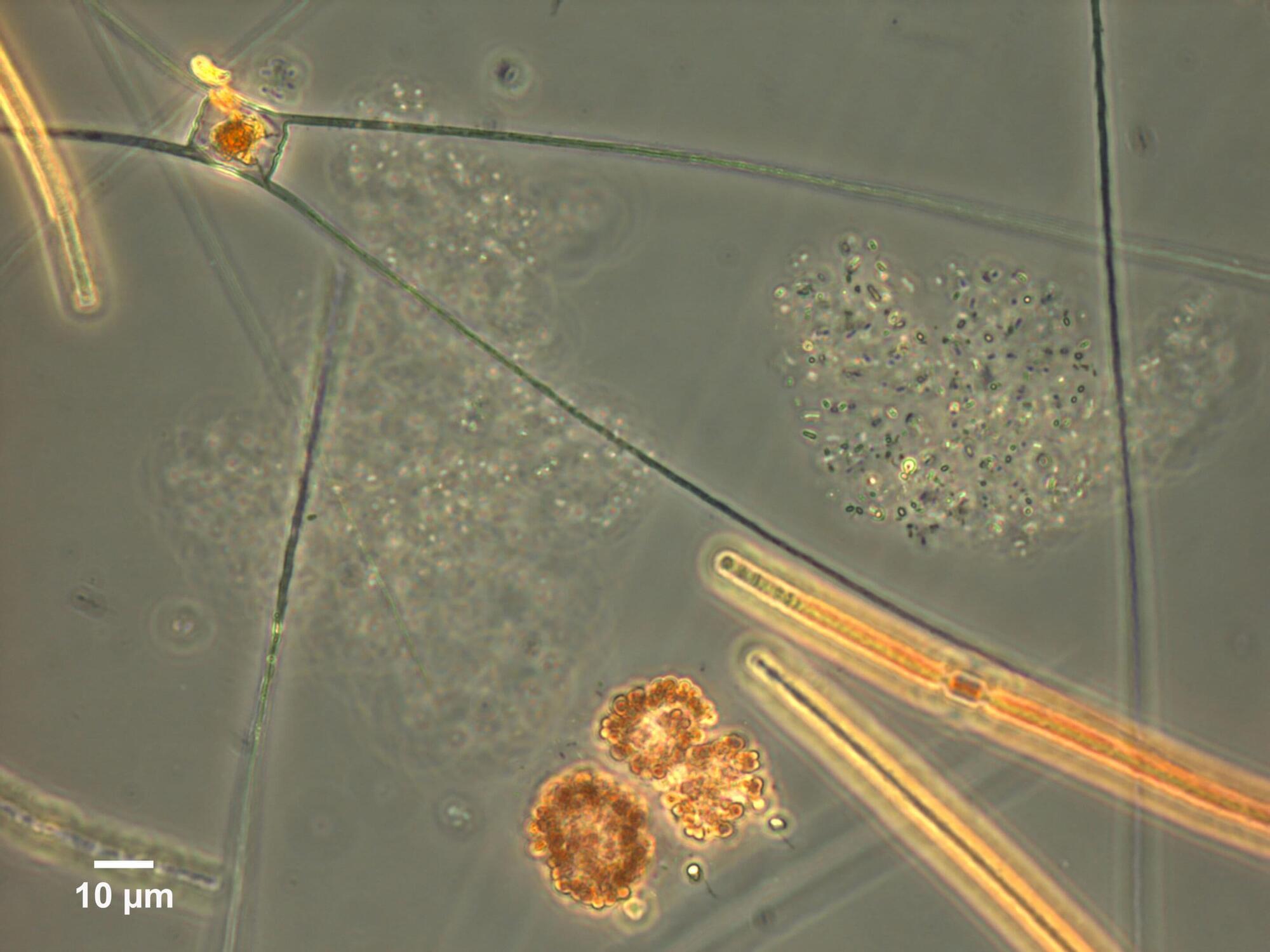
Tiny photosynthetic organisms in the Baltic Sea can contribute substantially to the transport of carbon from surface waters to deeper parts of the sea. A new study from the Department of Ecology, Environment and Plant Sciences at Stockholm University shows that their ability to form colonies and aggregates is an important factor determining how much of their biomass sinks.
“In this study, we have shown that in situ aggregation properties vary among picocyanobacterial strains and that the degree of aggregation directly determines the magnitude of export. Given that picophytoplankton are expected to increase in abundance in a warmer and more nutrient-poor (stratified) ocean, understanding mechanisms allowing their biomass to be exported to the deep ocean is important for predicting future atmospheric CO2 levels,” says lead author Martin Ekman, a former researcher at the Department of Ecology, Environment and Plant Sciences at Stockholm University (at the time of the study).
The work is published in The ISME Journal.