Forget about how the zebra got its stripes. For a group of Cornell engineers, an equally important question is: What drives the formation of such eye-catching patterns?
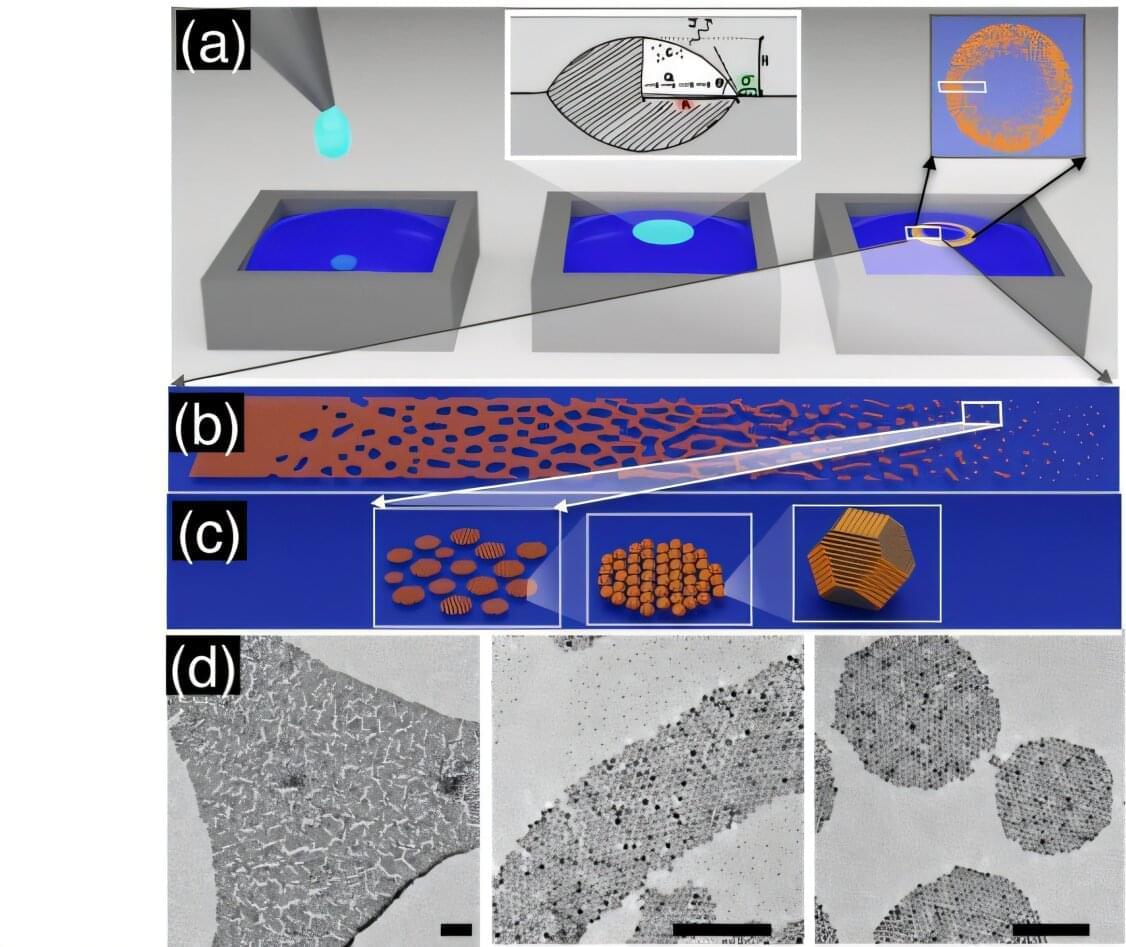
Rather than studying the animal kingdom, the researchers looked to tiny semiconductor crystals called quantum dots to understand how they arrange themselves into striking cascade structures in evaporating liquid. As a result, the researchers can now control the process, which could lead to engineering the next generation of optical and electronic devices from nanoscale building blocks.
The findings were published Nov. 14 in Nature Communications. The study’s lead author is Jonathan Palumbo, M.S. ‘25, a doctoral student in the Hanrath Energy Lab. Anjali Asthagiri ‘28 is the co-author.