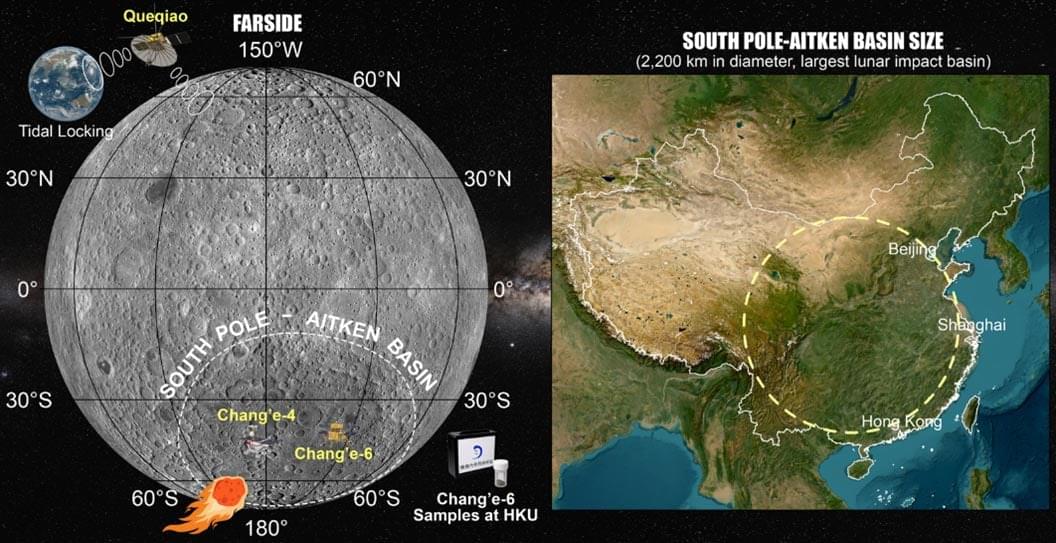
Scientists have narrowed down when three massive collisions reshaped the Moon, bringing them closer to understanding why its Earth-facing side looks so different from its far side.
Billions of years ago, a collision powerful enough to melt enormous quantities of lunar rock created the Moon’s largest impact basin. Subsequent collisions broke apart and scattered some of that ancient material across the surface, leaving behind a geological record that scientists are now piecing together.
Located on the Moon’s far side, the South Pole-Aitken (SPA) basin is one of the oldest and largest impact structures in the solar system. Understanding its history could help explain why the Moon’s near and far sides are so different, what lies beneath its surface, and when major collisions occurred during its early evolution.