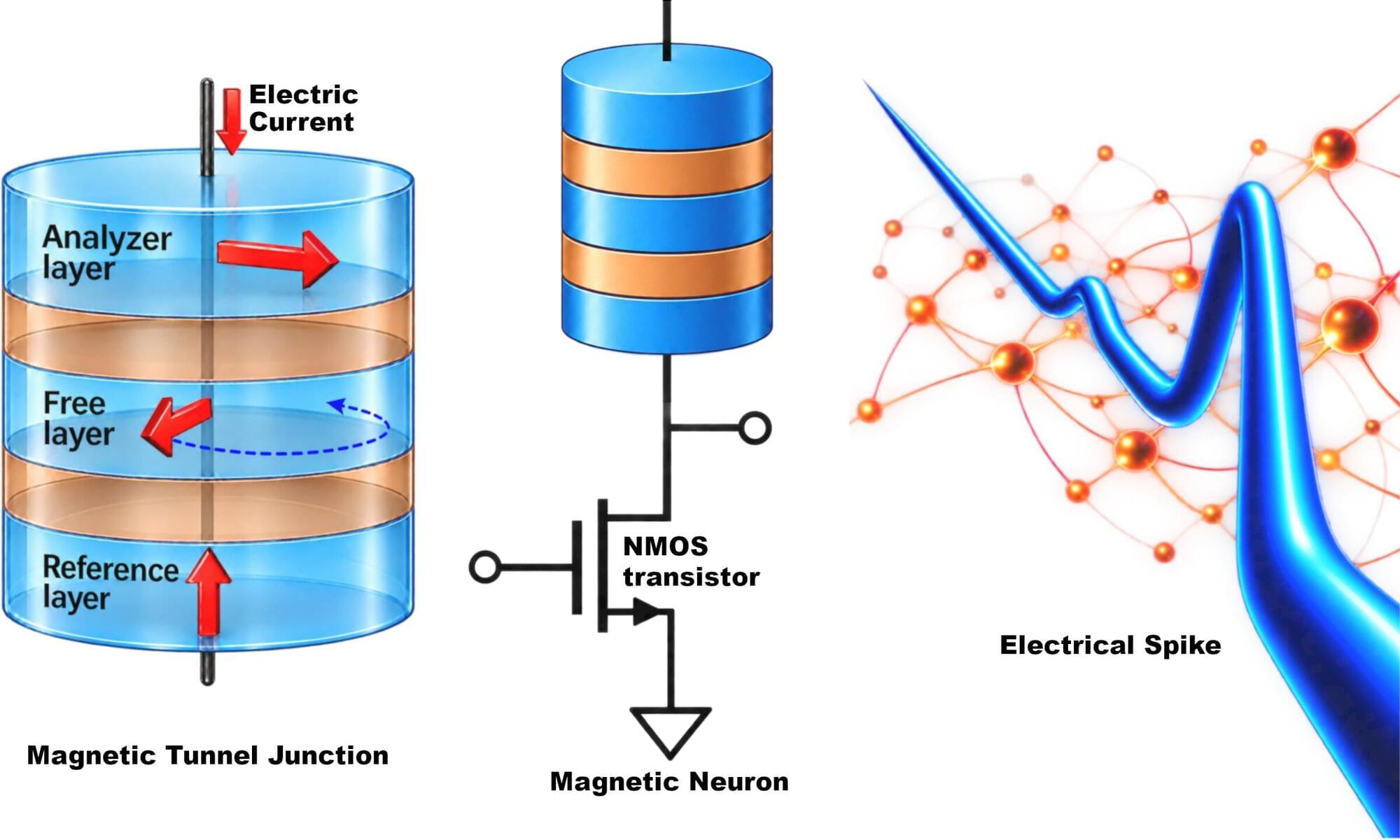
Researchers have designed an electronic neuron that combines two simple elements, a conventional transistor and a nanoscale magnetic device, to reproduce the behaviors of biological neurons. Unlike conventional electronic neurons, these behaviors emerge naturally from the magnetic properties of the device, without requiring complex control circuitry. The circuit can generate precisely timed electrical pulses that resemble those of biological neurons and, in a small demonstration, perform machine learning.
The latest incarnation of AI has an inconvenient appetite: The larger the models become, the more chips, data movement and electricity they require. Therefore, one goal for next-generation AI hardware is not simply to make computers smarter, but to make computation far less wasteful.
A team at Oakland University in Michigan has proposed a way to scale back much of this waste: build artificial neurons from a standard electronic transistor paired with a magnetic tunnel junction, or MTJ. In simulations, networks made from these components learned a standard machine-learning benchmark, the XOR gate, by using the timing of electrical spikes rather than conventional digital signals. The research was recently published in IEEE Transactions on Circuits and Systems.