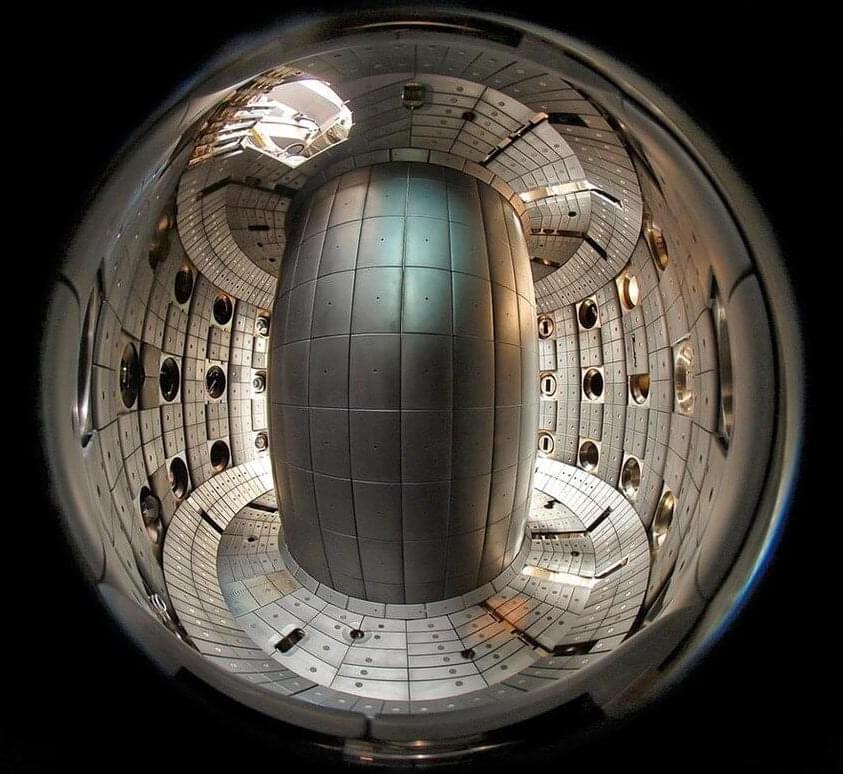
Nuclear fusion promises a source of energy by combining light atomic nuclei, the same process that powers the sun. To achieve fusion on Earth, scientists must heat a gas to extreme temperatures, creating a charged state of matter called plasma. Keeping this plasma hot and stable long enough for fusion energy production is one of the main challenges facing the technology.
One approach uses machines called tokamaks, which employ powerful magnetic fields to confine plasma inside a doughnut-shaped chamber. But plasma is turbulent. Fluctuations carry heat away, making it difficult to maintain the conditions needed for fusion.
In 1982, researchers discovered that increasing the heating power beyond a certain threshold triggers a sudden change in plasma behavior. Turbulence near the plasma’s edge drops sharply, allowing the plasma to retain energy much more effectively. Scientists call this the transition from low confinement (L-mode) to high confinement (H-mode).