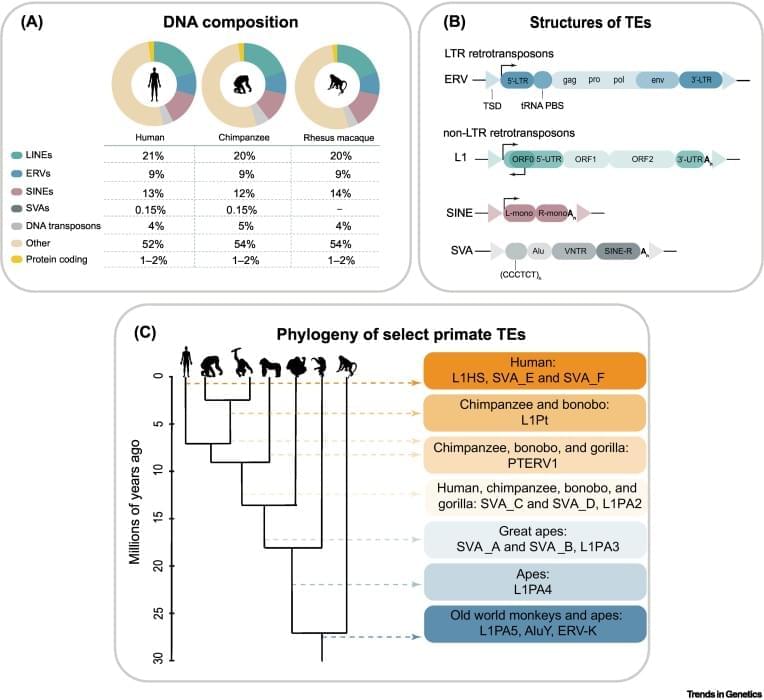
The genetic basis of human brain evolution remains unclear. Transposable elements (TEs), which comprise half the human genome, are emerging as an important source of regulatory innovation. Comparative genomics, single-cell multi-omics, and primate stem cell models show that evolutionarily young primate-specific TEs serve as regulatory elements during brain development. Here we review evidence that TE-derived sequences and Krüppel-associated box zinc finger protein–TE interactions shape neurodevelopment, supporting a model in which evolving TE landscapes and host repressors build lineage- and species-specific regulatory networks in the primate brain. We also discuss technical barriers to causal inference, including repeat-aware mapping, locus-specific perturbation, and incomplete primate genomic resources. Together, these advances provide a framework for determining whether and how TEs contribute to primate neurodevelopment and the roles these elements played in human brain evolution.