1951, William Dameshek (1900−1969) penned an editorial in Blood highlighting shared phenotype (i.e., trilineage proliferation, splenomegaly, bone marrow fibrosis) among the myeloproliferative and related myeloid neoplasms, including chronic myeloid leukemia (CML; then referred to as “chronic granulocytic leukemia”), polycythemia vera (PV), essential thrombocythemia (ET; then referred to as “megakaryocytic leukemia”), and primary myelofibrosis (PMF; then referred to as “idiopathic or agnogenic myeloid metaplasia of spleen”).1 He also discussed transitional (e.g., post-PV myelofibrosis) and pre-fibrotic states and contended that these “myeloproliferative disorders” were closely interrelated and represented variable manifestations of a constitutively-driven bone marrow proliferative activity arising from a “hitherto undiscovered stimulus”.1
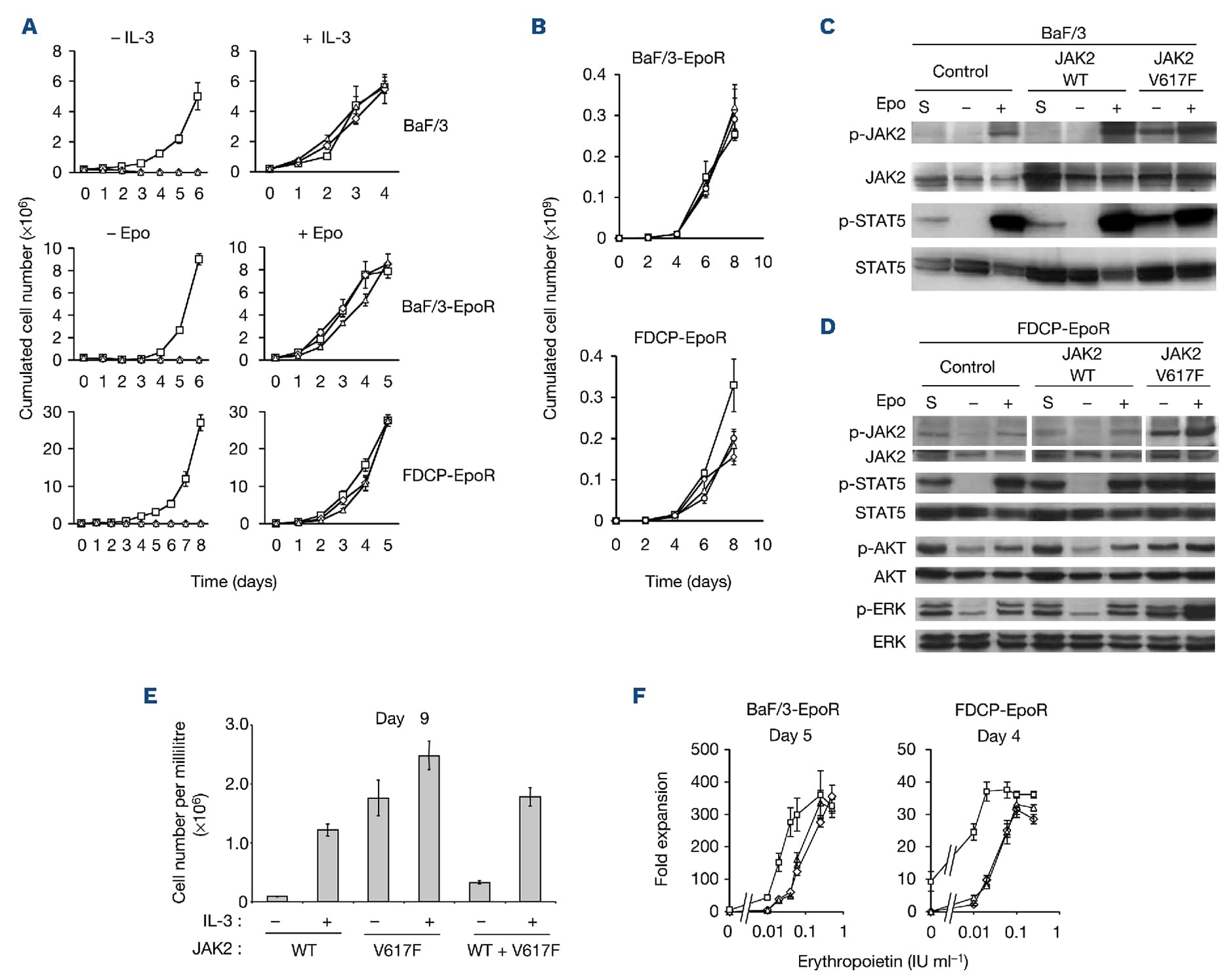
In 1960, Nowell and Hungerford described the Philadelphia chromosome that ultimately led to the identification of BCR::ABL1 as the disease-causing mutation in CML and the successful launching of imatinib (ABL tyrosine kinase inhibitor) as a disease-modifying drug therapy. By contrast, the molecular basis of PV, ET, and PMF remained elusive until the March, 2005 breakthrough communication by James et al., describing a novel Janus kinase 2 JAK/STAT activating mutation (JAK2V617F located in the auto-inhibitory JH2 pseudo-kinase domain — a G to T somatic mutation at nucleotide 1849, in exon 14, resulting in the substitution of valine to phenylalanine at codon 617) in PV, ET and PMF (discovery patent filing in October 2004).2 The authors utilized short interfering RNA to knock down JAK2 expression and demonstrated the essential role of JAK2 in erythropoietin-independent growth in PV (Figure 1).