Quantum technologies, devices that can process, store or collect information leveraging the laws of quantum mechanics, could potentially outperform their classical counterparts on some tasks. Yet these devices are highly sensitive to changes or disturbances in their surrounding environment, which can disrupt quantum effects and lead to errors.
Over the past decades, quantum scientists have introduced various methods to correct errors made by quantum computers. Many of these approaches work by spreading one unit of quantum information across various physical qubits (i.e., the physical systems encoding the information), then repeatedly checking for signs of errors and adjusting operations accordingly.
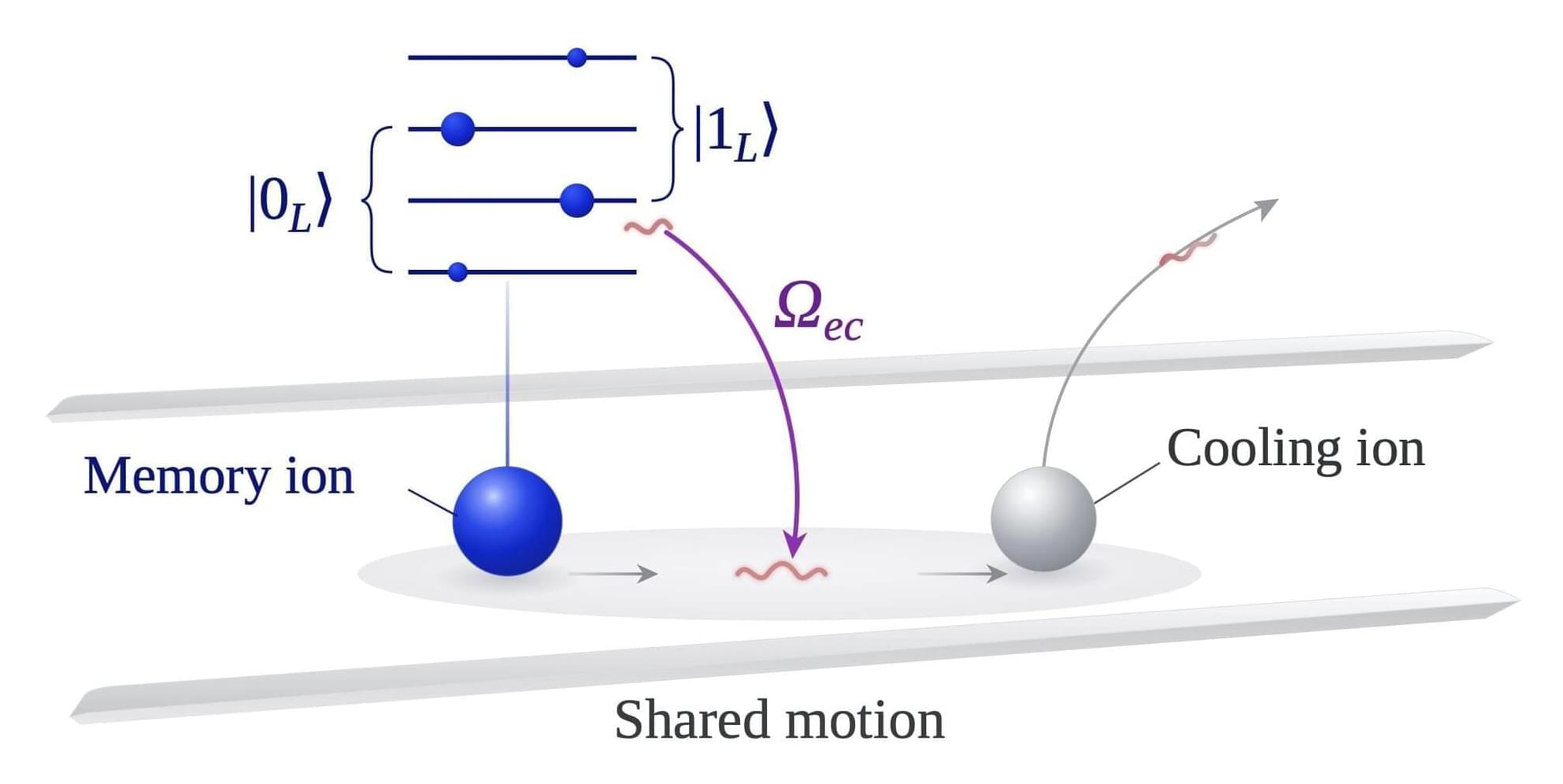
While some of these approaches have achieved promising results, they require additional operations that can introduce more computation errors. Researchers at the University of Science and Technology of China (USTC) and Zhejiang University recently introduced an alternative approach that corrects certain errors without repeated error checks or real-time feedback.