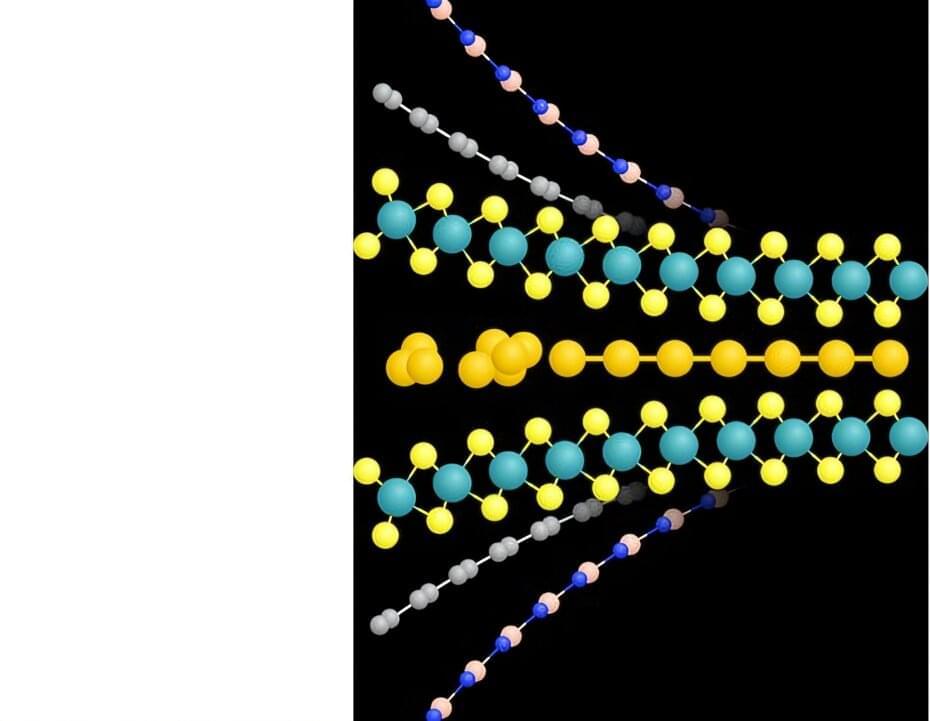
Atomically thin metals, metallenes, are promising materials for catalysis, electronics and energy conversion, but their synthesis has been challenging. Researchers from the University of Jyväskylä have now identified more than 300 stable metallene sandwich structures using machine learning and high-performance computing. The results provide researchers with a practical roadmap for the fabrication of new two-dimensional metals.
Metallenes are atomically thin layers of elemental metals. Their large surface area and unusual electronic properties make them promising materials for many future technologies. However, because metal atoms bond in all directions, freestanding metal sheets easily collapse into three-dimensional clusters.
In 2025, researchers showed that metals such as bismuth, tin and lead can be kept flat by squeezing them between two sheets of molybdenum disulfide. However, finding out systematically which metals and protective layers work best would be impractical experimentally and far too slow with conventional electronic structure simulations.