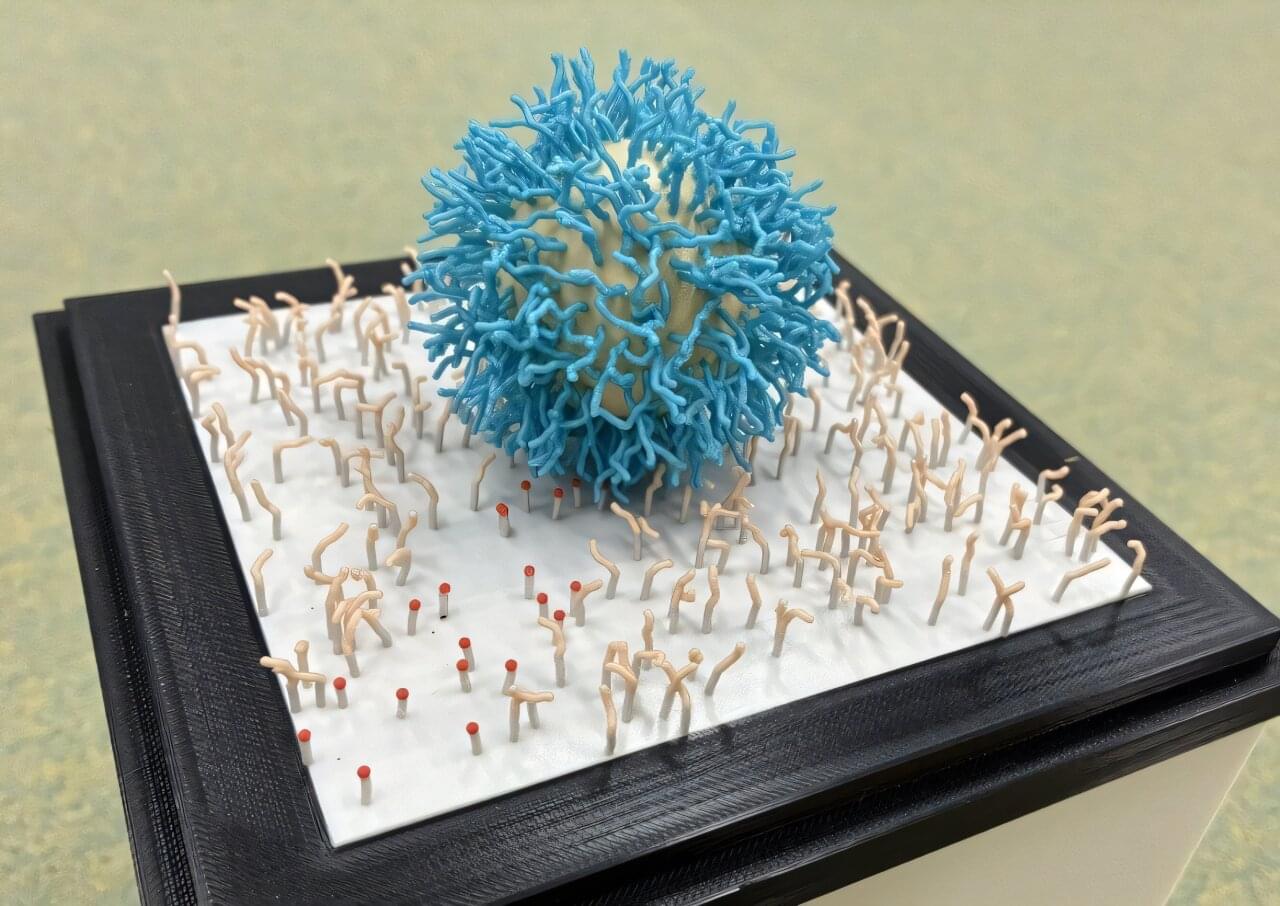
DNA-nano/microparticle motors are among the fastest artificial molecular motors reported to date, moving at approximately 30 nm per second. However, they are still slower than natural motor proteins (approximately 100–1,000 nm per second), and further improvements in design and performance are required.
Researchers at the Institute for Molecular Science (IMS) and the Graduate University for Advanced Studies, Sokendai, performed geometry-based kinetic simulations that reproduce the motion of DNA-nano/microparticle motors with particle diameters of 100–5,000 nm and identified conditions for improving their speed, run length and unidirectionality.
The work was published in Biophysical Journal.