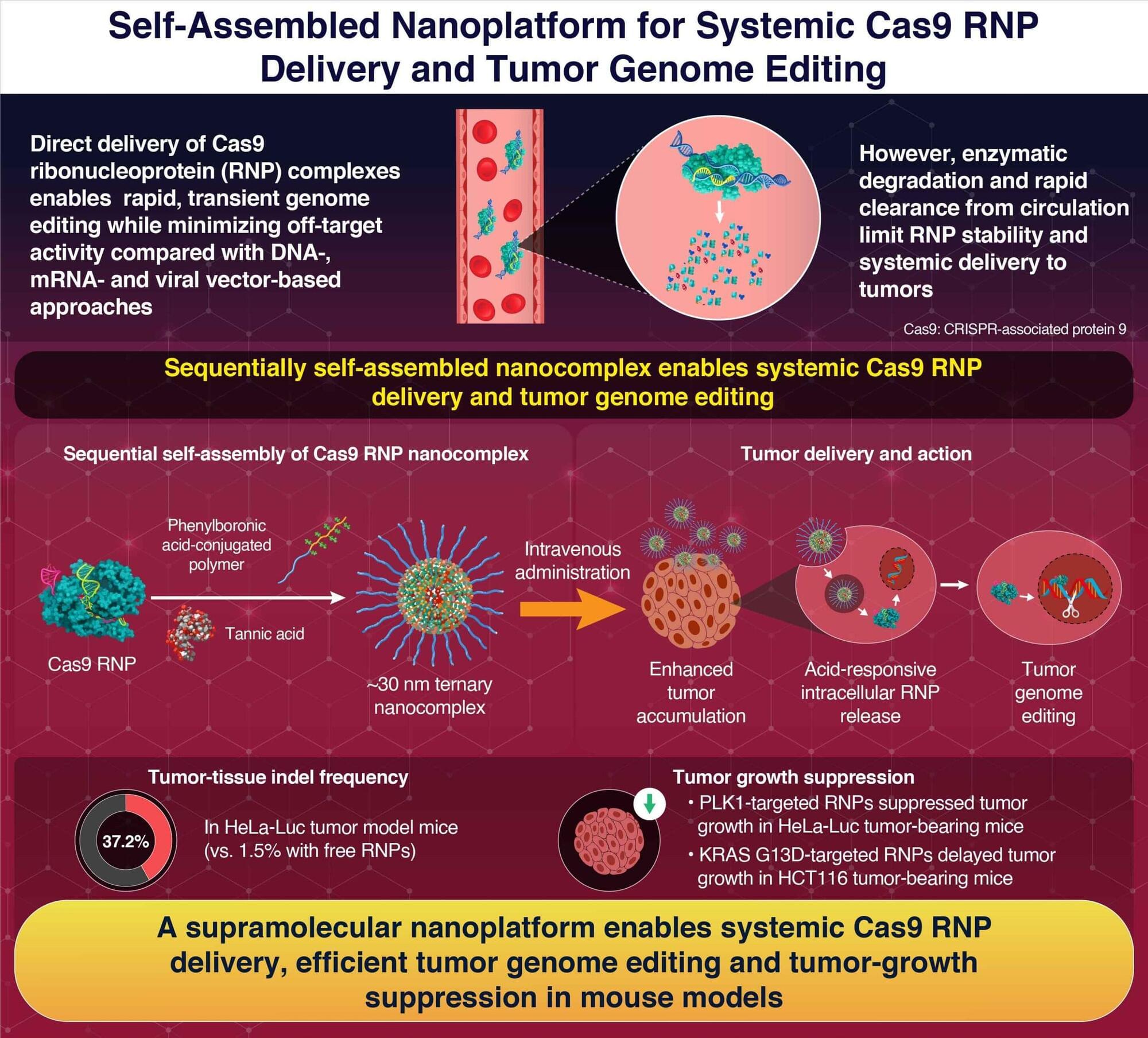
A self-assembling supramolecular nanocarrier protects Cas9 RNPs from degradation, enhances systemic delivery and preferential tumor accumulation, and enables pH-responsive intracellular release. Developed by researchers at the Institute of Science Tokyo, this platform achieved a 37.2% indel frequency at the luciferase target locus in HeLa-Luc tumor tissue in mice, compared with 1.5% with free RNPs, and suppressed tumor growth in separate mouse models. These findings support the further development of systemic CRISPR-based cancer therapies.
The application of CRISPR-Cas9 in cancer therapy has generated considerable interest because of its ability to modify specific genomic sequences. However, translating this approach into an effective therapeutic strategy requires overcoming several delivery-related barriers. These include protecting the gene-editing components from degradation, achieving sufficient tumor accumulation and facilitating their intracellular transport to the site of action.
Cas9 and its guide RNA can be delivered together as a ribonucleoprotein (RNP) complex, which offers advantages over approaches involving plasmid DNA or messenger RNA. Even so, RNPs are susceptible to degradation in biological environments, limiting their stability and therapeutic potential after systemic administration. Nanocarrier-based delivery systems offer a potential approach to address these limitations by protecting gene-editing components from premature degradation and facilitating their cellular uptake.