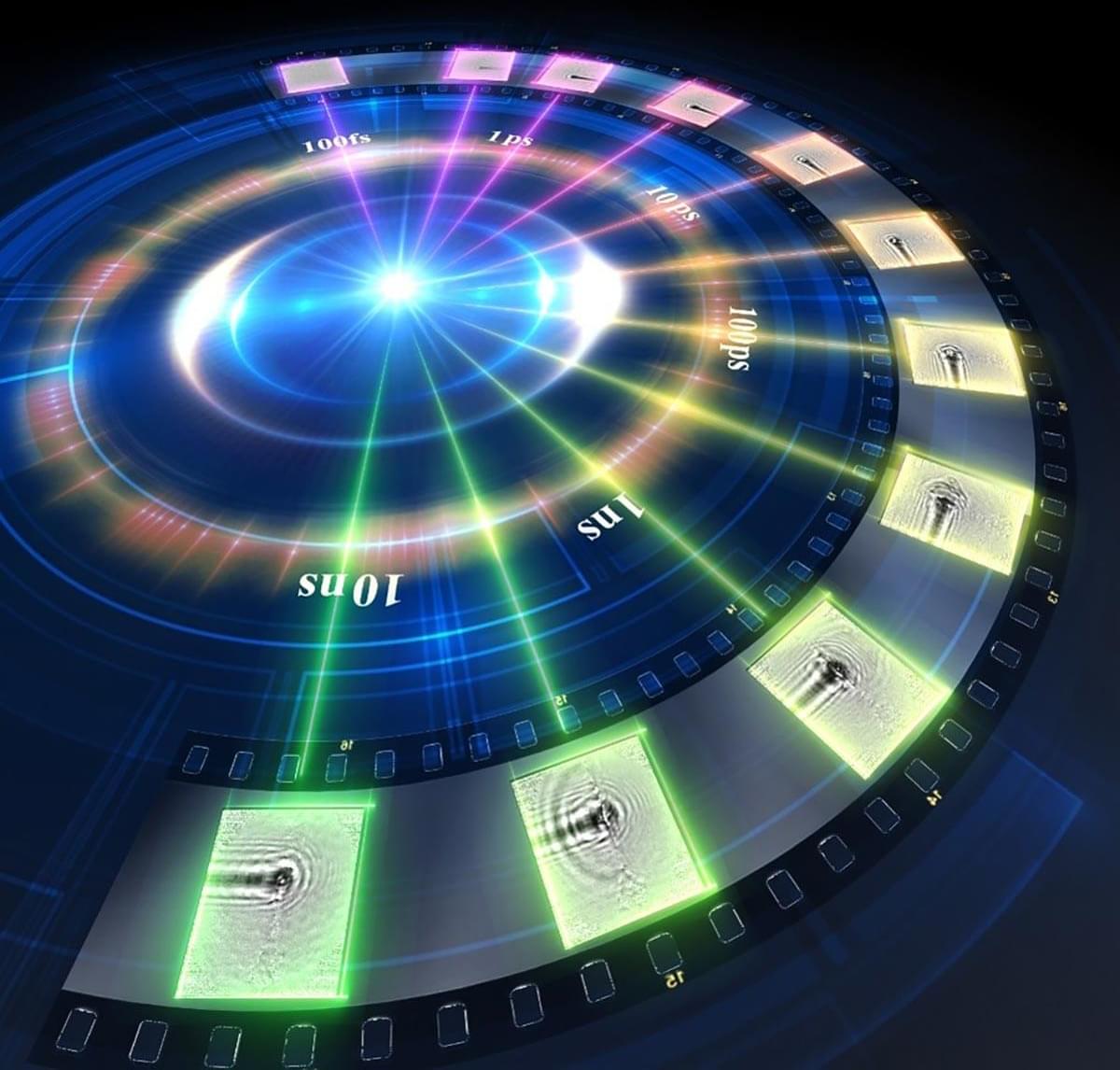
Eleven carefully timed images can connect the early and later stages of an ultrafast event, offering scientists a way to investigate fleeting processes that are difficult to repeat.
A limited set of images can leave gaps in a laser pulse or shock wave’s story. Its first moments and later development may unfold on very different timescales, so taking snapshots at regular intervals can miss changes that connect one stage to the next.
Conventional imaging methods operate on microsecond, or millionth-of-a-second, and millisecond, or thousandth-of-a-second, timescales, usually capturing images at evenly or nearly evenly spaced intervals. Single-shot ultrafast imaging typically uses a uniform interval within a selected time window. With only a finite number of frames available, that choice can favor a detailed view of one brief stage over a record of the broader process.