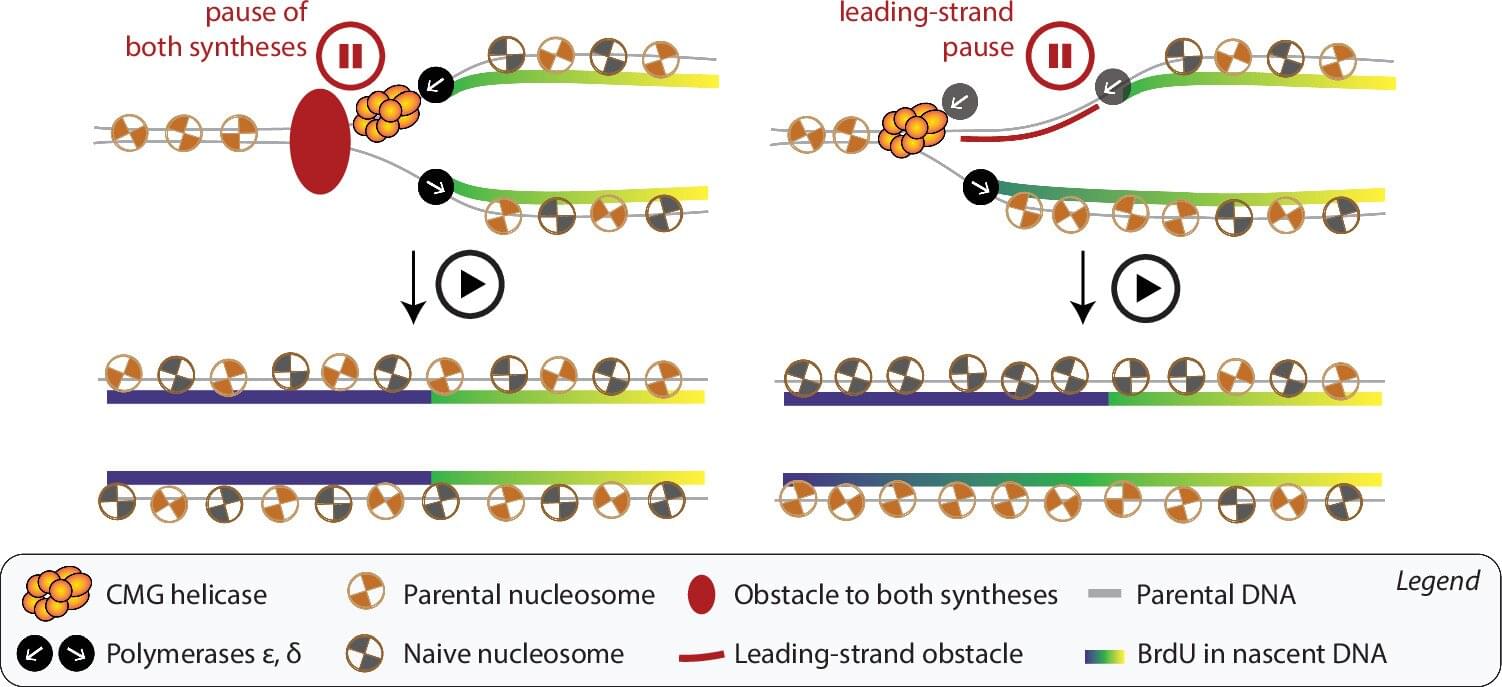
Creating an accurate copy of the genome—the entire length of DNA in a cell—is the fundamental step before cells can divide, the basis on which all life sits. Errors in that duplication process—including replication pauses—lead to natural genetic changes that underpin evolution, but also give rise to diseases such as cancer.
However, identifying the frequency and impact of these events is inherently challenging due to their low frequency and delocalized nature across the genome.
Researchers in the Nieduszynski Group at Earlham Institute have now mapped locations in budding yeast where the copying machinery pauses, or stops altogether, in much greater detail. The paper “Single-molecule landscape of DNA replication pausing” is published in Nature Communications.