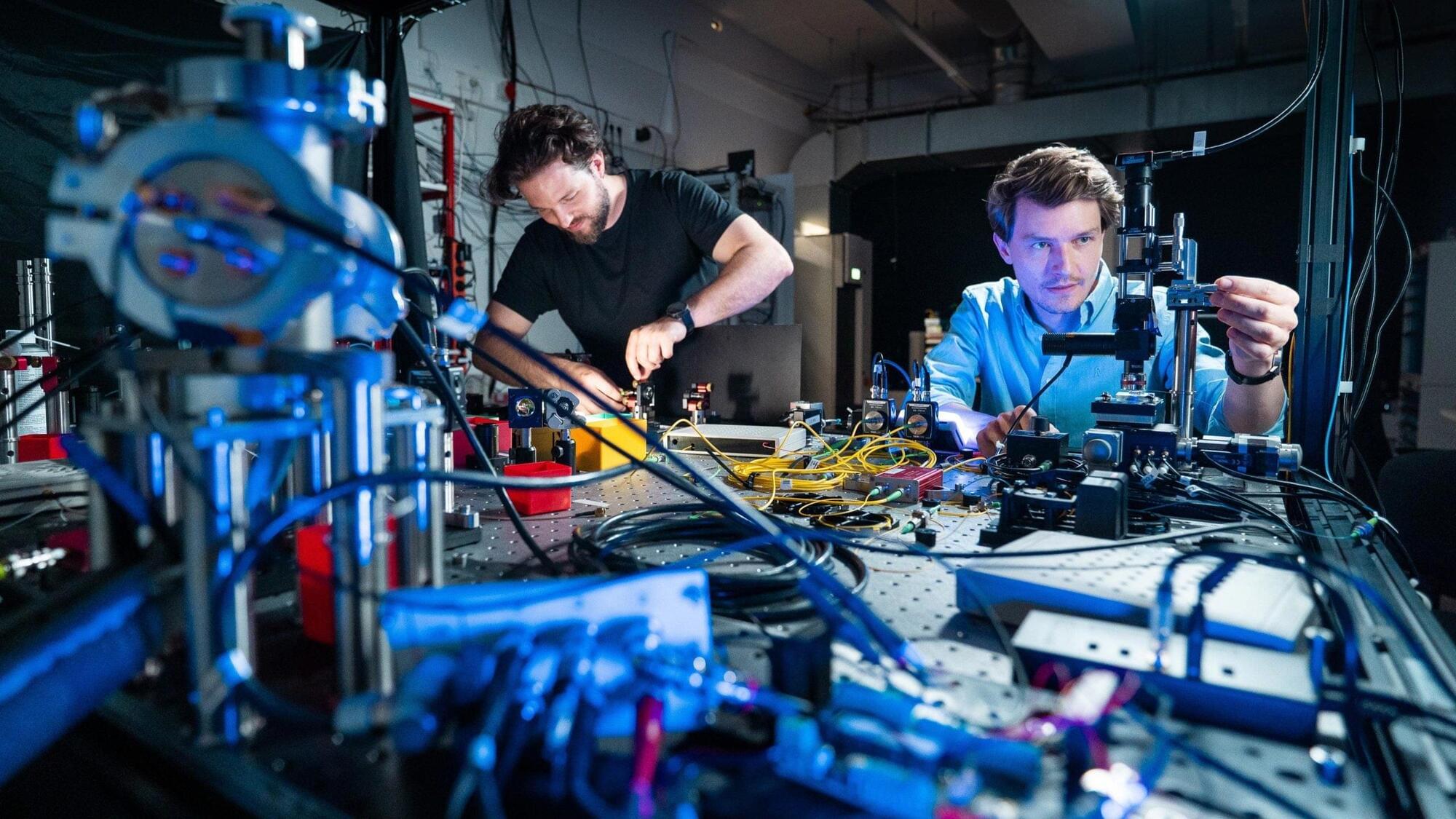
Getting the right light for future quantum networks may depend on what scientists prevent from being emitted, an approach that nearly tripled the share of desired photons.
Future quantum networks may one day allow quantum computers and other devices to exchange information through individual particles of light, known as photons. Making that possible requires reliable sources of photons with carefully controlled properties. One challenge is their frequency, which determines the kind of light they produce. A source can emit photons at several frequencies, leaving only a fraction suitable for the intended connection.
Scientists have traditionally addressed this problem using tiny optical structures called resonators. These structures influence a photon source so that it emits more light at a particular frequency. Although effective, resonators work within a narrow frequency range and must be precisely tuned to each source, making it difficult to use multiple sources together.