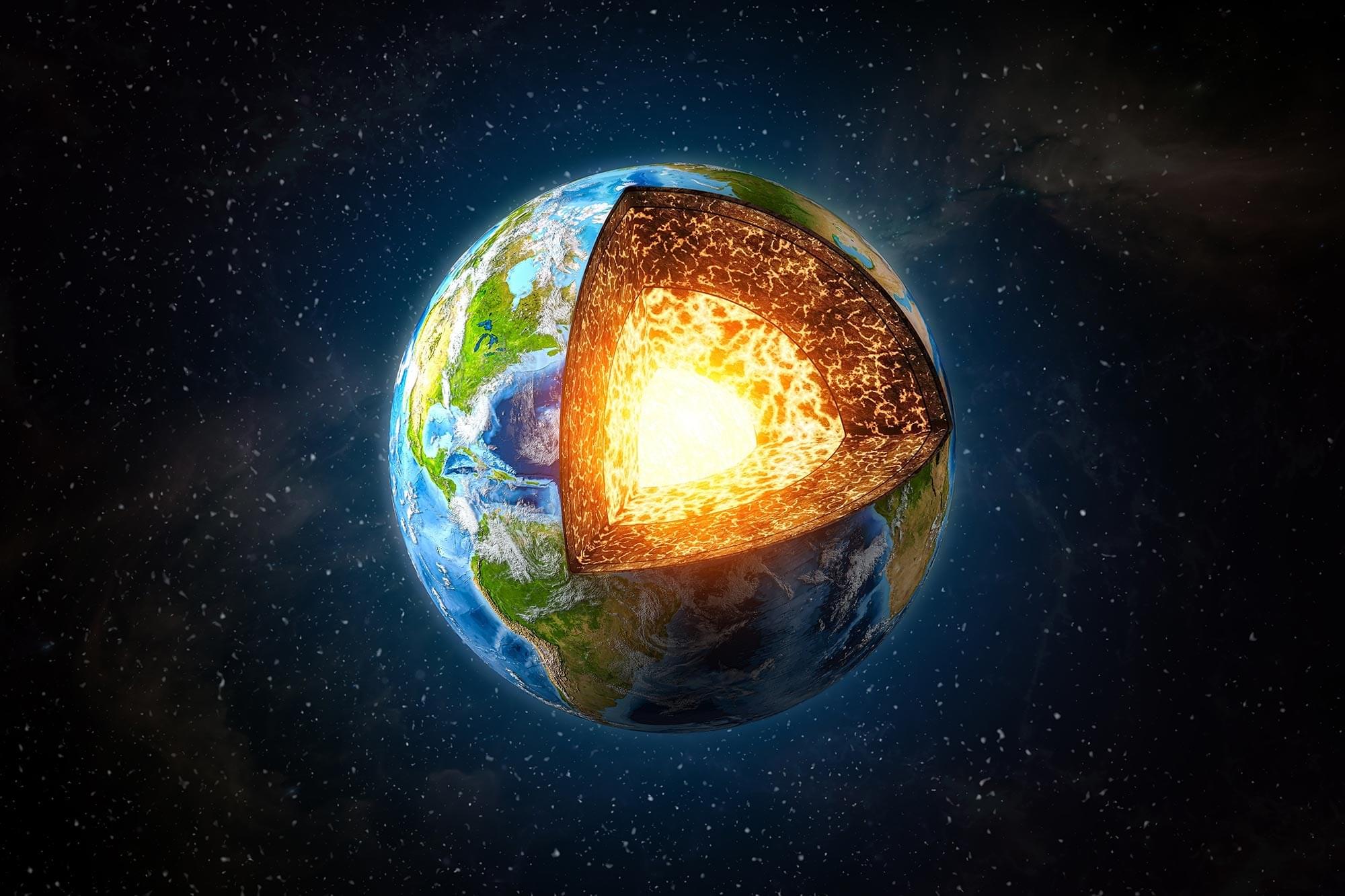
Ancient eruptions may have helped shape the air we breathe, with laboratory experiments revealing magma’s unexpected ability to store extra oxygen.
Molten rock deep inside Earth can take up an extra supply of oxygen under pressure, according to a new study. That finding raises the possibility that rising magma could release oxygen on its way to the surface, a process that may have contributed to increases in atmospheric oxygen billions of years ago.
Oxygen makes up more than half the atoms in Earth’s silicate interior, but its abundance does not necessarily mean it is available to escape into the atmosphere. Much of it is chemically bound to other elements. Geoscientists have generally assumed that the quantities and electrical charge states of elements such as silicon, magnesium, and iron determine how much oxygen magma contains. Knowing those ingredients should let them calculate the oxygen needed to balance the chemistry. Whether molten rock could absorb additional oxygen as a separate volatile component, as it does water and carbon dioxide, has remained largely unexplored.