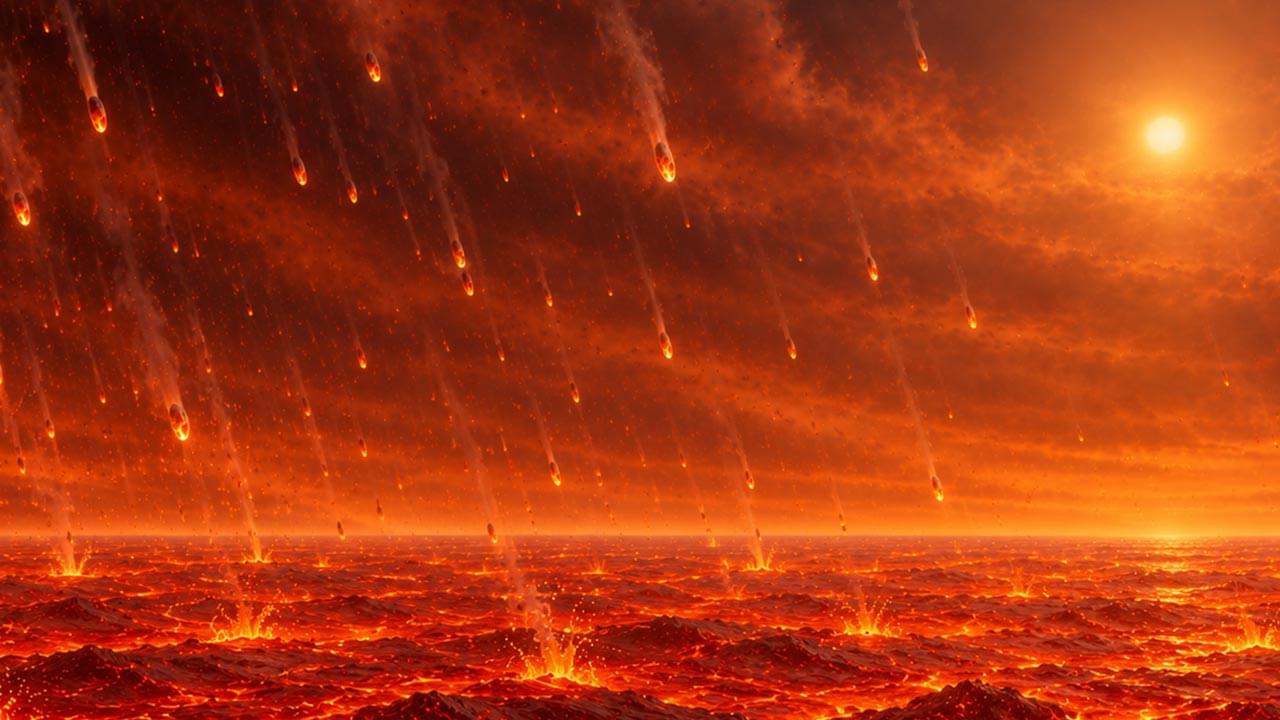
Laboratory experiments suggest that rocky planets could generate their own water as they form, potentially giving distant worlds an essential ingredient for life.
Rocks, hydrogen gas, and intense heat might sound like an unlikely recipe for an ocean. Yet experiments suggest that these ingredients could have produced much of Earth’s water while the planet was still taking shape.
One leading explanation for Earth’s water involves small particles containing ice, known as icy pebbles. These formed in colder regions of the early solar system, where water could remain frozen, and may have carried that water to the growing Earth. Questions remain about how the particles traveled such long distances and whether those deliveries can fully explain Earth’s chemical composition.