Recently an artificial intelligence proved an 18-year-old conjecture in computer science, called the Aaronson–Ambainis conjecture. The proof settles a long-standing conjecture (educated guess) that eliminates one proposed route to enormous quantum computer speedups, ruling out one particular variant of “quantum supremacy,” the term for the hypothesis that a programmable quantum computer can solve a problem that no classical computer can solve in any “feasible” amount of time.
But as theoretical computer science expert Scott Aaronson of the University of Texas at Austin wrote, “It doesn’t undermine any form of quantum supremacy that we did conjecture to exist!” Which is to say, despite what you may have heard, the promises of quantum computing are still very much alive. Quantum computing is still very difficult, though. In particular, reading qubits is challenging because reading them often changes their state.
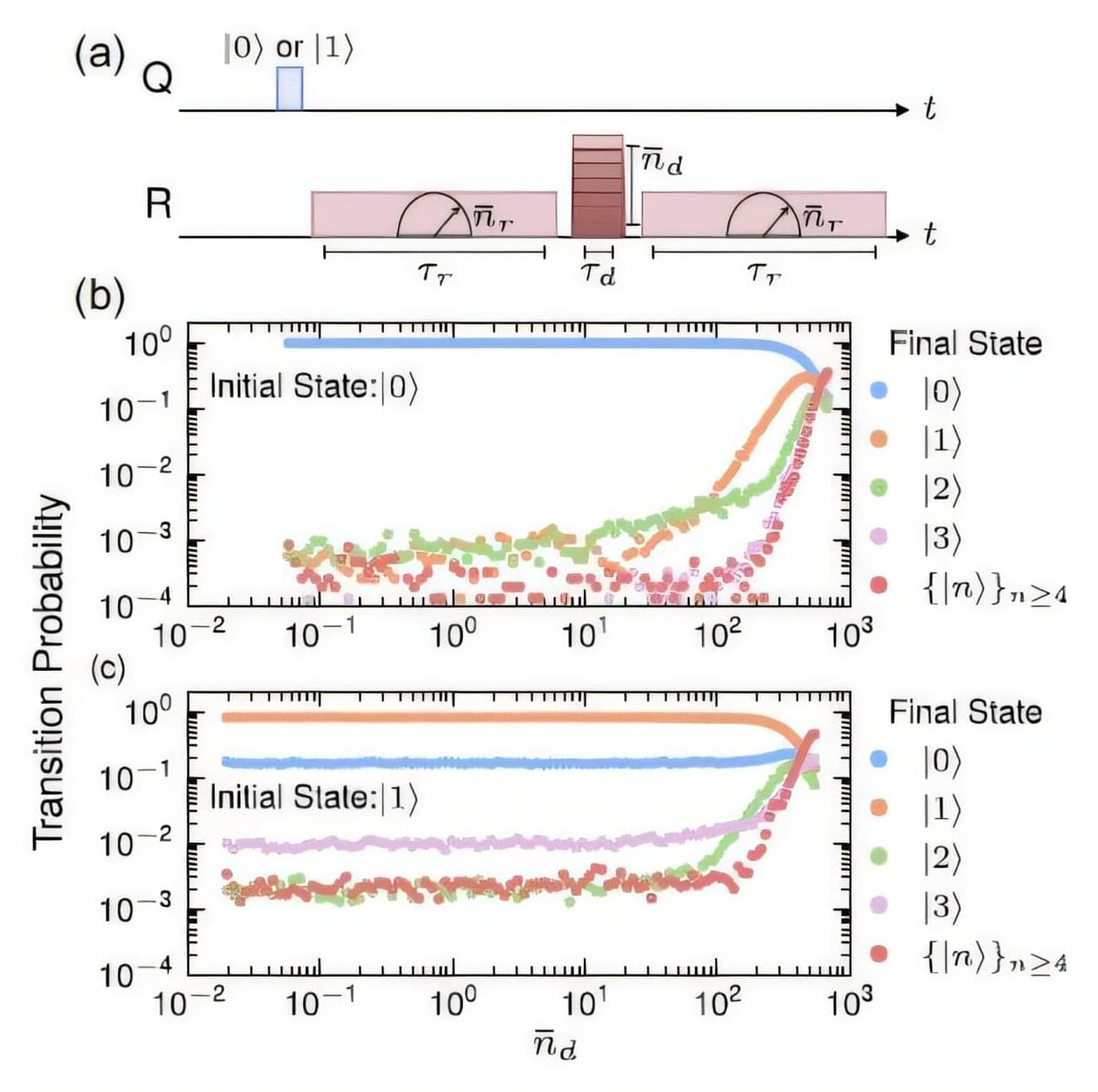
Toward that end, a research team from Colorado in the U.S. with a team member from Canada has built a device that can read a qubit without changing its state, with more than 99% fidelity. Their work is published in the journal Physical Review Letters.