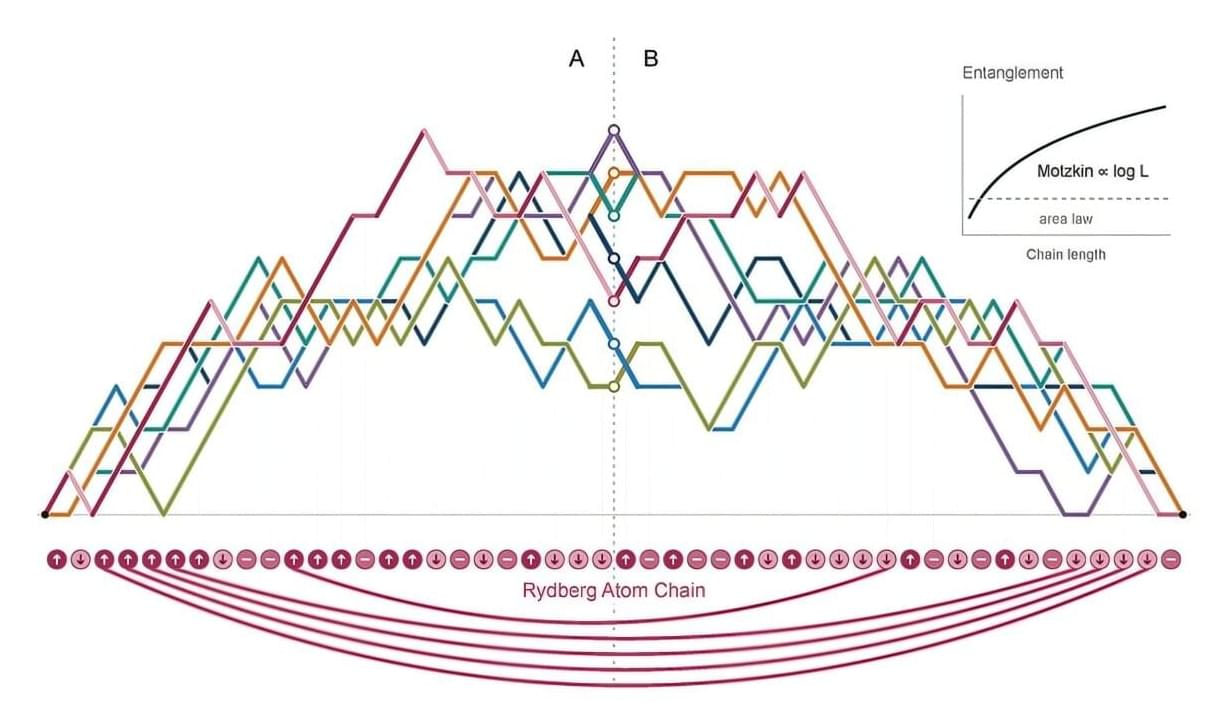
Adrian Del Maestro knows how to engineer a quantum fingerprint. Rick Mukherjee has a gift for tuning atoms. Their combined expertise has taken a theory sketched out on paper and created a pathway for real experiments. The results, published in the journal Physical Review Letters, move a law-defying “mathematical oddity” ever so slightly up the technology readiness scale.
Quantum physics is not the familiar physics where you drop a ball from a balcony and it hits the ground below. There’s a different play on the quantum stage, where objects abandon the rules of classical physics and the plot is unpredictable. Del Maestro and Mukherjee want to edit the script and help shape where the story goes. Ultimately, they’d like to take advantage of quantum phenomena and lay the groundwork for future technologies.
Del Maestro is a professor and the head of UT Knoxville’s Department of Physics and Astronomy. One of his interests is quantum entanglement, where subatomic particles are so intertwined that it’s impossible to think of them as separate entities, even when they’re far apart. Mukherjee is an associate professor of physics at UT Chattanooga and director of the UTC Quantum Center. His research is in atomic, molecular and optical (AMO) physics, exploring the quantum behavior of atoms and molecules to understand how light and matter interact.