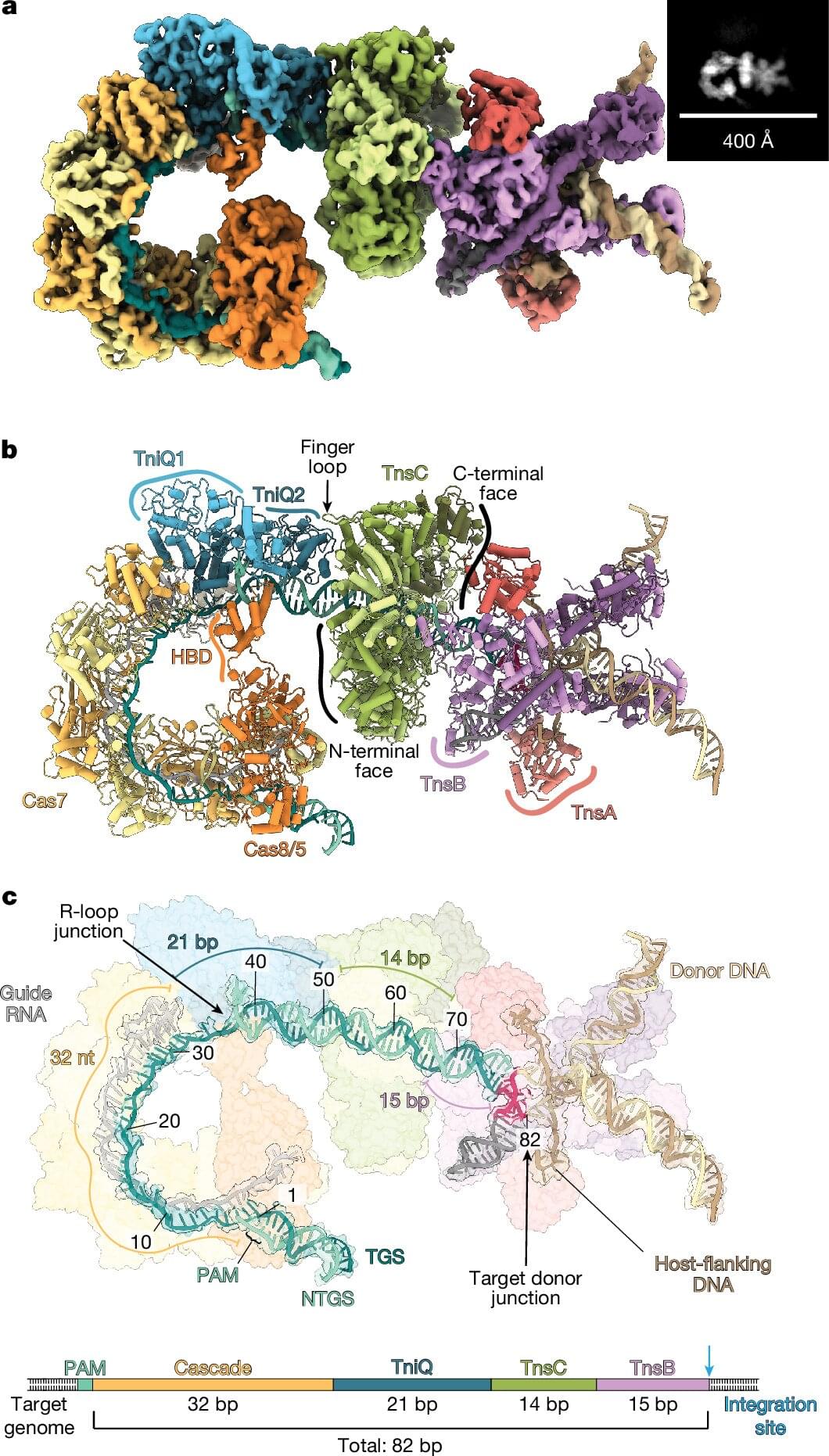
Genome engineering is exciting, given its vast potential to treat and even cure diseases, but it is still a largely uncharted biomedical innovation. Scientists at St. Jude Children’s Research Hospital recently uncovered the mechanisms involved in precisely integrating DNA into a target genomic location using CRISPR-associated transposases (CASTs). By studying type I-F3 CAST, the researchers unveiled structural findings that explain how this CAST family achieves successful DNA integration at precise target sites and offer insights for future genomic engineering approaches. The results were published in Nature.
The findings establish a mechanistic framework for how precise RNA-guided DNA integration could be engineered. While current genomic editing approaches have revolutionized gene therapy, CASTs could advance progress in the field and solve many existing challenges.
“There’s excitement around CASTs because if you could program DNA integration where you want in a genome, that would be extremely powerful,” said corresponding author Elizabeth Kellogg, Ph.D., St. Jude Department of Structural Biology.