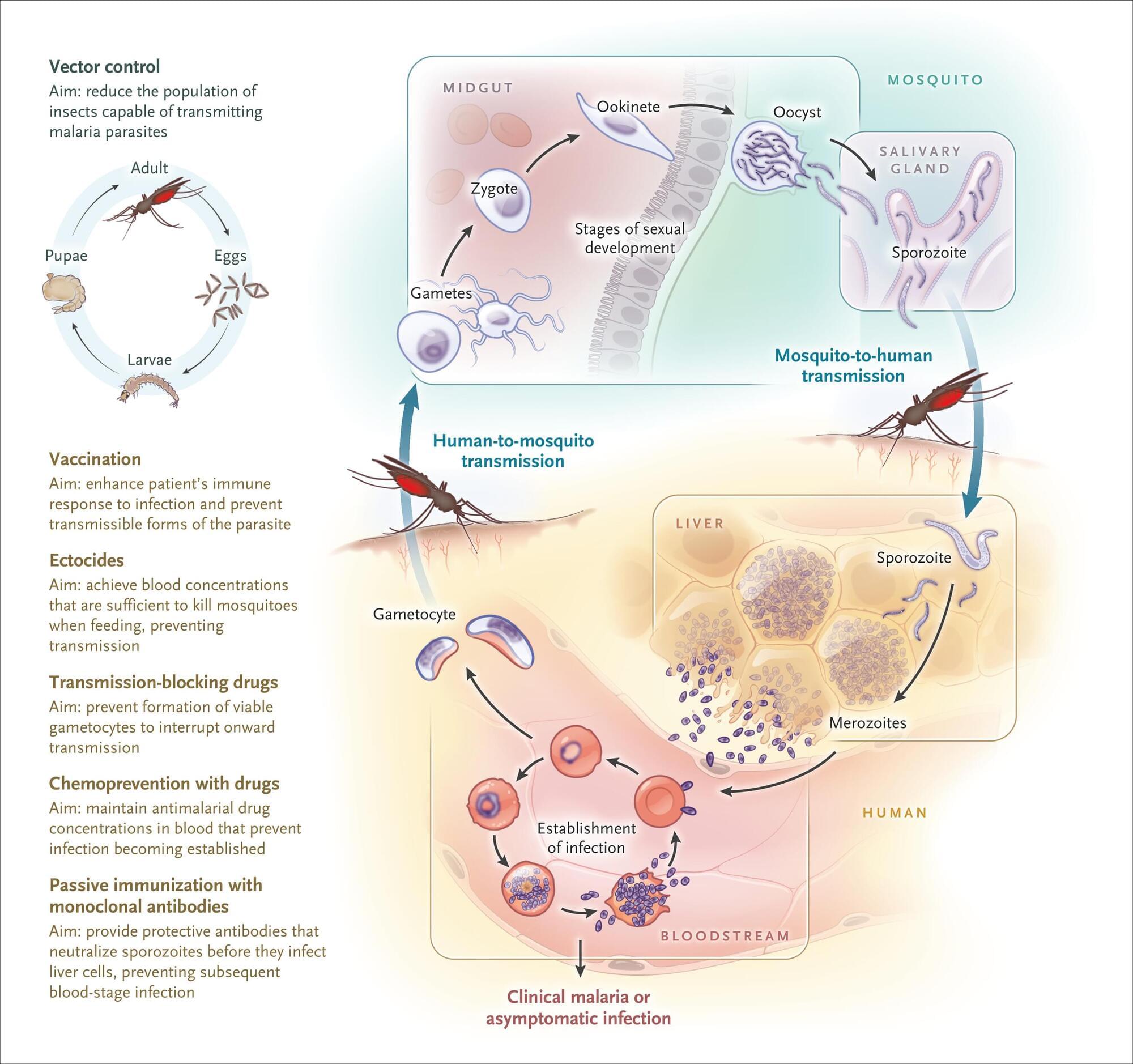
Extensive deployment of insecticide-treated nets accounted for 68% of malaria case reduction in Africa between 2000 and 2015.7 Hence, the increased prevalence of insecticide-resistant vectors has substantially contributed to declining momentum against malaria over the past decade.1 Likewise, chemoprevention is threatened by the emergence and spread of high-level Plasmodium falciparum resistance to sulfadoxine–pyrimethamine and amodiaquine.1,8
On a more positive note, two new classes of insecticide-treated net became available as of 2023, transforming the vector-control space.1 Seasonal malaria chemoprevention protected 54 million children across 19 countries in sub-Saharan Africa in 2024 (Figure 2A).9 In addition, two World Health Organization (WHO)–prequalified malaria vaccines are being deployed across Africa.2 Of note, the political will to address malaria in Africa was reinforced at the 2024 Malaria Ministerial Conference in Yaoundé, Cameroon, where health ministers from 11 countries that have been classified by the WHO as “high burden to high impact” — and that account for approximately 70% of all cases and deaths worldwide — underscored their unwavering commitment to reducing malaria-related mortality.10 Emphasis was placed on country leadership, with subnational tailoring to implement the most effective combinations of interventions for specific contexts.10
This review examines current tools and recent advancements in malaria control and prevention. Not every intervention is suitable for every context; decisions must be guided by available resources, local epidemiologic factors, and evidence of effect. Substantial investments are being made in emerging technologies, and their transformative potential for malaria elimination is discussed.