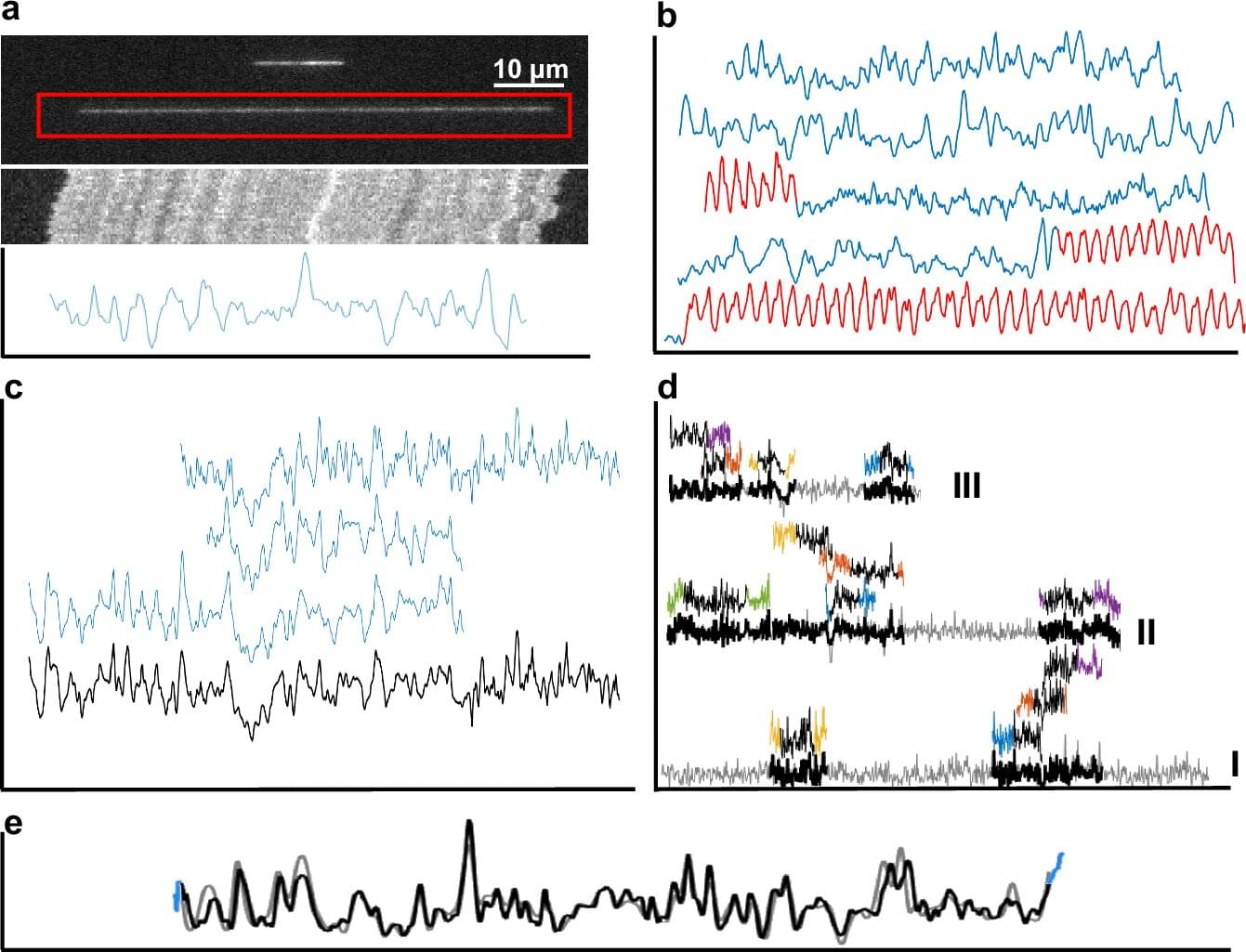
Large, complex genomes remain difficult to characterize accurately, even with modern DNA sequencing. Researchers at Chalmers University of Technology have now extended an optical genome mapping approach, previously demonstrated for bacterial genomes, to more complex eukaryotic genomes. Using two yeast species, they generated optical maps covering entire chromosomes, including large repetitive regions that are particularly difficult to reconstruct.
While DNA sequencing provides detailed information about genomes, they are still difficult to reconstruct because similar sequences may show up many times in several places. Optical genome mapping complements sequencing by providing information about much longer stretches of DNA and how they are organized.
Applying the method to eukaryotic genomes introduces new challenges, including extensive repetitive regions and intricate chromosome structures. These challenges are addressed in the research article “Chromosome-scale assembly of yeast genomes using enzyme-free, dense optical genome mapping,” published in Nature Communications. The study was conducted by Fredrik Westerlund’s research group at the Department of Life Sciences, together with researchers from Umeå University and Lund University.