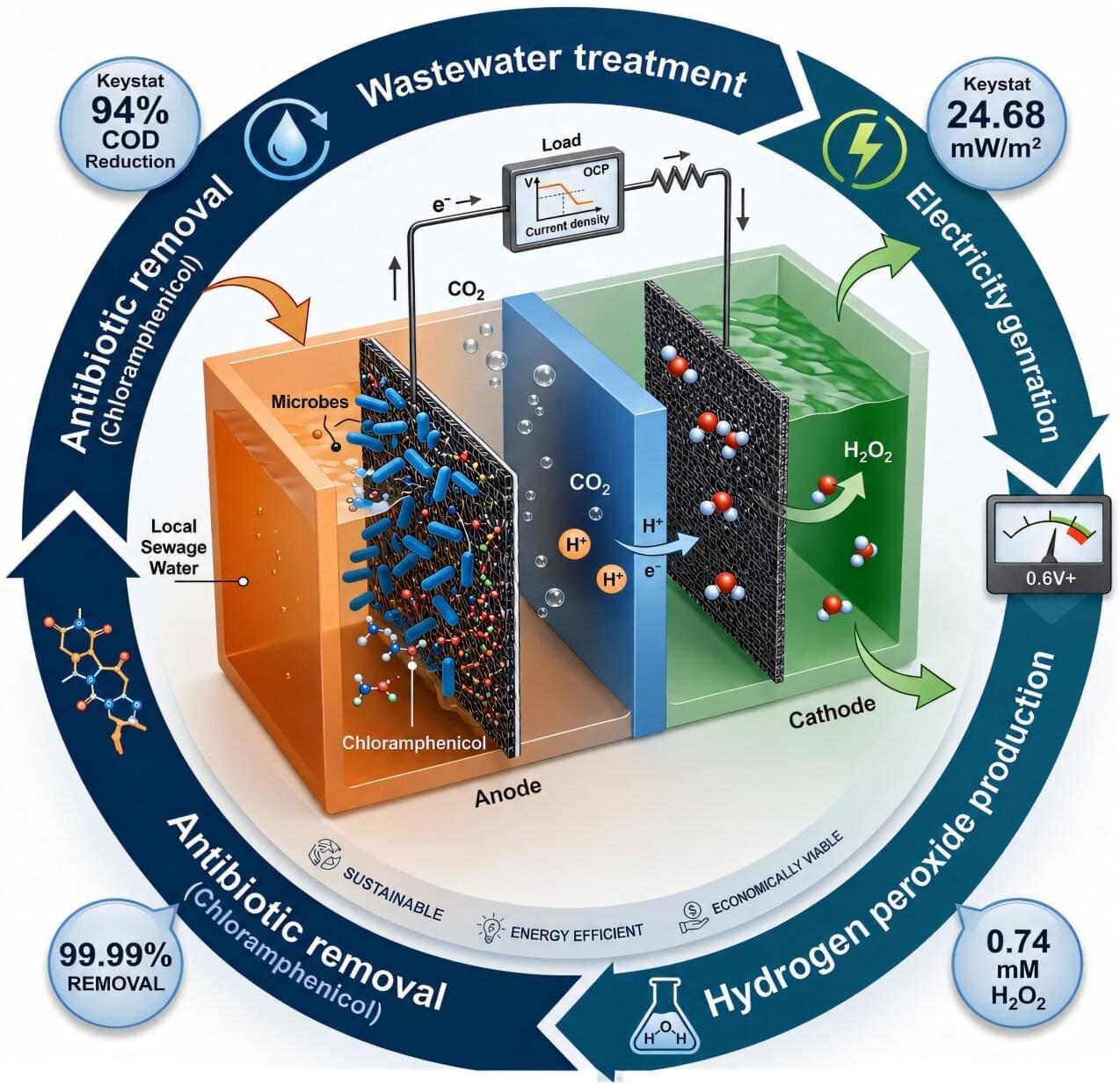
What if the dirtiest water in town could help pay for its own cleanup? That is the question that started our project. Sewage is full of hungry bacteria. It also carries leftover medicines, including antibiotics like chloramphenicol, stubborn molecules that conventional treatment can struggle to remove. Most people see a waste problem. We saw a small power plant and a chemical factory hiding in plain sight. Our study is published in the Journal of Power Sources.
The idea behind a microbial fuel cell is simple. Bacteria eat the organic matter in wastewater and shed electrons like exhaust. Give them an electrode to live on, and those electrons travel along a wire to a second electrode and make a current. It is a battery that runs on dinner.
The catch is that the current is small. So we asked a different question: What else could those electrons do when they arrive?