Quantum circuit optimization is an important research area, as the computational resources required to execute quantum algorithms remain a major challenge. In particular, two-qubit operations are generally associated with higher error rates than single-qubit gates on current quantum hardware, making reducing the number of two-qubit gates an important objective.
Clifford circuits are constructed from Hadamard, phase and controlled-NOT (CNOT) gates. Although these circuits can be simulated efficiently using classical computers, finding their most resource-efficient implementation presents a fundamentally different challenge.
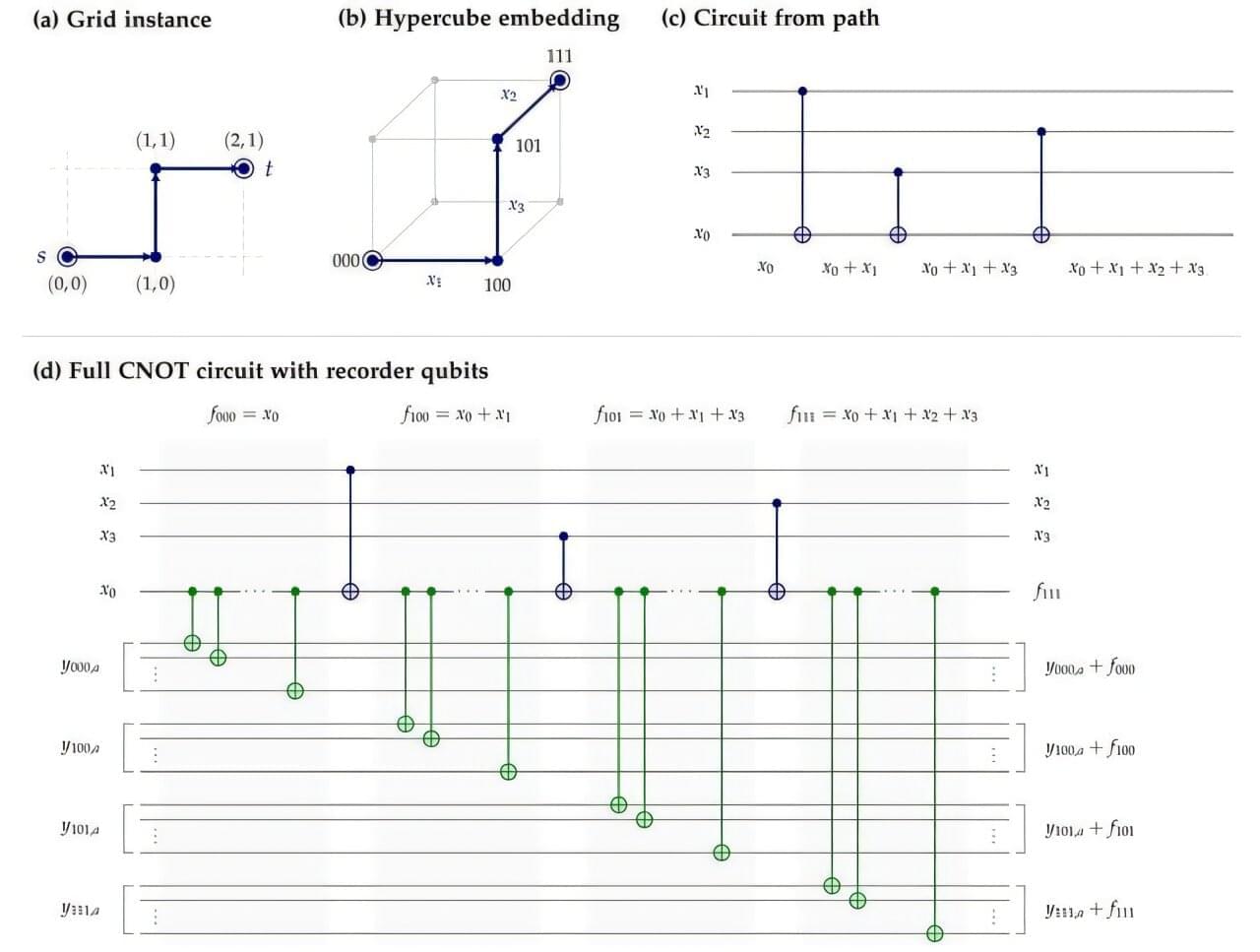
New research from Kvantify establishes that deciding whether a given Clifford operator can be implemented using at most a specified number of CNOT gates, while allowing an unlimited number of single-qubit Clifford gates, is NP-complete. The result provides a theoretical explanation for the difficulty of optimal Clifford circuit synthesis and has important implications for quantum algorithm development.