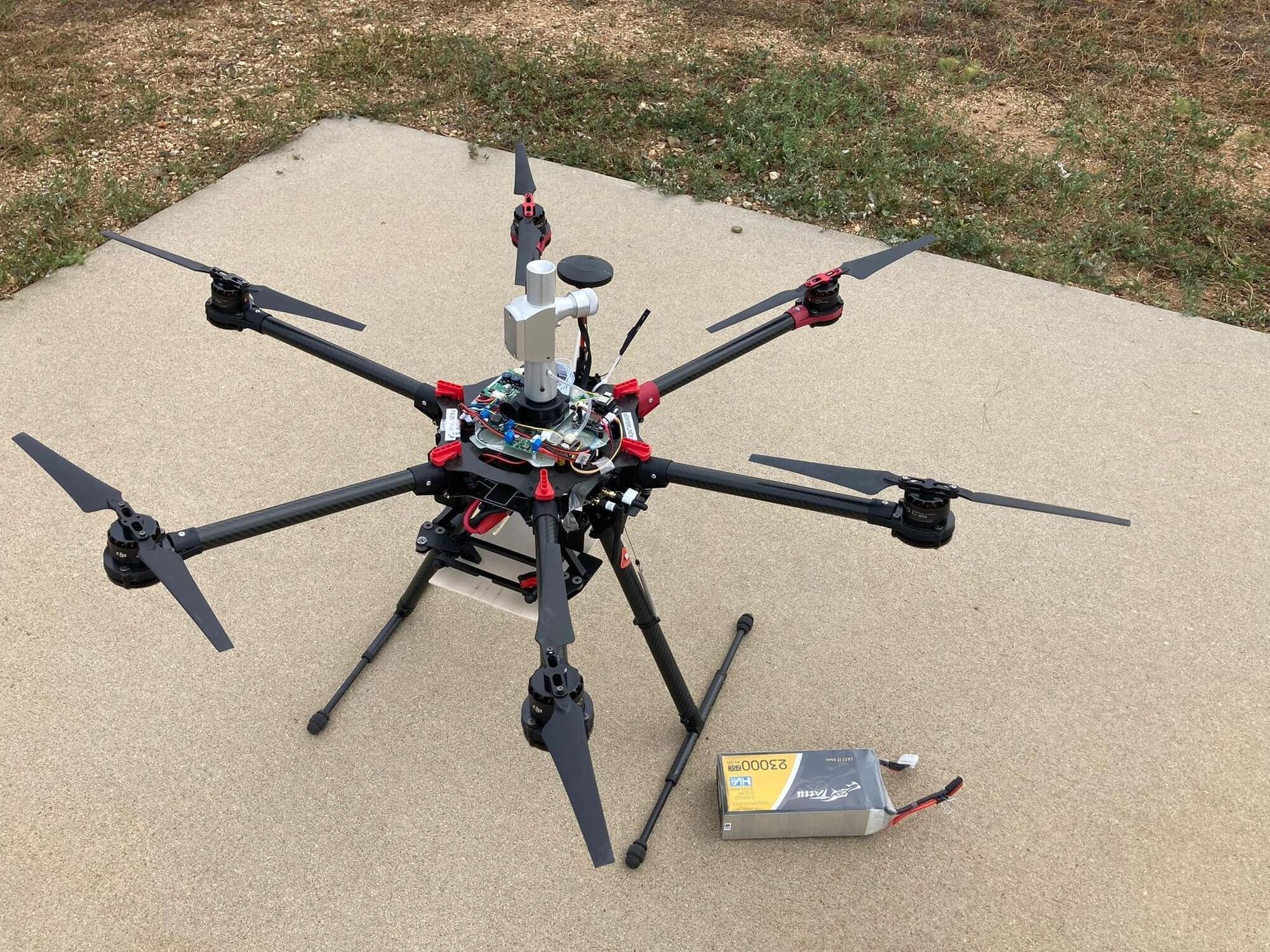
Microplastics have been found in our bodies and the food we eat—and even in remote environments around the world, including seawater and ice in the Arctic. Despite their prevalence, little is known about how they move through the atmosphere. New CIRES-led research, which demonstrates a new method for sampling microplastics in the atmosphere using an uncrewed aerial system (UAS), aims to change that. The findings are published in the journal Scientific Reports.
“Atmospheric microplastics are usually sampled from a rooftop, ground-based location or ship,” said Radiance Calmer, a former CIRES researcher who is now working at the Norwegian Polar Institute and lead author of the paper. “Our proof-of-concept study shows we can sample atmospheric microplastics using UAS flights for a specific height.”
Their results not only indicate microplastics are present 100 meters (328 feet) high in the atmosphere near areas with intense human activity but also confirm the team’s UAS sampling method is a feasible approach for measuring microplastics in the atmosphere. They are the first team to successfully use an environmental cyclone sampler on a UAS to collect microplastics.