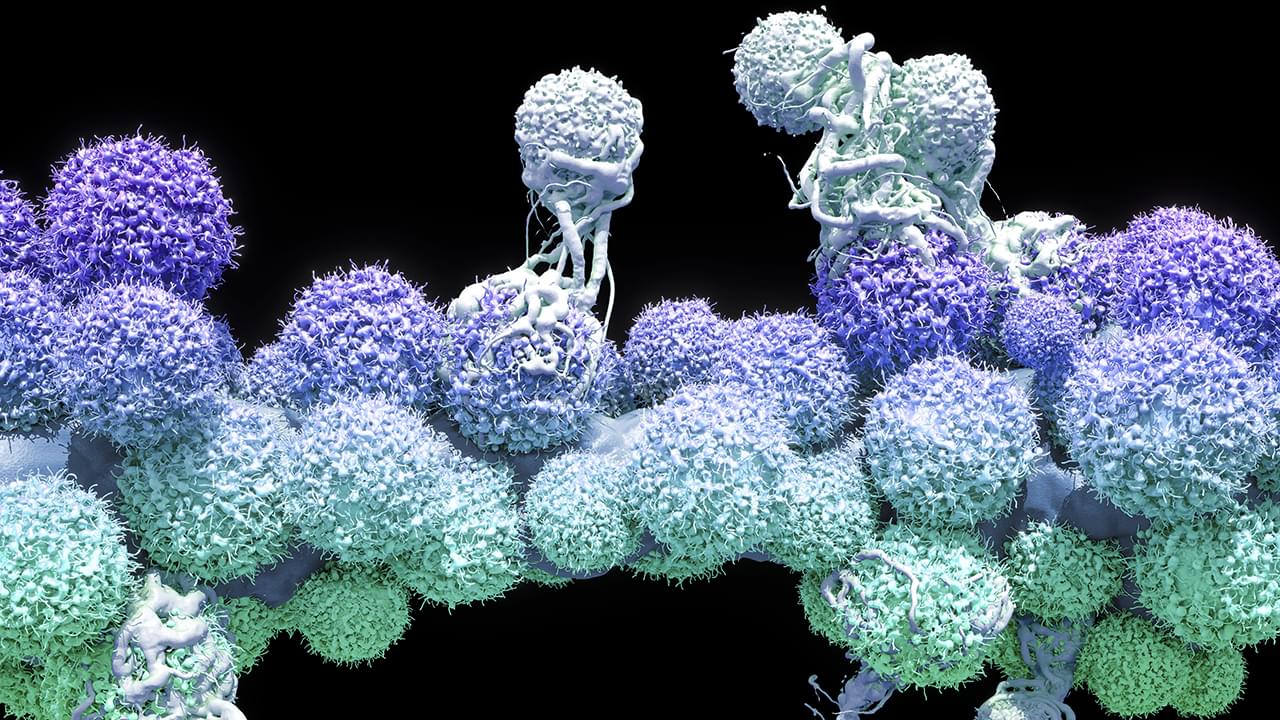
Researchers have shown in mice that designer antibodies can curb the growth of tumors by targeting two of cancer’s most infamous offenders—the proteins RAS and p53, which are mutated in many tumors but have largely defied drug development efforts. If their promise holds up in clinical trials, such drugs could make it possible to unleash the body’s immune system on hard-to-treat cancers including pancreatic and ovarian.
“It’s exciting,” says immunologist Jon Weidanz of the University of Texas, Arlington, who co-founded a company that works on similar immunotherapies, called bispecific antibodies. The new drugs can lock onto a few snippets of p53 or RAS jutting out from a tumor cell’s surface—and then trigger immune cells to attack them. “The therapies have the potential to work when there’s a really low number of the target on cells. That is a big deal,” says Weidanz, who wrote a commentary accompanying the papers.
P53 is a tumor suppressor, and the intact protein helps healthy cells repair DNA—or self-destruct if the damage can’t be fixed. When p53 is turned off in tumors, they can grow unchecked. But targeting p53 with drugs is difficult, because restoring its activity is much harder than inhibiting its activity or turning off its production—more typical drug strategies against misbehaving proteins.