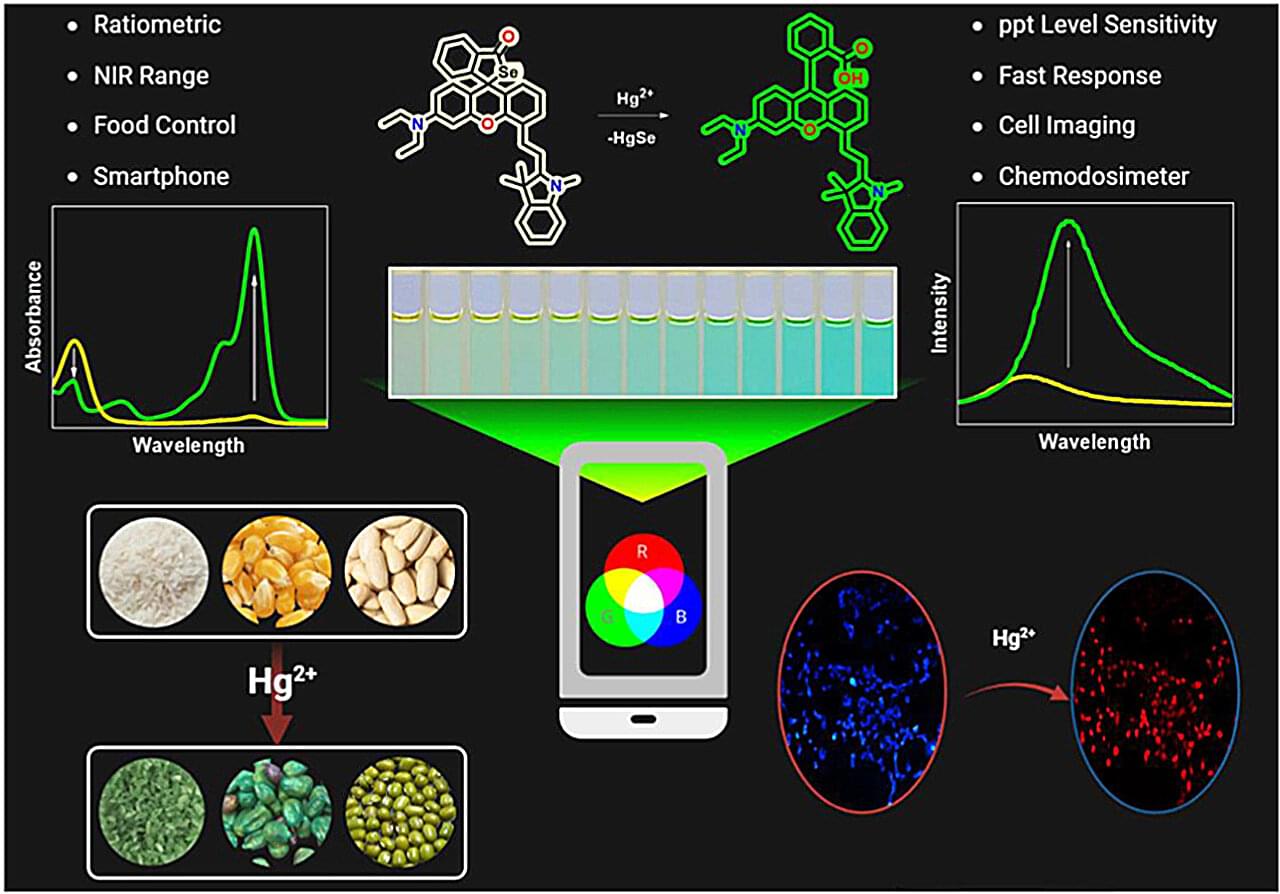
Mercury contamination presents an obvious challenge: it is invisible. A glass of water or a piece of fruit can seem perfectly normal to the naked eye, even when trace amounts of toxic mercury are present. Detecting such minute levels usually requires specialized laboratory tools and trained experts.
Researchers at Istanbul Technical University (ITU) have created a molecule that provides an alternative method to detect mercury. When mercury(II) ions are present, the sensor changes color and starts emitting near-infrared light, transforming an invisible contaminant into a measurable signal. The research is published in the journal Talanta.